

This Spring, One Mega-Dealer Dominates N.Y.C. Museums

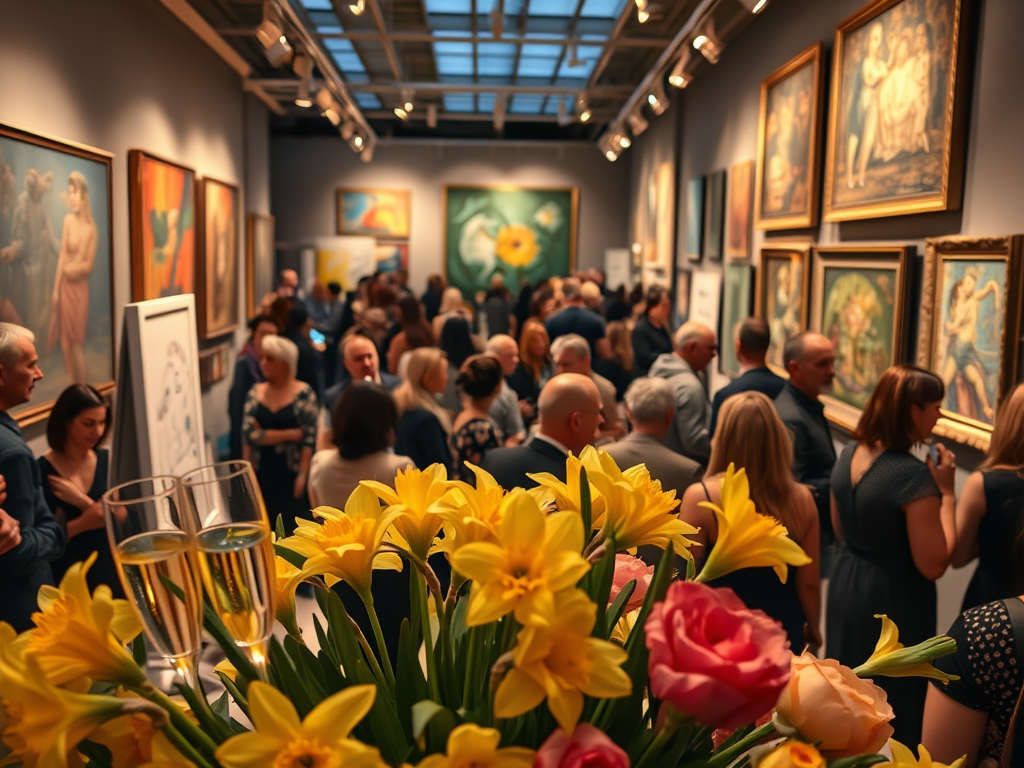
Earlier this month, the Whitney Museum of American Art marked the opening of a new exhibition by painter Amy Sherald — best known for her official portrait of Michelle Obama — with a lavish celebration, complete with champagne toasts and abundant arrangements of daffodils and yellow ranunculus.
Meanwhile, the Museum of Modern Art hosted a grand event celebrating an expansive retrospective dedicated to Jack Whitten, the renowned painter and sculptor who passed away in 2018.
Further uptown, the celebrated multimedia artist Rashid Johnson made a bold statement with a major solo exhibition at the Solomon R. Guggenheim Museum, featuring nearly 90 pieces and live performances. And next month, the acclaimed conceptual artist Lorna Simpson will unveil an important collection of her paintings at the Metropolitan Museum of Art.
What links all of these highly sought-after artists? They are all represented by the powerhouse Swiss gallery, Hauser & Wirth. This season, Hauser & Wirth’s presence in New York’s top museums is so overwhelming that insiders have jokingly dubbed the period “Hauser Spring.”

Hauser & Wirth’s rising influence coincides with a broader trend: the increasing involvement of major commercial galleries in supporting the ambitious programming of New York’s premier museums. According to a New York Times review of solo exhibitions from 2019 onward, almost a quarter of 350 contemporary artist exhibitions were attributed to just 11 of the world’s largest galleries.
Within that exclusive circle, Hauser & Wirth led the field, having backed 18 solo shows over the past six and a half years — outstripping industry giants like Larry Gagosian and David Zwirner.
Industry experts acknowledge that the overlap between mega-galleries and museums isn’t surprising. Both aim to spotlight the most impactful and influential artists. As Antwaun Sargent, a director at Gagosian, pointed out, these major galleries naturally represent artists who are already well-established.
However, some caution that the close ties between galleries and museums could raise concerns about conflicts of interest. Museum exhibitions often bolster an artist’s reputation and drive up the value of their work, creating lucrative opportunities for the representing galleries.
Historically, museums — as nonprofit institutions granted tax-exempt status to collect, research, and showcase culturally significant art — maintained a careful distance from the commercial art world. Partnerships with galleries were approached with caution for fear of undermining their public mission.
But the financial impact of the pandemic left museums vulnerable. Costs have risen while attendance and corporate sponsorship have declined. Simultaneously, longstanding donors, including members of the Sackler family linked to the opioid crisis, have come under scrutiny. In this environment, receiving support from major galleries is increasingly seen as a necessity rather than a compromise.

Robert Storr, a former curator at the Museum of Modern Art, noted, “The museums are subsidized by the galleries and the collectors supporting those galleries. It’s tough to break into the system unless you’re part of that network.”
Soliciting support from art dealers was once considered taboo, said Michael Darling, a curator who later founded Museum Exchange, a service connecting museums with potential art donors. But the urgency of the current financial landscape has shifted norms. “Museums are now so desperate for funding that galleries are among the first places they turn to,” he explained.
Hauser & Wirth’s Rise in New York

Since establishing its U.S. presence in 2009, Hauser & Wirth has grown into a global powerhouse with 19 locations, including three in Manhattan. Its dominance has been fueled by financial support for exhibitions, strategic recruitment of museum curators, and attracting high-profile artists from rival galleries.
This season, Hauser & Wirth provided logistical and financial assistance for exhibitions at the Met, Guggenheim, and Whitney museums featuring its artists, helping to secure artwork loans from private collectors. In recognition of their contributions, the gallery’s name appears alongside traditional sponsors like foundations and board members on museum websites.
Although Hauser & Wirth did not fund MoMA’s current Whitten exhibition — the museum has a policy against accepting gallery funding — the gallery previously enhanced Whitten’s visibility by arranging for the transport of 40 of his sculptures from Crete to the United States nearly a decade ago. This move helped curators access his work and ultimately contributed to major shows, including Whitten’s 2018 retrospective at the Baltimore Museum of Art and the current MoMA exhibition.
Marc Payot, Hauser & Wirth’s president, emphasized that institutional recognition is crucial for sustaining an artist’s career. He argued that logistical support — helping secure loans, producing catalogues, and organizing events — is often more critical than direct financial contributions.


Different museums maintain varying policies regarding gallery involvement. MoMA, for instance, prohibits gallery funding, while the Metropolitan Museum of Art, Whitney Museum, and Guggenheim accept certain forms of assistance.
Ann Bailis, a spokeswoman for the Met, acknowledged that galleries sometimes provide financial support, though specifics were not disclosed. She said that while the museum independently arranges most loans, galleries can be helpful in the process. The Met’s promotional material for “Lorna Simpson: Source Notes” lists Hauser & Wirth among its supporters.
At the Whitney, communications director Ashley Reese stated that exhibition decisions are made independently of potential funders. Nevertheless, Hauser & Wirth is both a supporter of Amy Sherald’s show and a co-chair of the Whitney’s upcoming fundraising gala.
Payot insisted that the timing of so many Hauser & Wirth artists’ exhibitions in New York was coincidental, crediting the artists’ relationships with institutions rather than gallery maneuvering. “It’s easy to be cynical,” he said, “but the truth is sincere.”
Museum leaders echoed this sentiment. Madeleine Grynsztejn, director of the Museum of Contemporary Art Chicago, emphasized that collaborations between museums and galleries aim to benefit artists, not just financial interests.


Still, some art historians note that the relationship between galleries and museums has evolved. Veronique Chagnon-Burke, a leader in the International Art Market Studies Association, pointed out that while galleries and museums worked closely together in the early 20th century, today’s exhibitions play a much greater role in market positioning.
The Mega-Gallery Phenomenon
Mega-galleries like Hauser & Wirth represent only a small fraction of the art world — many working artists have no gallery representation at all, and New York City alone houses more than 760 galleries.
Nevertheless, artists linked to these major players are far more likely to land solo exhibitions at top museums. The Times found that more than half of the Morgan Library & Museum’s solo contemporary shows since 2019 featured artists from major galleries. At the Guggenheim, the figure was 40 percent; at the Met, nearly one-third; at MoMA, around a quarter; and at the Whitney, about one-fifth.
Smaller institutions, and those located outside Manhattan, have offered more opportunities to artists without major gallery representation. At the Brooklyn Museum, fewer than 10 percent of contemporary solo exhibitions featured mega-gallery artists, while over 30 percent highlighted artists unaffiliated with any gallery.
This discrepancy has prompted concerns about whether museums are doing enough to champion a broader, more diverse pool of artists. Shrinking travel budgets and pressure to ensure high attendance figures make it harder for curators to discover and advocate for lesser-known talents.

Maxwell Anderson, former director of the Whitney and Dallas museums and now president of the Souls Grown Deep Foundation, described it as an act of curatorial bravery when institutions choose to spotlight artists outside the commercial mainstream.
Despite the challenges, non-gallery artists still made up 20 percent of solo shows at top museums in New York since 2019, according to the Times’ research.
Over the past 15 years, the expanding art market has blurred the boundaries between museums and galleries. Ylinka Barotto, a former museum curator now with Perrotin gallery, noted, “We no longer work in isolation.”
Indeed, prominent curators have moved between museums and galleries, further intertwining the two spheres. John Elderfield, MoMA’s former chief curator of painting and sculpture, began collaborating with Gagosian in 2012, and more recently, Ingrid Schaffner joined Hauser & Wirth from the Chinati Foundation. David Zwirner even established a dedicated museum partnerships department in 2022.
“There’s no clear line anymore between galleries and museums,” Anderson said, noting that galleries have become adept at creating highly curated experiences that many museums can no longer afford.
With lower ticket revenues and fewer major donors, museums are more reliant than ever on alternative sources of funding. Sally Yerkovich, a museum anthropology professor at Columbia University, stressed that the key consideration for accepting funding is whether sponsors share the museum’s core values.
Even amid a challenging market, Hauser & Wirth’s influence shows no signs of retreat. In September, one of the gallery’s newest artists, Jeffrey Gibson, who represented the United States at the most recent Venice Biennale, will present a major new project — a sign that Hauser & Wirth’s momentum is set to continue.




Leave a Reply