
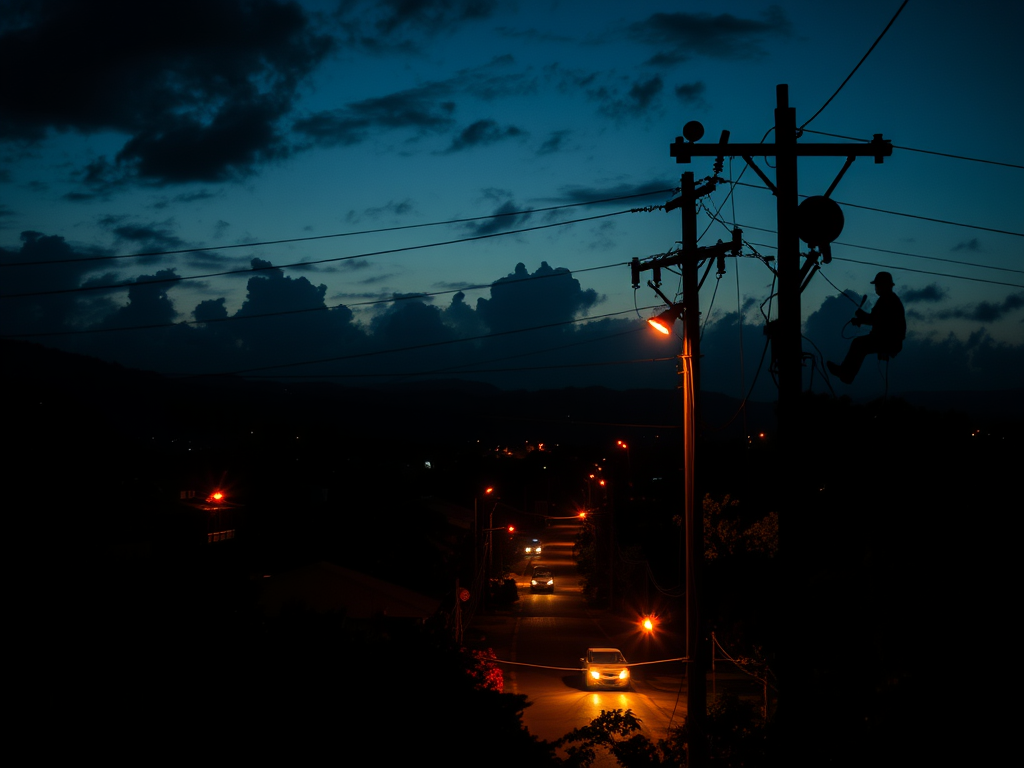

Puerto Rico Restores Some Power After Blackout

More than a day after a widespread blackout swept across Puerto Rico, a significant portion of the island remains without power. As of Thursday afternoon, over 40 percent of the island’s 1.4 million utility customers were still experiencing outages, following a failure that knocked every operational power plant offline and plunged the entire territory into darkness.
Officials indicated that full restoration of electricity was unlikely before the early hours of Friday. Josué Colón, Puerto Rico’s top energy official, addressed the media and explained that restarting the power plants and stabilizing the system would take considerable time and effort. “We are working around the clock to bring power back, but the complexity of a full system reboot means it won’t happen instantly,” he said.
Governor Jenniffer González-Colón echoed those concerns but remained cautiously optimistic. Speaking Thursday afternoon, she stated, “We expect that the majority of residents will have their power restored today.” She added that while one of the power plants had sustained serious damage, recovery efforts were progressing and full service should be reestablished by Friday.

According to Luma Energy — the private company responsible for Puerto Rico’s power transmission — approximately 844,000 customers, or about 57.5 percent of the total, had electricity again by 2 p.m. Thursday. Luma clarified that “customers” include not just individual homes but also apartment complexes, commercial buildings, public institutions, and government offices.
Some essential services have already been brought back online, including major hospitals and the island’s airports — such as the Luis Muñoz Marín International Airport in San Juan, Puerto Rico’s capital and busiest air hub.
The blackout was reportedly triggered by a cascade of malfunctions within the power transmission infrastructure. Luma officials said they had yet to pinpoint the exact cause but acknowledged the situation stemmed from multiple failures. The company requested a 72-hour window to conduct a full investigation and determine what went wrong.

Early assessments suggest the outage may have involved a failure in a safety mechanism designed to isolate malfunctions and prevent them from impacting the entire grid. Instead of containing the problem to a single power line, the breakdown appeared to ripple through the system unchecked. There is also speculation that excessive vegetation — specifically, overgrowth encroaching on a transmission line in western Puerto Rico — may have played a role.
González-Colón criticized Luma’s vegetation management efforts, reminding the public that the company is obligated to conduct aerial inspections to prevent such overgrowth from interfering with transmission lines. While Luma insisted it had followed these protocols, it did not specify when the affected line had last been surveyed.
The governor also raised concerns about whether the electrical grid can accommodate increased demand during peak periods, such as public holidays. Notably, the most recent outage occurred during Holy Week — a time when many Puerto Ricans take time off and electricity consumption typically rises. A similar incident happened on New Year’s Eve, raising further questions about the system’s capacity and resilience.
Governor González-Colón estimated that Puerto Rico loses approximately $230 million per day when electricity is unavailable. The economic toll is immense, affecting businesses, tourism, healthcare, and daily life for residents already coping with years of infrastructural instability.

Local residents, meanwhile, are expressing deep skepticism toward official statements and promises. Hemilett Pérez, 48, has lived through countless blackouts and says her trust in the system has eroded completely. “It’s hard to know what’s real anymore,” she said. “You hear the same reassurances every time, and yet the outages just keep coming.”
Reflecting on Puerto Rico’s prolonged struggle with electricity, Pérez grew emotional. “I used to believe this was the Island of Enchantment, a true paradise,” she said. “But Hurricane Maria changed everything. It tore the veil off and exposed all the cracks in our infrastructure. Since then, it’s just been one crisis after another. There’s no clear path forward.”
Her frustrations mirror those of countless Puerto Ricans who have grown increasingly disillusioned with the state of the power grid, particularly since the devastation caused by Hurricane Maria in 2017. That storm left the entire island without power for months and exposed long-standing vulnerabilities in its electrical system.
Luma Energy has been at the center of criticism for much of the last three years. The company assumed control of Puerto Rico’s power transmission and distribution in mid-2021 as part of a broader effort to modernize and stabilize the energy infrastructure. However, its performance has been marred by frequent outages, slow response times, and a perceived lack of transparency.
Governor González-Colón was elected in part due to her strong opposition to Luma’s continued management of the grid. During her campaign, she vowed to terminate the company’s contract and explore alternative solutions for Puerto Rico’s power system. The recent blackout has only intensified those calls.
Despite mounting pressure, Luma insists it is making progress and working diligently to identify the source of the latest outage. A spokesperson for the company stated, “Our crews are fully mobilized. We understand the hardship this has caused, and we are committed to restoring service as safely and quickly as possible.”
Still, the broader issue of grid reliability remains unresolved. Energy experts have long warned that Puerto Rico’s power infrastructure — much of it outdated and poorly maintained — is vulnerable to both natural disasters and internal failures. Without major investment and reform, they say, rolling blackouts and complete outages will continue to threaten the island’s economy and quality of life.

Some progress has been made toward building a more resilient energy future. The government has pledged to increase the share of renewables in Puerto Rico’s energy mix, targeting 100 percent by 2050. But efforts to transition away from fossil fuels have been slow, hampered by political disagreements, regulatory hurdles, and logistical challenges.
In the meantime, residents like Hemilett Pérez are left to cope with the immediate consequences of each new outage — from spoiled food and disrupted medical treatments to cancelled plans and heightened anxiety.
“We’re tired,” she said. “We just want a basic sense of stability. Electricity shouldn’t be a luxury.”
As of Thursday evening, restoration efforts were still underway. Power crews continued working into the night, racing to bring the remaining households and institutions back online. Whether Friday’s deadline will be met remains to be seen — and whether the underlying issues that led to the blackout will be effectively addressed is an even larger, looming question.
For now, Puerto Rico remains in a familiar state of waiting — for answers, for solutions, and for a power grid that lives up to the island’s needs.




Leave a Reply