

Buy or Wait? Americans Wrestle With How Tariffs Will Affect Their Shopping.

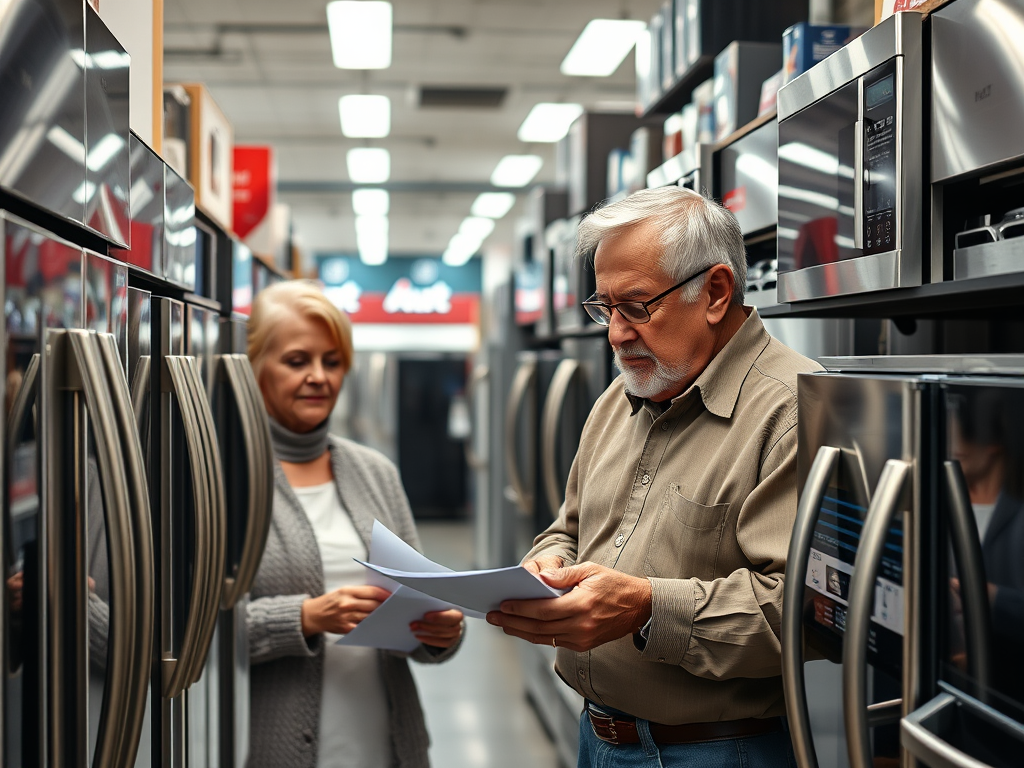
Charlene and Phil Willingham had long considered updating their aging kitchen appliances — a stove, refrigerator, microwave, and dishwasher that had served them faithfully for two decades. But it wasn’t until news of impending tariffs hit the headlines that the retired couple from suburban Chicago felt a real sense of urgency. On a brisk Friday morning, they found themselves navigating the aisles of Abt Electronics in Glenview, Illinois, checking off items on their long shopping list.
“We thought we had more time,” said 64-year-old Ms. Willingham as she surveyed rows of stainless steel appliances. “But once the tariffs were announced, it felt like a clock started ticking. We decided to act before prices climb.”

Their decision mirrors the sentiment of many across the country who, faced with the uncertainty of sweeping tariffs imposed by the Trump administration, are reevaluating their spending priorities. Over the course of a weekend, interviews with dozens of shoppers at grocery stores, electronics retailers, car dealerships, and warehouse clubs revealed a shared thread of anxiety — and, in some cases, action.
“I wasn’t planning to buy anything big this week,” said Shali Santos, 28, after filling her cart at a Costco in Marina del Rey, California, with bulk purchases of soap, bottled water, and mouthwash. “But the way everyone was talking about price hikes and shortages — I just thought I’d better get ahead of it.”
Many Americans, like Santos, are buying more than usual, stocking up on essentials or making major purchases earlier than planned. The fear is that if they wait, they’ll end up paying more — not just for luxury items, but for the basics.
Still, not everyone is making changes. Some shoppers expressed calm and confidence in the president’s trade strategy, believing the economic shakeup would be temporary and ultimately beneficial.

“I think it’s going to work out,” said Gregg Harris, a 61-year-old shopping for groceries at a Walmart in Nashville. “Prices might go up for a while, but we’ll recover. It’s about playing the long game.”
Yet beneath these varying opinions lies a common thread of uncertainty. The tariffs, which include a minimum 10% surcharge on most imported goods and steeper rates for imports from specific countries, left many unsure of the real-life implications. Which products will be hit the hardest? How soon will prices rise? Is it worth taking on additional expenses now to save money in the future?
“I like that he’s doing something different,” said Mitchell Kwapick, 28, while browsing birthday gifts for his nephew at a Target in suburban Milwaukee. “But honestly, it’s hard not to feel a little nervous about what’s coming next.”

Indeed, the market reacted swiftly and harshly to the news. Global indexes dropped, retirement portfolios took a hit, and economic analysts warned that businesses were likely to pass the costs of tariffs on to consumers. Supporters of the policy argued that the long-term gain — bringing manufacturing jobs back to the U.S. — justified short-term discomfort. Critics, however, painted a more pessimistic picture, predicting disruption and inflation.
In Glenview, Illinois, Laura Papa, a 44-year-old accountant and supporter of Kamala Harris, echoed those concerns. “We were planning to wait until summer to upgrade our wall oven and fridge,” she said while shopping with her family at Abt Electronics. “But then this mess happened. I told my husband, ‘Let’s just do it now, before the prices go up.’”
Papa believes the tariffs will do more harm than good. “It’s going to shake up the economy in ways we can’t fully predict. If you’re thinking about buying something, now’s the time.”
Back in California, Tamela Plaine, 48, who also voted for Harris, had similar concerns. Her fear of future price hikes actually dates back to the 2016 election, when she rushed to buy a Hyundai SUV before Trump took office. Last week’s tariff announcement pushed her to make another Costco run, stocking up on essentials once again.

But this time, she said, her ability to act was more constrained. “I walked into Costco thinking I should load up on everything — but when you’re living paycheck to paycheck, it’s just not realistic.”
Plaine admitted the stress had been building. “It’s been keeping me up at night. I try to stay calm, but when you’re constantly doing mental math about what you can and can’t afford, it’s exhausting.”
For others, particularly Trump supporters, the atmosphere was far less tense.
“I think the tariffs are a good thing,” said Dixon Witherspoon, 66, as he browsed for a replacement oven lightbulb at Target in Nashville. “We’ve gotten too comfortable relying on cheap goods from abroad. Short-term pain, sure. But in the long run, it’s what we need.”

A retired insurance executive, Witherspoon acknowledged that his investment portfolio had suffered losses in recent days. Still, he insisted the policy would lead to greater economic independence for the United States. “We need to stop thinking only in terms of quarterly gains. Sometimes you’ve got to take the hit now to build something stronger for the future.”
In Milwaukee, J.J. Kennedy, 45, was similarly unfazed. While shopping for keyboards at Best Buy, the owner of a small architectural design firm admitted the tariffs had introduced uncertainty in the construction industry — particularly in terms of new housing prices — but shrugged it off.
“Inventory is so low around here, people are just going to pay whatever it takes,” he said.
Across the country, however, many shoppers expressed concern that tariffs were simply another burden in an already difficult economy. Even before price increases began to take effect, the announcements stirred anxiety and triggered emotional reactions — especially as retirement accounts and savings portfolios took a hit.

“Everybody is feeling this, one way or another,” said Alonzo Beyene, a Miami-based tech business owner. “My stocks have dipped, my mom’s pension is shrinking, and even my 401(k) is down. You can’t escape it.”
In Milwaukee, retiree Juanita Norris shared a similar experience. “My retirement account lost $8,000 in two days,” she said. “That’s money I was going to use to help my kids buy a car. But now, even that might have to wait.”
Back at the appliance store in Illinois, Charlene and Phil Willingham stood before a gleaming six-burner stove, weighing their options. Though both lifelong Democrats, they were less focused on politics in that moment and more concerned about financial stability.
“I just don’t see how these tariffs help regular people like us,” Ms. Willingham said quietly. “I just hope things get settled before everything gets worse.”
For now, many Americans are caught in that same in-between space — unsure whether to act or wait, caught between fear and hope, trying to make the best decisions for themselves and their families in an economic climate that feels anything but predictable.




Leave a Reply