

Polls Close in Wisconsin’s Key Court Contest

As polling stations closed across Wisconsin on Tuesday evening, election officials continued tallying votes in a high-stakes race for control of the State Supreme Court—an election with nearly $100 million in spending at stake.
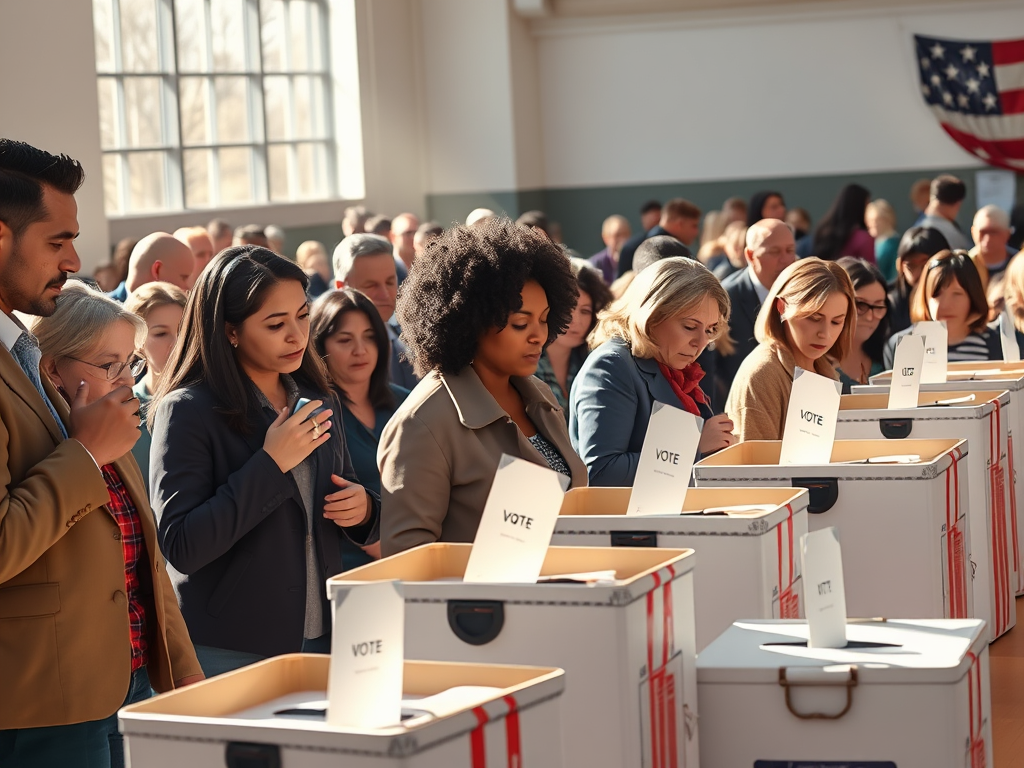
Throughout the day, polling sites experienced a steady flow of voters, a reflection of the immense interest in this contest, which will determine the ideological balance of Wisconsin’s highest court. The significance of the race extended far beyond the state’s borders, drawing national attention. Early voting had already surpassed 600,000 ballots, leading officials to anticipate a total turnout exceeding two million.
By late Tuesday, officials in Milwaukee reported that the unexpectedly high voter participation had resulted in ballot shortages. Efforts were swiftly made to replenish supplies and ensure all voters had the opportunity to cast their ballots.

Elon Musk, the billionaire entrepreneur and advisor to the White House, has played an outsized role in this election, investing millions in advertising and canvassing. His involvement has helped make this judicial race the most expensive of its kind in American history. Musk, who wields significant influence in President Trump’s administration, has sparked controversy among Wisconsin voters. Many expressed their frustration, arguing that he should refrain from interfering in state affairs.
“Do you see the look on my face?” remarked Lydia Vela, a 54-year-old banker, as she grimaced upon hearing Musk’s name. “He’s terrifying.”
A staunch Democrat, Vela was backing Judge Susan Crawford, the liberal candidate in the race, against her conservative opponent, Brad Schimel. She viewed a Crawford victory as a repudiation of billionaire meddling in local politics. While the Supreme Court race is officially nonpartisan, most voters were well aware of the candidates’ ideological leanings and political alliances.
Musk, meanwhile, continued to escalate his involvement in the election. On Tuesday, his super PAC announced on his social media platform that it would offer $50 to anyone who posted a photo of a Wisconsin resident outside a polling station.
Beyond the Supreme Court battle, Wisconsin voters also weighed in on numerous local issues.
In Mount Pleasant, dozens of voters passed through a Lutheran church serving as a polling site. Many noted that their ballots contained more than just the Supreme Court race. Among the key issues was a closely watched referendum on increasing funding for Racine’s public schools, one of several similar measures appearing on ballots across the state. Another proposed amendment sought to enshrine voter ID requirements into Wisconsin’s Constitution.
Both Judge Crawford and Judge Schimel cast their votes early Tuesday morning. At a senior living facility on Madison’s far west side, Judge Crawford completed her ballot, fed it into the voting machine, and then made an additional decision: choosing a voting sticker. She opted for the one that read “Every Vote Counts,” bypassing the standard “I Voted” option, and affixed it to her jacket lapel.

“I think kids design these,” she observed. “It’s a nice touch.”
Many Wisconsin voters—across party lines—expressed growing dissatisfaction with the increasing politicization of the state’s Supreme Court. Currently, the court leans liberal by a narrow margin.
James Wampole, a 61-year-old truck driver, said that although he supported Trump in the presidential election due to his tough stance on immigration and economic policies, he chose to support Judge Crawford in the Supreme Court race. “She just seems to have a good head on her shoulders,” he said.
Scott Korslin, 47, a retired Navy veteran who runs his own delivery business, has consistently voted Republican and backed Trump in the last election. Trump narrowly won Wisconsin in 2024 by less than a percentage point but carried Racine County by a seven-point margin over Vice President Kamala Harris.
While Korslin acknowledged his ideological differences with Judge Crawford—especially regarding her stance on abortion rights—he ultimately cast his vote for Judge Schimel. His primary concern was reducing the size and reach of the federal government, but he was apprehensive about the current administration’s approach.
“I think they should use a scalpel instead of an ax,” he said, referring to government budget cuts.


Frustration with the judicial system and the broader political landscape was a common theme among voters.
“It’s become too partisan, too extreme on both sides,” Korslin lamented. “People keep drifting further and further from the center.”
Danny Christoforos, 60, who manages a restaurant kitchen, was among those who left the polling station after voting for Judge Crawford.
In the presidential election last November, Christoforos had been so dissatisfied with the candidates that he wrote in his own name on the ballot. Now, he expressed dismay over the role of money in politics and criticized Musk’s financial influence in the Wisconsin Supreme Court race.
“He has no business here,” Christoforos said. “He’s an outsider, and he should stay out of it.”




Leave a Reply