

How Trump Supercharged Distrust, Driving U.S. Allies Away

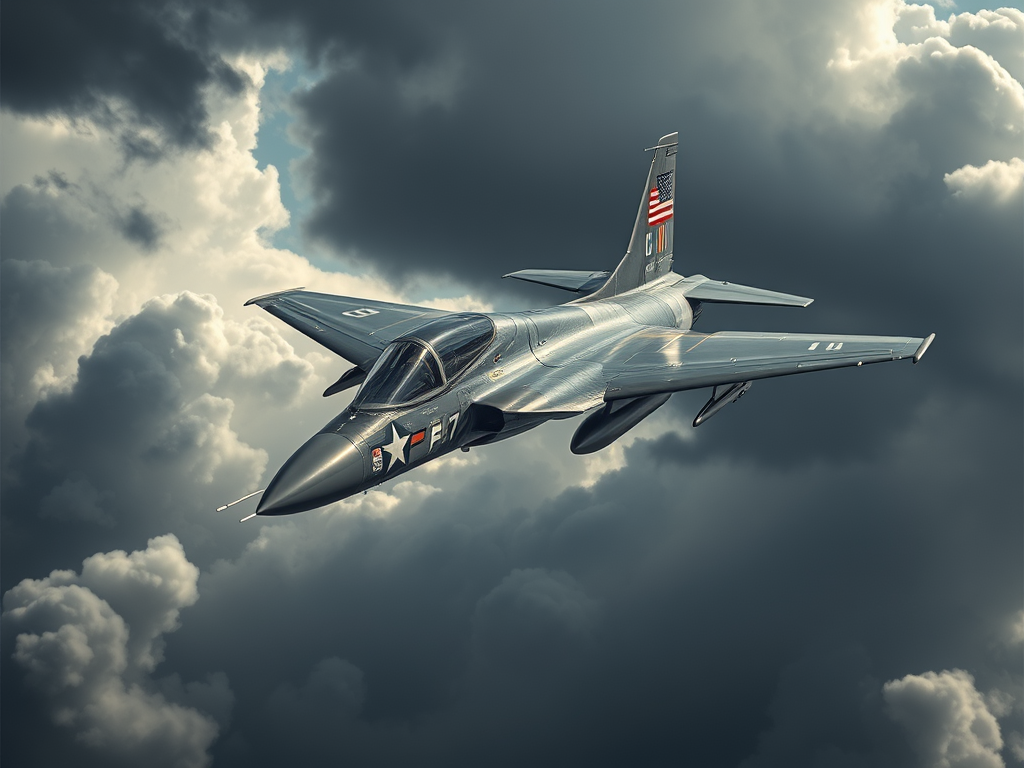
The F-35, a fifth-generation fighter jet, was developed through a collaborative effort among eight nations, exemplifying a model of international cooperation. However, when President Trump introduced the sixth-generation F-47, he highlighted its advanced capabilities while making it clear that versions sold to allied nations would be intentionally downgraded.
His reasoning? As Trump stated last week, “because someday, maybe they’re not our allies.”
For many nations closely aligned with the United States, this remark reinforced a growing concern: America is no longer a reliable partner. Even those not yet directly affected can see the broader implications as Trump undermines alliances, disrupts economic relationships, and even threatens national sovereignty.
At present, these countries are engaged in damage control, trying to mitigate the impact of Trump’s policies, including a sweeping round of tariffs expected in April. At the same time, they are recalibrating their long-term strategies, preparing for the possibility that U.S. pressure and unpredictability will remain a fixture in international relations. Many are taking steps to assert greater independence.
Some examples illustrate this shift:
- Canada recently finalized a $4.2 billion agreement with Australia to develop advanced radar systems and has entered discussions about participating in the European Union’s military expansion.
- Portugal and several NATO member states are reconsidering their planned F-35 purchases, citing concerns over American control of critical components and software.
- After years of stagnation, negotiations between the European Union and India for a free trade and technology agreement have suddenly gained momentum.
- Brazil has significantly increased trade with China, opting to conduct transactions in China’s currency rather than the U.S. dollar.
- In nations such as Poland, South Korea, and Australia, debates about acquiring or securing access to nuclear weapons have become more frequent.
Some degree of decoupling from the United States was already underway as other nations grew wealthier, more capable, and less inclined to see American dominance as a permanent fixture. However, Trump’s return to power has dramatically accelerated this process.
History and psychology offer insights into why this is happening. Social scientists studying international relations emphasize that few forces shape global politics as profoundly as distrust. The Israeli-Palestinian conflict has been paralyzed by it for decades. Cold War tensions between the U.S. and the Soviet Union were sustained by mutual suspicion.

Realist scholars argue that trust in international relations should always be approached with skepticism since placing faith in another nation’s goodwill carries inherent risks. But Trump has gone beyond merely fostering cautious skepticism—his overt distrust of allies, rooted in his zero-sum worldview that sees any foreign gain as an American loss, has been met with reciprocal suspicion. The result is a classic “distrust spiral.” Studies show that when one party perceives another as untrustworthy, it becomes more likely to break agreements, reinforcing the other side’s own lack of trust, leading to further disengagement or hostility.
“Trust is fragile,” wrote Paul Slovic, a psychologist at the University of Oregon, in a landmark 1993 study on risk, trust, and democracy. “It is typically created rather slowly, but it can be destroyed in an instant—by a single mishap or mistake.”
In Trump’s case, allies argue that this is not about isolated incidents but a sustained assault on trust.

His imposition of tariffs on Mexican and Canadian imports—despite having signed a North American trade agreement in his first term—shocked America’s closest neighbors. His threats to annex Canada as an American state and to deploy U.S. military forces into Mexico to combat drug cartels were perceived as brazen violations of sovereignty, reminiscent of his past demands to acquire Greenland and the Panama Canal. His claims that Ukraine bears responsibility for the war initiated by Russia have further alienated allies, forcing them to reconsider whether the United States remains committed to democracy or is shifting toward accommodating autocrats.
Increasingly, foreign governments are concluding that while some of Trump’s more extravagant proposals—such as transforming Gaza into a Middle Eastern tourist hub—may be unrealistic, the broader trajectory of U.S. policy under his leadership is clear: the global order is shifting from a framework of cooperation to one resembling a high-stakes power struggle.
Perhaps no country has been more taken aback than Canada. Despite its military disparity with the U.S., the two nations have shared the world’s largest undefended border—a testament to Canada’s longstanding trust in American stability. Now, that trust has eroded.
Canadian Prime Minister Mark Carney acknowledged the shift last Thursday, declaring that the traditional U.S.-Canada relationship is “over.”

“Trump has shattered the fundamental assumption in Canadian foreign policy that the U.S. is inherently reliable,” said Brian Rathbun, a global affairs professor at the University of Toronto. “That deeply undermines Canada’s core interests in trade and security, prompting it to seek alternative partnerships.”
Canada is now experiencing a surge in economic nationalism, with the “Buy Canadian” movement urging citizens to avoid American goods and investments. Additionally, travel cancellations for U.S. vacations are increasing.
More significantly, Trump’s policies have united Canadians around an issue that was previously divisive: reducing dependence on the U.S. by investing in infrastructure that expands trade routes eastward and westward, rather than solely north-south, thereby strengthening economic ties with Asia and Europe.

Europe is further along in its diversification efforts. Following the U.S. election, the European Union finalized a trade agreement with South American nations, establishing one of the world’s largest trading blocs. The EU has also deepened economic ties with India, South Africa, South Korea, and Mexico.
Japan, historically America’s strongest ally in Asia, has likewise been seeking alternative markets, focusing on rapidly growing economies like Vietnam.
“There is an increasing awareness in Japan that we need to diversify our investment portfolio,” said Ken Jimbo, a professor of international politics and security at Keio University in Tokyo. Looking ahead, he added, “we must adjust our expectations regarding the U.S. alliance.”
On the military front, reducing dependence on the United States is proving more challenging, particularly in Asia, where no equivalent to NATO exists. American security assurances have, in some ways, limited the military development of allied nations such as Japan, South Korea, and the Philippines.

On Friday, U.S. Defense Secretary Pete Hegseth visited Manila, pledging to “prioritize and shift focus to this region.” Yet many of America’s Asian allies are increasingly forging independent security agreements, allowing troops from allied nations to operate within their territories and forming coalitions to counter Chinese influence without relying solely on the U.S.
Europe, too, remains years away from achieving full military autonomy, given its dependence on U.S. weapons and defense technology. However, in response to the Trump administration’s tariffs, hostile rhetoric, and indifference—exemplified by leaked messages in which Hegseth dismissed Europe as “pathetic”—the EU recently announced a significant increase in defense funding, including a €150 billion loan program to bolster military investment.
Furthermore, the EU has intensified security cooperation with non-member states such as the UK and Norway, particularly concerning support for Ukraine and broader defense initiatives.
For some nations, even these steps are insufficient. Polish Prime Minister Donald Tusk told Parliament in March that Poland would explore acquiring nuclear weapons, expressing concerns that Trump might not fully uphold NATO obligations.
“This is a race for security,” Tusk declared.
Similarly, South Korean Foreign Minister Cho Tae-yul told the National Assembly in February that while nuclear armament was “not on the table, that doesn’t mean it’s off the table either.” Analysts estimate that both South Korea and Japan could develop nuclear capabilities within two months if necessary.


Bilihari Kausikan, a former Singaporean diplomat, suggests that while a degree of skepticism toward the U.S. has long existed in Asia—particularly since the Vietnam War—Trump’s policies may ultimately lead to a more diversified world order, reducing America’s dominance.
However, at present, distrust continues to spread. Experts warn that rebuilding confidence will require years of diplomatic effort and substantial investment in repairing alliances.
“Trust takes years to build and only moments to destroy,” observed Deborah Welch Larson, a political scientist at UCLA who has extensively studied the role of mistrust in the Cold War., “Mistrust of the United States’ intentions and motives is growing day by day.”


Leave a Reply