

Drones, Mines and Snipers: Ukraine’s Front Line Is a World Away from Peace Talks

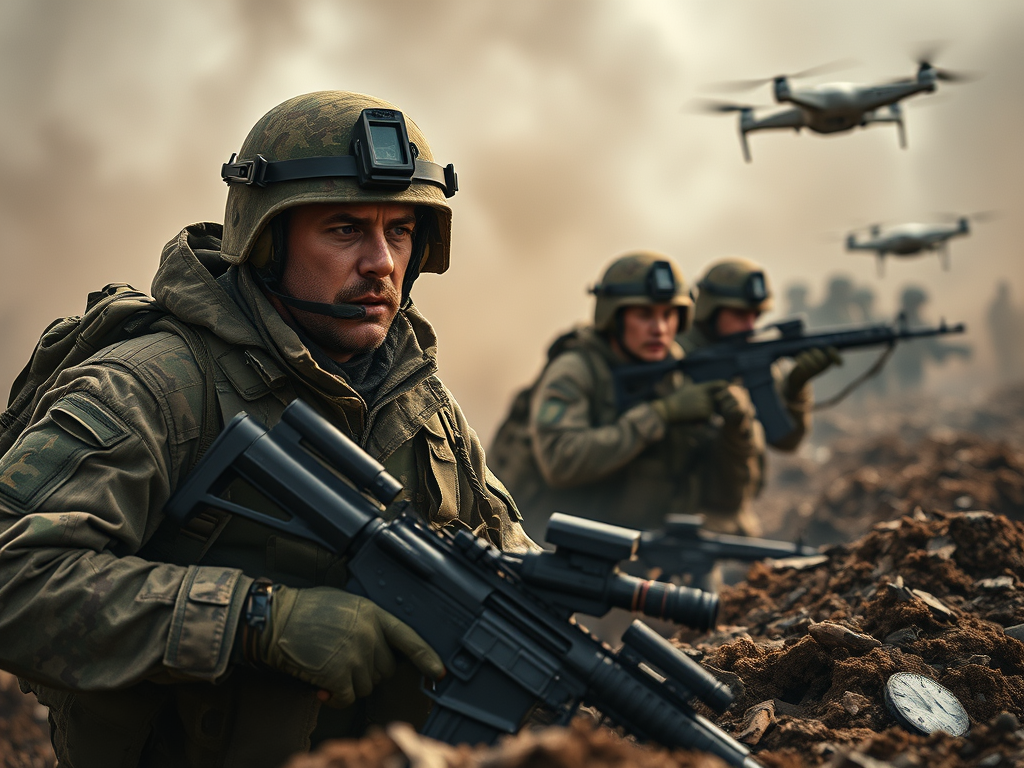
Under constant threat from drones, targeted by snipers, and encircled by minefields, soldiers on the Ukrainian frontlines cannot afford even the slightest lapse in focus. The intensity of the battlefield demands unwavering vigilance, as any moment of distraction could prove fatal.
This is precisely why Colonel Dmytro Palisa, commander of Ukraine’s 33rd Mechanized Brigade, instructs his troops to disregard any rumors about a potential ceasefire.

“The moment they begin to believe in the possibility of peace, they let their guard down, start overanalyzing, and view the situation through an overly optimistic lens,” he explained during an interview from his command post in eastern Ukraine. “That cannot happen. We keep firing until the order comes to stop.”
While diplomats and European leaders, miles away from the battlefield, deliberate over potential peace negotiations and their enforcement, Ukraine and Russia remain embroiled in some of the war’s fiercest clashes. The brutal engagements raging across the frontlines are, in part, a final bid to secure territorial advantages ahead of diplomatic discussions, which the Trump administration asserts are progressing.

However, the ongoing bloodshed also underscores the widespread skepticism surrounding these talks. Even if minor steps—such as a temporary cessation of hostilities in the Black Sea—are achieved, few Ukrainians, whether soldiers or civilians, believe such measures will bring lasting peace. Both nations continue their struggle to secure advantageous positions for future confrontations.
Ukrainian President Volodymyr Zelensky warns that Russia is preparing to launch fresh offensives, seeking to exert maximum pressure on Ukraine before dictating terms from a position of power.
Kyiv is determined to prevent Moscow from gaining such leverage.

Despite being outnumbered and outgunned—just as they have been since Russia’s full-scale invasion over three years ago—Ukrainian forces have managed to slow Russian advances significantly this year. Now, they are initiating localized counterattacks to reclaim lost ground.
Military experts monitoring the conflict confirm that Russia’s offensives have stagnated, with the pace of advancement nearly grinding to a halt. Nevertheless, Russian forces persist in their assaults along strategic sections of the front.
Adapting to a War That Keeps Changing
Interviews with Ukrainian troops and military leaders reveal several factors contributing to their resilience: evolving defensive tactics incorporating drones more effectively, rapid responses to emerging threats, indications of Russian fatigue, and improved morale following the appointment of a new ground forces commander, General Mykhailo Drapatyi.

“This war never stays the same,” Colonel Palisa noted. “Every day, we must adapt. Before we sleep at night, we are already planning alternative strategies for the next day.”
Ukraine’s withdrawal from most of Russia’s Kursk region earlier this month is set to reshape the battlefield once again. Tens of thousands of Russian troops, previously engaged in reclaiming territory there, are now available for redeployment.
Colonel Oleh Hrudzevych, deputy commander of Ukraine’s 43rd Mechanized Brigade, acknowledged the significance of the Kursk campaign in drawing Russian firepower away from other fronts.
He pointed out that while battles raged in Kursk, the number of aerial bomb attacks in the Kupiansk sector—on the northern edge of the eastern front—dropped by 50 percent.

For now, Russian tactics in the region have been reduced to small-scale, largely ineffective assaults. However, Ukrainian commanders anticipate that Moscow will redirect some forces to regain momentum in key areas.
Captain Yurii Fedorenko, commander of the 429th Achilles Unmanned Systems Regiment, described the primary objective in the northeast as preventing Russian troops from expanding their foothold along the Oskil River.
Because Ukrainian drones and artillery make it impossible for Russian forces to build pontoon bridges, they have resorted to using small boats to transport soldiers and equipment under the cover of poor weather. Yet despite these efforts, they have struggled to advance.
“For nearly a month, they have failed to expand their position,” Captain Fedorenko explained. “They pay a heavy price just to hold onto the ground they already occupy.”
Drone footage provided by the Ukrainian military supports this account. In one instance, a flyover of a narrow, 200-meter-long tree line revealed approximately 190 Russian casualties.

Fighting Across Multiple Fronts
Hundreds of miles away, along the Dnipro River in the south, Russian forces are searching for vulnerabilities in Ukraine’s defenses.
Two months ago, they launched a series of cross-river attacks, utilizing 15 to 20 boats per assault. These attempts were unsuccessful. Now, they have shifted tactics, conducting smaller probing attacks in an effort to push north toward the city of Zaporizhzhia, which remains under Ukrainian control.
President Vladimir Putin and other Russian officials have openly stated their goal: full control over Zaporizhzhia and its surrounding regions. However, these plans were postponed when Russian forces were redirected to Kursk, according to Senior Sergeant Andrii Klymenko, a veteran of the battles in this sector. His claim is corroborated by independent military analysts monitoring Russian troop movements.
“Now, they’re trying to revive their strategy,” he observed.
A War of Innovation and Adaptation
Some of the fiercest fighting remains concentrated in the rugged terrain and devastated industrial centers of the Donbas region. Despite three years of war, Russia has failed to fully capture the provinces of Donetsk and Luhansk—two key objectives.
Colonel Palisa commands a defensive sector south of Pokrovsk, a city where Russian forces made significant progress last year. However, Ukrainian drone warfare and defensive ingenuity have halted further Russian gains.
“In the past three to four weeks, the enemy has not advanced a single meter in this area,” he said. “Right now, the situation is stable.”
Still, new challenges continue to emerge. Russian forces have begun deploying drones connected via ultrathin fiber-optic cables, rendering them impervious to electronic jamming.
“When they didn’t have fiber optics, we could still maneuver,” Colonel Palisa explained. “After they introduced these drones, we lost 10 vehicles in just one week.”

The brigade has since altered its approach, drastically reducing vehicle use in favor of quad bikes, buggies, and foot patrols. Soldiers now wear cloaks that conceal their body heat from drones equipped with thermal imaging. Supply roads are shielded with netting, which Colonel Palisa says has cut successful enemy strikes by more than half. Additionally, troops now carry shotguns alongside their standard rifles—an adaptation to close-quarters drone encounters.
These modifications contribute to a battlefield aesthetic reminiscent of a ‘Mad Max’ scenario, where civilian vehicles, motorcycles, and armored transports are outfitted with makeshift cages and electronic jammers.

This blend of low-tech ingenuity and structural military reforms is Kyiv’s strategy to sustain the fight—especially as the U.S. scales back support and increasingly echoes Russian talking points in ceasefire negotiations.
On the ground, Ukrainian soldiers remain skeptical about the prospect of lasting peace. Many believe the war will continue until the cost of fighting outweighs the Kremlin’s ambitions and Ukraine secures enough strength to deter future aggression.
“We are fighting for our right to exist,” Captain Fedorenko asserted. “Americans must understand—this is not about pressuring Ukraine into some illusion of peace. Real peace is impossible when Ukraine never started this war.”




Leave a Reply