

How a Cheap Drone Punctured Chernobyl’s 40,000-Ton Shield

For 15 years, Eric Schmieman dedicated himself to constructing one of the most ambitious engineering projects in modern history—a colossal protective structure designed to contain the hazardous remnants of the Chernobyl disaster and shield the world from further radioactive contamination. This undertaking, often likened to the Great Pyramid in terms of scale and complexity, was a vital step in securing the site of the worst nuclear catastrophe ever recorded.
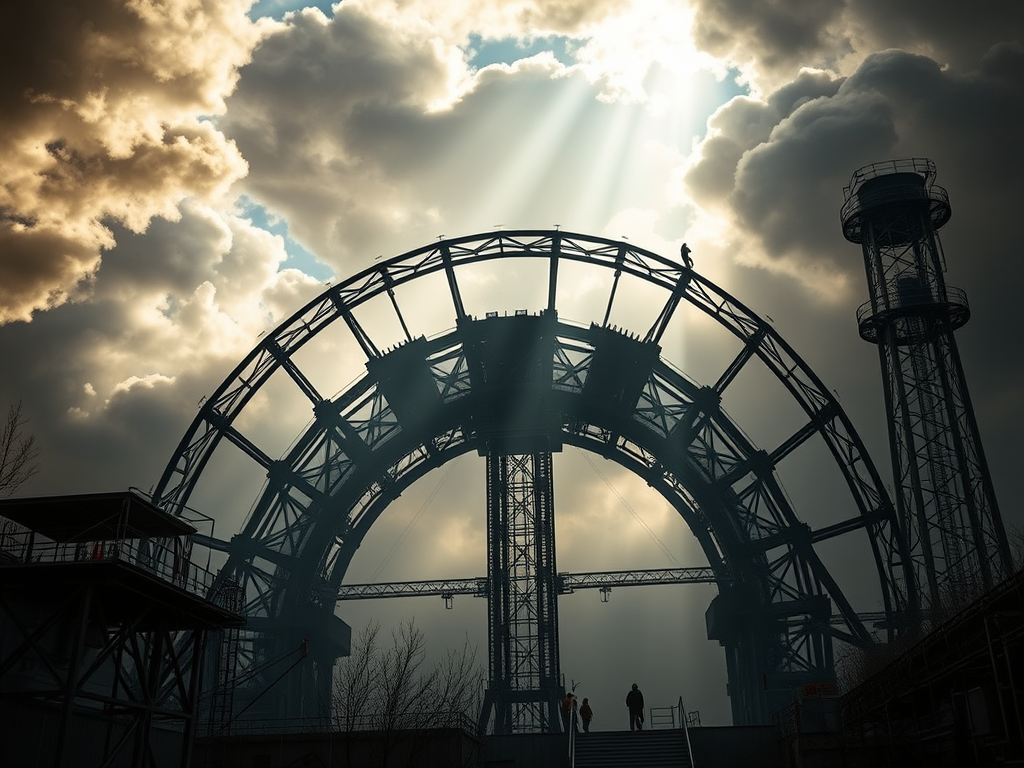
Completed in 2016, the enormous steel enclosure was carefully maneuvered into position over Reactor No. 4 using a specialized rail system. Measuring the height of a football field and weighing nearly 40,000 tons, it stands as the largest movable structure ever built. The ambitious project was a global effort, with contributions from more than 45 countries and organizations, amounting to a total cost of approximately $1.7 billion.
“We conducted extensive safety analyses, considering a wide range of potential threats,” said Schmieman, a 78-year-old retired civil engineer from Washington state who served as a senior technical advisor on the project. “We accounted for earthquakes, tornadoes, extreme winds, and even record-breaking snowfall events. What we never anticipated, however, was the possibility of deliberate attacks during wartime.”

That unforeseen risk became a reality on February 14, when a drone carrying a high-explosive warhead—believed to cost as little as $20,000—breached the structure. According to Ukrainian authorities, the attack was a deliberate strike carried out by Russian forces using a Shahed 136 drone, though the Kremlin has denied any involvement.
While the initial fire sparked by the strike was swiftly extinguished, the damage proved far more insidious. A waterproof membrane within the insulation of the arch continued to burn and smolder for nearly three weeks, said Artem Siryi, head of operations for the New Safe Confinement. Emergency crews, equipped with climbing gear, were forced to cut openings into the structure’s outer shell to locate and combat the lingering flames. To suppress the fire, they had to spray water into an enclosure explicitly designed to remain dry to prevent corrosion—an action that could have long-term consequences, according to Ukrainian officials and international experts.
By March 7, Ukrainian authorities officially declared the fire extinguished. However, by that point, nearly half of the northern section of the shield had sustained significant damage. An assessment shared by Ukraine with the International Atomic Energy Agency (IAEA) on March 13 confirmed that the fire had caused extensive destruction, impacting the northern side and, to a lesser degree, the southern section of the roof.
Despite the damage, the IAEA and Ukrainian nuclear regulators reported that radiation levels outside the Chernobyl site remained stable. However, the extent of the repairs required, their associated costs, and the timeline for restoring the structure remain uncertain.

Nuclear experts caution that repairs could span several years, potentially delaying critical plans to dismantle the damaged reactor and safely dispose of radioactive materials—a process originally scheduled to commence within the next five years. There are also concerns that corrosion could begin affecting the steel structure or that the original Soviet-era “sarcophagus” inside, which was hastily constructed nearly 40 years ago, could further deteriorate.
“The reason the global community invested so much time and money into this structure is because of the immense radiological threat still present inside,” said Shaun Burnie, a nuclear specialist with Greenpeace who inspected the site after the attack. “Creating this protective shield was an extraordinary intellectual and engineering feat—one that safeguarded not just Ukraine, but all of Europe and beyond.”

“And now,” he continued, “the Russians have literally blown a hole in it, both in the physical sense and in terms of its overall integrity.”
On Thursday, Greenpeace released a report asserting that the drone strike had significantly disrupted plans for managing the damaged reactor. The organization claimed that the protective enclosure was no longer fulfilling its intended function. Jan Vande Putte, a nuclear specialist with Greenpeace Ukraine, suggested that the only viable solution might be a complete dismantling and replacement of the shell—a sentiment echoed by both Schmieman and Siryi. The IAEA has also confirmed that the integrity of the structure has been compromised and that substantial repair efforts will be necessary.




Leave a Reply