

Syria’s Struggle to Unify Military Was Evident in Outburst of Violence

Syria’s newly appointed president has repeatedly emphasized the need to consolidate the numerous armed factions that fought to overthrow Bashar al-Assad into a single, unified national army.
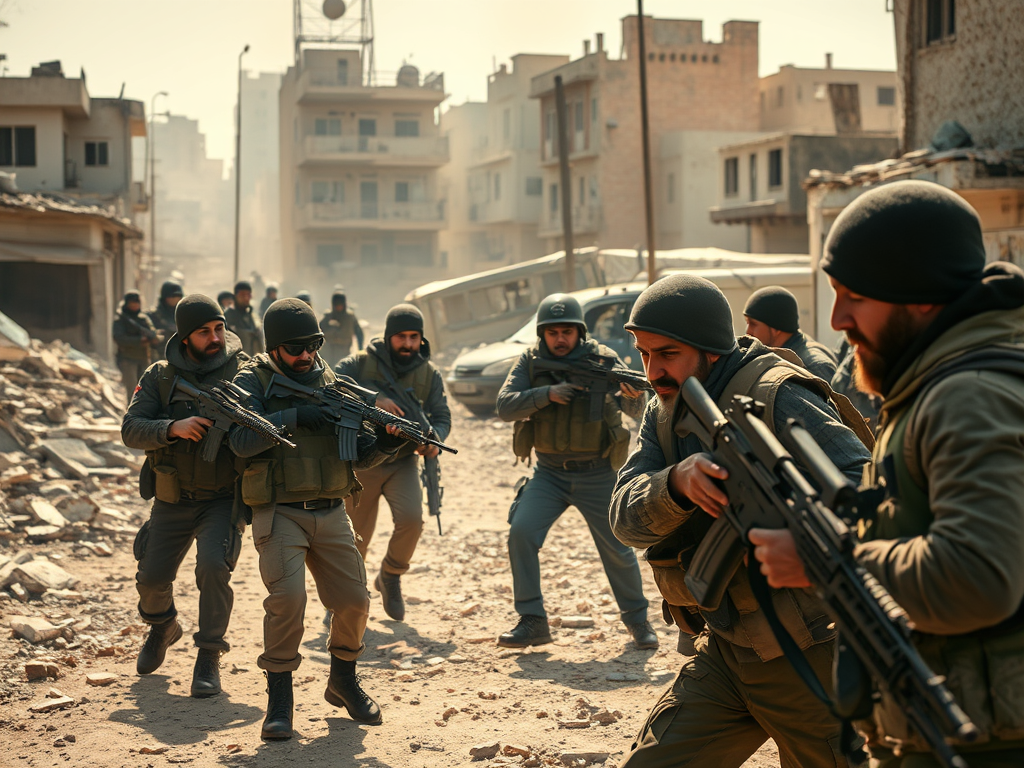
However, the recent outbreak of violence in northwestern Syria, which claimed the lives of hundreds of civilians, has highlighted just how far that objective remains. Instead of demonstrating government control, the clashes revealed its inability to rein in the forces nominally under its command or manage other militant groups, experts noted.
The violence erupted on March 6, when insurgents linked to Assad’s ousted regime launched coordinated attacks on government troops across two coastal provinces—strongholds of Syria’s Alawite minority. In response, the government mobilized its security forces, with additional armed factions and armed civilians joining the fray, according to eyewitnesses, human rights organizations, and analysts monitoring the situation.
According to these rights groups, various armed groups—some under government command and others operating independently—spread across Tartus and Latakia provinces, targeting suspected insurgents opposed to the new leadership. However, their actions extended beyond combat; they bombarded residential areas, looted and torched homes, and committed sectarian killings of Alawite civilians.
The new government, along with its security forces, is predominantly composed of members from Syria’s Sunni Muslim majority, while the primary victims of this wave of violence were Alawites, a sect associated with Shiite Islam. For decades, the Assad family, which belongs to the Alawite sect, favored its own community in military and security positions. As a result, many Sunnis associate Alawites with the old regime and its brutal suppression of Sunni communities throughout Syria’s 13-year civil war.
Given the widespread nature of the attacks, the sheer number of those involved, and the difficulty of confirming identities and affiliations, a complete picture of the events will take time to emerge. Yet, this latest violence represents the deadliest period in Syria since Assad’s removal in December, underscoring the disarray among the country’s armed factions.

The Syrian Network for Human Rights, a conflict monitoring group, reported last week that sectarian and retaliatory mass killings were primarily carried out by militias and foreign fighters affiliated with—but not formally integrated into—the new government.
The report further pointed to the government’s weak grip over its forces and affiliated militias, as well as their disregard for legal constraints, as key factors contributing to the rising civilian death toll. As hostilities escalated, the report noted, “some of these operations quickly transformed into large-scale retaliatory attacks, including mass killings and widespread looting by undisciplined armed groups.”
On Saturday, the Syrian Network for Human Rights raised its estimate of those killed since March 6 to over 1,000, many of them civilians. Meanwhile, the Syrian Observatory for Human Rights, another war-monitoring group, reported on Friday that the death toll had climbed to 1,500, with the majority being Alawite civilians.

There is no direct evidence linking senior government officials, including interim President Ahmed al-Shara, to the atrocities. The government has announced the formation of a fact-finding commission to investigate the violence and pledged to hold perpetrators accountable.
“Syria is a country governed by law,” al-Shara stated in a recent interview with Reuters. “Justice will take its course.”
He accused insurgents loyal to the Assad family, allegedly supported by an unnamed foreign power, of instigating the violence. However, he also acknowledged that “multiple factions became involved in the conflict, leading to numerous violations.” He described the clashes as having turned into “an opportunity for revenge” in the aftermath of the prolonged and bitter civil war.
That war, which claimed more than half a million lives by most estimates, saw numerous rebel groups form in opposition to Assad’s rule. Some later aligned with al-Shara’s Sunni Islamist faction in the final battle that led to Assad’s overthrow.

In late January, a coalition of rebel leaders appointed al-Shara as president. Since then, he has vowed to unify the country’s fragmented rebel factions into a single national military force. However, little over a month into his tenure, the eruption of violence in the coastal provinces has exposed the immense difficulties he faces.
“The consolidation of armed forces under state control is not a matter of choice but a fundamental necessity,” al-Shara declared at a recent national dialogue conference attended by hundreds of delegates.
Yet, the task remains daunting.
Many rebel groups fiercely defended their territories during the war and are unwilling to relinquish control. Syria’s economy has been devastated, leaving al-Shara with a bankrupt state that lacks the financial resources to build a new army. Meanwhile, international sanctions imposed on the former regime remain in effect, severely limiting the government’s ability to secure foreign aid.
As a result, the effort to merge armed groups into a national force has made little tangible progress.
“The idea of unification is largely symbolic—it’s not materializing,” said Rahaf Aldoughli, an assistant professor at Lancaster University specializing in Syria’s armed factions. “The command structure is weak.”

At the core of the new security apparatus are former fighters from Hayat Tahrir al-Sham, the Sunni Islamist group that al-Shara previously led. While these forces maintain a structured chain of command under al-Shara’s leadership, they lack the manpower to secure the entire nation.
Moreover, vast areas of Syria remain under the control of powerful factions that have yet to be integrated, including a Kurdish-led militia dominating the northeast and Druse militias that hold sway in the southeast near Damascus.
Some rebel factions allied with al-Shara have officially pledged to merge into the new military structure but have not yet done so. Most of their fighters have received no formal training or government salaries and continue to operate under their original commanders, Aldoughli explained.
Additionally, numerous independent armed groups persist, alongside civilians who took up arms for self-defense during the war.
“There has been little effort to enhance discipline or even establish a coherent framework for these factions,” said Haid Haid, a consulting fellow at Chatham House in London who researches Syria’s armed groups. “The recent events illustrate just how fragmented and untrained these forces are.”

When clashes broke out on March 6, fighters from various factions quickly became involved, each driven by different motivations. Some sought to suppress the insurgency, while others saw an opportunity for revenge.
The violence was marked by strong sectarian undertones.
Videos circulated online show fighters making derogatory remarks about Alawites, portraying their attacks as acts of vengeance.
“This is retribution,” an unidentified individual declares in one such video, which shows fighters looting and setting fire to homes believed to belong to Alawites. The New York Times verified the footage.
In recent days, the government has announced the arrest of individuals filmed committing violence against civilians. While this move signals an effort toward accountability, Haid remains skeptical about whether the government will pursue those whose crimes were not caught on camera.
“It’s unclear whether the security forces have mechanisms in place to track down those responsible and impose appropriate penalties,” he said.




Leave a Reply