
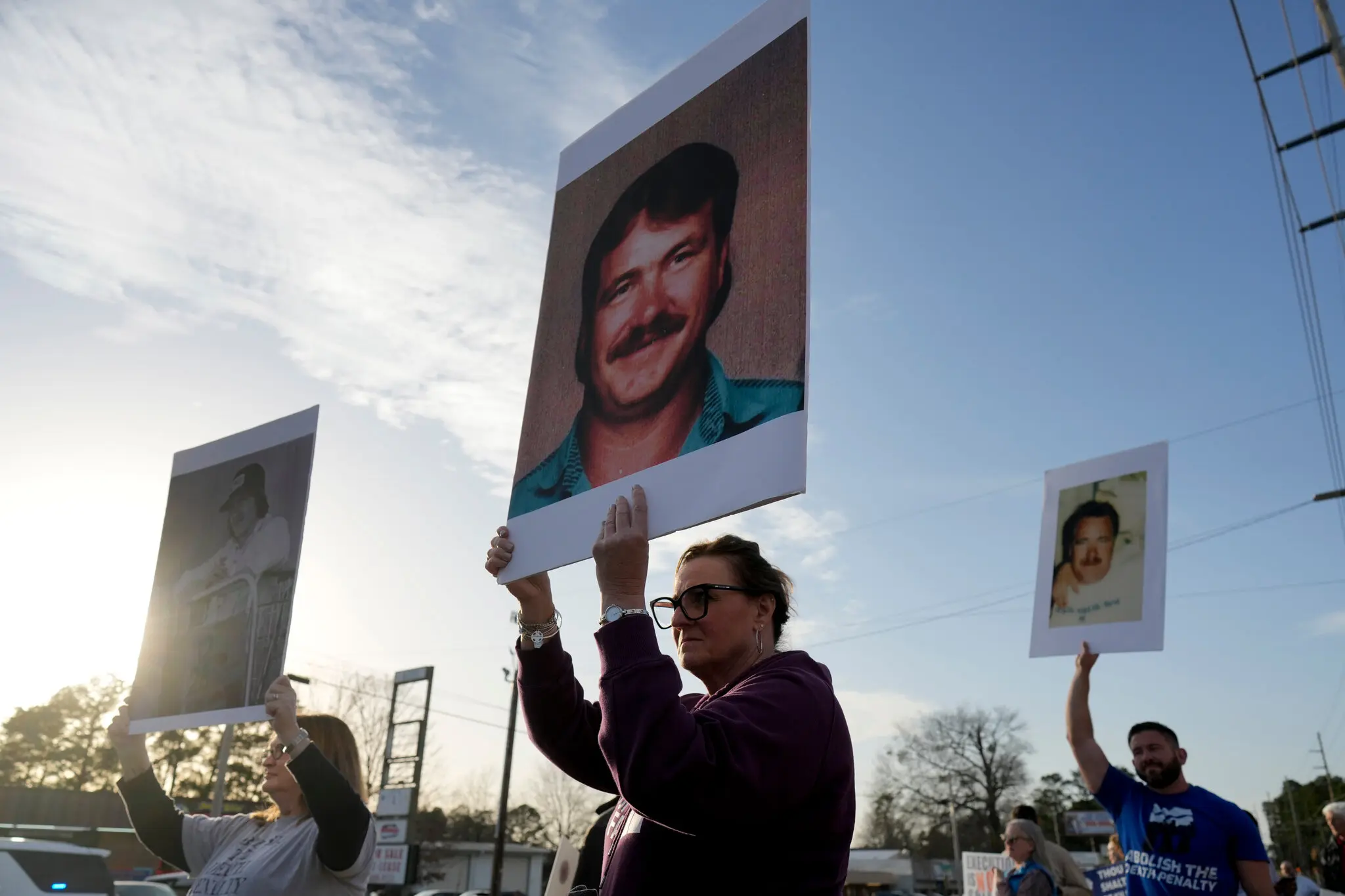

The Crack of Rifles, Then Silence: What a Firing Squad Execution Was Like

I have now observed, through glass and bars, as 11 men were executed at a South Carolina prison. Yet, none of the previous 10 prepared me for witnessing the firing squad execution of Brad Sigmon on Friday night.
I may now hold a rare distinction among American journalists—I have witnessed executions carried out by three different methods: nine by lethal injection, one by the electric chair, and now, one by firing squad. Even after 21 years, I can still hear the heavy thud of the breaker falling during that electric-chair execution.
As a journalist, you prepare for assignments. You research cases. You study the subject.
For two weeks leading up to Mr. Sigmon’s execution, knowing the method that would be used, I immersed myself in information about firing squads and the devastating impact of gunshot wounds. I examined autopsy photos of the last man executed by firing squad in the U.S., in Utah in 2010.
I also reviewed the transcript of Sigmon’s trial, reading in detail how prosecutors described his brutal crime. They recounted how, in under two minutes, he struck his ex-girlfriend’s parents nine times each in the head with a baseball bat, moving between rooms in their Greenville County home in 2001 until both were dead.
Yet, no amount of research can fully prepare you. Execution protocols are partially concealed, and some experiences defy expectation—like witnessing, for the first time, a person shot at close range.
Firing squads operate more quickly—and with far more violence—than lethal injection. The tension in the room was palpable. My pulse quickened as Mr. Sigmon’s lawyer read his final statement. Then, a hood was placed over his head, and a prison employee drew open the black curtain shielding the three volunteer executioners.
Roughly two minutes later, they fired. There was no countdown, no warning. The sudden crack of the rifles jolted me. The white target with its red bull’s-eye, positioned over his chest and standing out against his black prison jumpsuit, vanished in an instant as his body recoiled from the impact.
It brought back memories of the prisoner I saw electrocuted 21 years ago, his body convulsing under the surge of electricity.
In those brief, chaotic moments, I tried to take everything in: the digital clock on the wall to my right, Mr. Sigmon to my left, the small rectangular window through which the executioners aimed, and the witnesses in front of me.
A jagged red wound, roughly the size of a small fist, appeared where the bullets struck. His chest rose and fell a few times. Beyond the gunfire, the room remained eerily silent.
Within a minute, a doctor entered. His examination lasted about another minute. At 6:08 p.m., Mr. Sigmon was pronounced dead.
Then, we left through the same door we had entered.
Outside, the sun was setting, the sky painted in hues of pink and purple—a stark contrast to the fluorescent glare of the execution chamber, with its gray concrete walls and the rigid, metallic firing squad chair that reminded me of a 1970s doctor’s office.
The death chamber sits less than five minutes from the Department of Corrections headquarters, alongside a busy suburban highway. Every time I leave an execution, I look out the window. On one side of the road, a pasture with grazing cows stretches behind a fence; on the other, the distant razor wire of the prison looms.
Armed officers were stationed everywhere. We waited in vans outside the execution chamber—perhaps 15 minutes, though I can’t be certain. My watch, phone, and all other belongings had been confiscated for security, leaving me only with a notepad and pen.
To my right, I caught a glimpse of the narrow barred windows of South Carolina’s death row. Earlier that day, 28 inmates had been housed there. Now, there were 27.
Last August, there had been 31. After a 13-year pause in executions due to difficulties obtaining lethal injection drugs, South Carolina has resumed carrying out death sentences. Inmates can now choose between lethal injection, electrocution, or firing squad.
I witnessed Freddie Owens’ execution on September 20. He met the gaze of every witness in the room.
On November 1, I saw Richard Moore die, staring calmly at the ceiling while his lawyer—who had fought for his life for more than a decade—sobbed.
On January 31, I was there as Marion Bowman Jr. was executed. He gave his attorney a faint smile before closing his eyes, waiting for the inevitable.
I remember other executions as well—the victims’ families staring down the condemned man strapped to the gurney, a mother weeping for her son as he took his last breath, separated only by glass and bars.
Just as I will never forget the sound of the electric chair’s breaker dropping in 2004, I will never forget the crack of the rifles on Friday—or the instant that target on Mr. Sigmon’s chest disappeared. What lingers, too, is the image of Mr. Sigmon looking toward his lawyer, trying to reassure him with a few final words or gestures before the hood was pulled over his head.
I expect to return to Broad River Correctional Institution on April 11. Two more inmates have exhausted their appeals, and the State Supreme Court seems poised to schedule their executions in five-week intervals.
They will be the 12th and 13th men I have seen the state of South Carolina put to death. When that day comes, I will have witnessed more than a quarter of all executions carried out in the state since the death penalty was reinstated.




Leave a Reply