

Gene Hackman’s Smile Could Give You Shivers

When Clint Eastwood sought an actor to match him in his ruthless 1992 Western Unforgiven, he needed someone who could stand toe-to-toe with him onscreen. Eastwood required a performer with a compelling presence, someone who could instantly captivate the audience while also repelling them with equal ease. This actor didn’t need to be liked, nor would he ever seek approval. Instead, he had to dig into the darkness of his character, embodying a villain so vile that it stoked the viewer’s own bloodlust. Eastwood needed a legend capable of sending shivers down spines—he needed Gene Hackman.
Hackman, who passed away at 95, was a defining figure of New Hollywood, that brief but revolutionary era in cinema beginning with films like Bonnie and Clyde (1967), which redefined filmmaking and the stars on screen. While directors led the charge in reviving the industry, it was also a time when male actors defied the old studio system, moving away from the polished, glamorous image of the past. Hackman was one of those actors. Whereas Warren Beatty starred as the male lead in Bonnie and Clyde, Hackman’s portrayal of Buck, Clyde’s brother, marked a shift toward a raw, unpolished style.
Hackman grabs your attention the moment Buck leaps out of a car and into his brother’s arms in Bonnie and Clyde. Buck quickly joins Clyde’s gang, and Hackman’s portrayal is larger-than-life, with flailing gestures and a high-energy performance. Yet, he never overpowers the scene, instead providing a rich, full-bodied characterization that gives you a vivid sense of who Buck is without going over the top. His distinct accent and frequent smiles make Buck a surprisingly human character, which, in turn, makes his brutal end all the more jarring.

One of Hackman’s signature moves was his smile, which he used to put both his fellow characters and the audience at ease, only to pivot into something much darker. His ability to wield charm and menace simultaneously made him a masterful villain. In The Conversation (1974), for instance, Hackman’s portrayal of a surveillance expert is unnervingly subtle, with his calm demeanor only enhancing the tension. Hackman’s smile wasn’t just for warmth; it often concealed a darker truth, and his exceptional control of his characters meant you could never quite predict when that false front would drop.

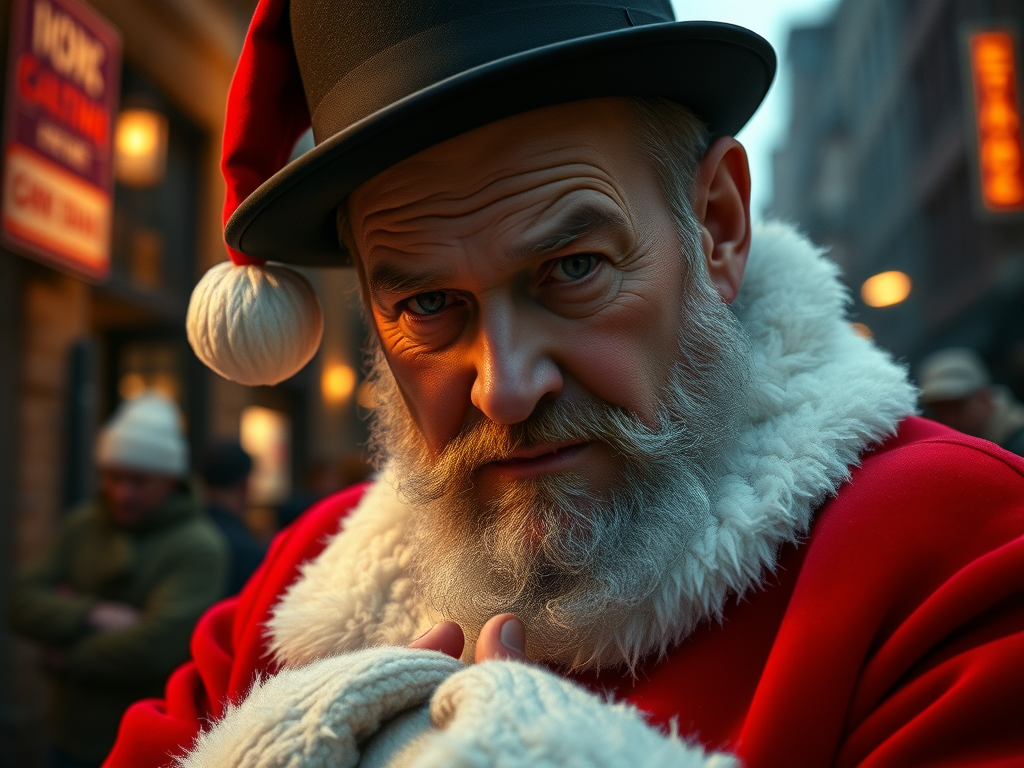
It’s oddly fitting, then, that Hackman’s breakthrough role in The French Connection (1971) saw him dressed as Santa. Playing the hard-nosed detective Popeye Doyle, Hackman’s portrayal earned him an Oscar for Best Actor. In the film’s opening, Popeye, disguised as Santa, is seen ringing a bell and chatting with kids before he suddenly springs into action, chasing a suspect through New York’s gritty streets. Once he tackles the man, Popeye brutally begins hitting him, with the blood staining his Santa sleeve as he repeatedly growls, “I wanna bust him.”
By the time Hackman starred in The French Connection, he was already a well-known name, with previous Oscar nominations for Bonnie and Clyde and I Never Sang for My Father (1970). In a 2011 GQ interview, Hackman reflected fondly on his role in I Never Sang, where he portrayed a professor grappling with his dying, tyrannical father. Though the film was far from perfect, Hackman’s nuanced performance added emotional depth to the story. But it’s his role in The Birdcage (1996), as a conservative politician who ends up dancing in drag, that remains a highlight of his range and humor.

I sometimes wonder if Hackman ever felt burdened by his unparalleled skill at portraying morally complex characters. His ability to give life to the darker side of human nature was exceptional, as seen in his turn as Sheriff Little Bill in Unforgiven. Playing a brutal, sadistic lawman in a desolate Wyoming town, Hackman’s character instigates the violent course of the film, which revolves around a group of prostitutes seeking revenge after one of their own is maimed by a customer. As the film builds, Hackman’s Little Bill combines vanity and cruelty in a performance that is chilling in its subtlety.
Hackman’s portrayal of Little Bill is a masterclass in restraint. He doesn’t have to steal scenes with flashiness; his violence is delivered with raw honesty. His Everyman persona—unremarkable in appearance yet powerful in presence—was key to his effectiveness as a villain. Little Bill was perfect for Hackman’s unique talents: a character so ordinary, yet so unforgettable, that he embodies the darkest aspects of American villainy.




Leave a Reply