
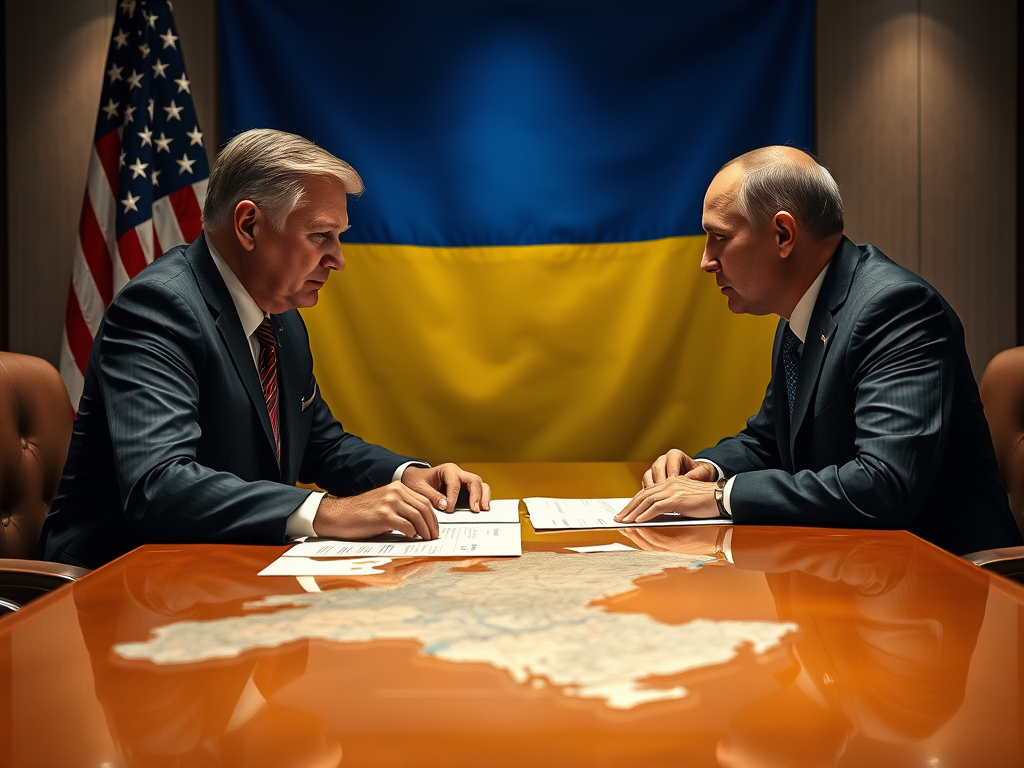
On Tuesday, the United States and Russia made surprising strides toward resetting their relationship, agreeing to collaborate on ending the Ukraine conflict, financial investments, and restoring normal diplomatic ties. The meeting between high-level officials from both nations marked a notable shift in tone after three years of American efforts to isolate Moscow over its 2022 invasion.
U.S. and Russia Pursue Partnership in a Head-Spinning Shift in Relations

Following more than four hours of talks, Secretary of State Marco Rubio announced that both parties had agreed to pursue a peace agreement for Ukraine and explore “incredible opportunities” for cooperation in both geopolitical and economic spheres.

“We weren’t just hearing each other; we were truly listening,” stated Sergey V. Lavrov, Russia’s foreign minister. “I believe the American side is starting to better understand our position.”https://svtoday.org/
This meeting, the most comprehensive discussions between the two global powers in over three years, signals a dramatic shift from the previous U.S. approach of isolating Russia. It underscores President Trump’s intention to reverse the Biden administration’s stance, which had centered on sanctions, isolation, and supplying weapons to Ukraine—actions that led to the deaths of tens of thousands of Russian soldiers.
After the talks, American officials refrained from addressing Russia’s violation of international law, alleged war crimes, or the destruction caused by Russian shelling in Ukraine. Instead, they praised Trump for attempting to end the conflict through dialogue in a manner his predecessor had not.

“For three years,” Rubio said, “no one has brought anything together like today’s meeting, because Donald Trump is the only leader who can.”
The talks demonstrated Trump’s willingness to engage Russia in ending the war—a strategy that could likely align with President Vladimir Putin’s demands—and his readiness to disregard concerns from American allies in Europe.
The meeting took place nearly a decade after Russia interfered in the 2016 election to Trump’s benefit, although during his first presidency, Trump adopted few policies favorable to Russia.
This meeting in Saudi Arabia suggests that Trump’s second term could present a different approach. In Europe and Ukraine, there are growing concerns that the U.S. and Russia might seek a peace deal without involving Kyiv or European allies.

Ukrainian President Volodymyr Zelensky strongly reacted to the meeting, announcing the postponement of his planned visit to Saudi Arabia in protest of Ukraine’s exclusion from the talks.
“It’s crucial that negotiations don’t occur behind the backs of the key parties,” Zelensky said, stressing that any decisions must not be imposed on Ukraine.
The discussions occurred less than a week after Trump’s lengthy phone call with Putin and took place at a Riyadh palace, hosted by Saudi Crown Prince Mohammed bin Salman, who has been working to boost his country’s international influence.
The American delegation included National Security Adviser Michael Waltz and Middle East envoy Steve Witkoff, both close to Trump, and Rubio. Witkoff described the talks as “positive, upbeat, and constructive.”
The Russian delegation was led by Putin’s foreign policy adviser Yuri Ushakov and Kirill Dmitriev, head of Russia’s sovereign wealth fund. Dmitriev spoke of a light-hearted atmosphere, mentioning jokes and a “very tasty” lunch. Ushakov also noted that the talks included discussions on a potential future meeting between Trump and Putin, although no details on timing were provided.
Russia appeared to cater to Trump’s interest in profits and natural resources, emphasizing the substantial financial opportunities American companies could regain in Russia, particularly in the oil sector.
Dmitriev, who had worked with Witkoff to facilitate the release of an American schoolteacher from Russian custody, mentioned the possibility of restarting economic ties, suggesting that U.S. oil companies could return to Russia to capitalize on access to natural resources.
Russian media commentators have expressed hopes that engaging with the Trump administration and negotiating a peace deal could lead to the removal of sanctions imposed by the Biden administration. Many Western companies, including Exxon Mobil, withdrew from Russia in response to the invasion, but Dmitriev pointed out that American companies lost billions by leaving, offering a compelling reason for them to eventually return.
Rubio laid out a three-step plan for the next phase of U.S.-Russia relations. The first step would be negotiating the removal of restrictions on embassy operations, which have been severely curtailed due to years of expulsions. The second step involves engaging with Russia on what a resolution to the Ukraine war might look like, with consultations involving Ukraine, European partners, and others. The third step would focus on exploring new partnerships in both geopolitical and business spheres.
This meeting marked the first in-person talks between senior American and Russian officials since Putin’s invasion of Ukraine in 2022.
In Europe and Ukraine, the news was met with confusion and unease. While Rubio described the discussions as preliminary, there was criticism that Trump’s approach to Russia had not been coordinated with U.S. allies.
For Saudi Arabia, hosting the talks was a major opportunity to enhance its global leadership role. The kingdom has remained neutral in the Ukraine conflict, providing humanitarian aid to Ukraine while strengthening its ties with Russia. When a Ukraine peace conference was held in Switzerland last June without Russian participation, Saudi Arabia and the UAE refused to sign the final joint statement.



Leave a Reply