

Trump Team Leaves Behind an Alliance in Crisis

As Europe’s first engagement with the Trump administration, marked by frustration and impatience, came to a close, many crucial issues remained unresolved — with Ukraine’s future being one of the most uncertain. However, one thing seemed undeniable: a significant rift within the Western alliance appeared to be forming.
Following three years of conflict that united NATO like never before, the Trump administration has signaled its intent to shift its focus elsewhere: Asia, Latin America, the Arctic, and regions where the U.S. could secure valuable mineral rights.https://svtoday.org/
European officials who met with Defense Secretary Pete Hegseth now foresee the withdrawal of tens of thousands of American troops from Europe. The only question, they said, is how many will leave and how quickly.
There are also concerns that in one-on-one talks with Russian President Vladimir Putin, President Trump may reach agreements that could allow Moscow to control a fifth of Ukraine, with ambitions to take the rest within the next few years. Many European officials fear that Putin’s ultimate objective is to fracture NATO.
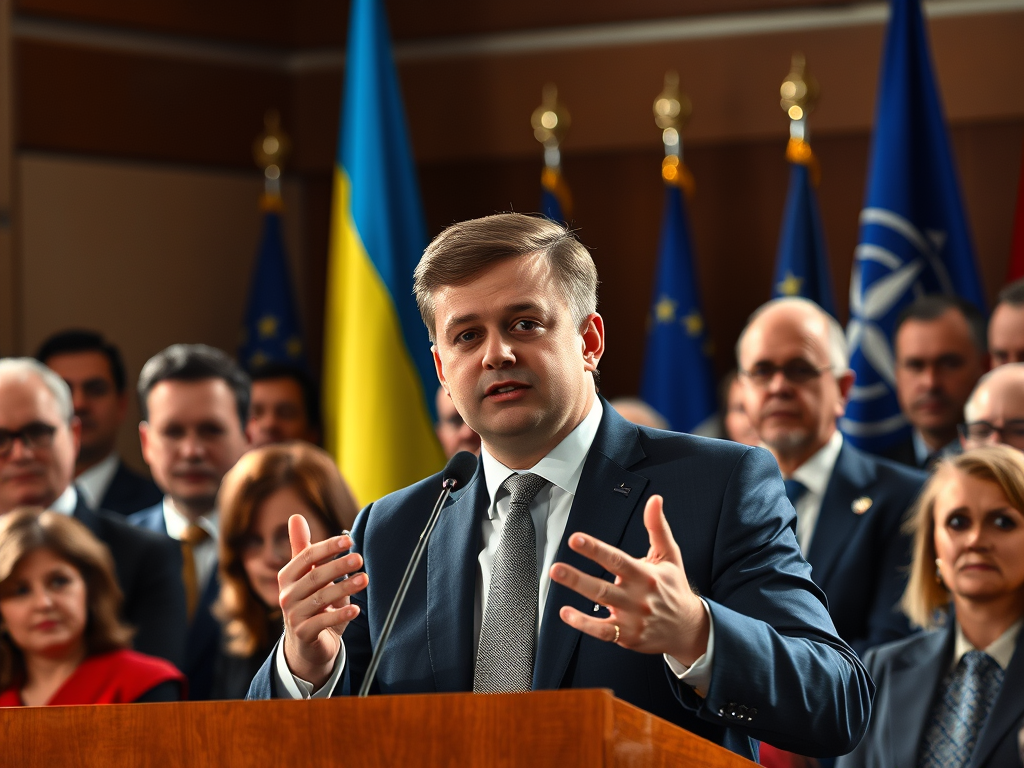
These anxieties were voiced at the Munich Security Conference on Saturday, where Ukrainian President Volodymyr Zelensky declared that “Ukraine will never accept deals made behind our backs.” He then optimistically proposed the creation of a “European army,” one that would include Ukraine’s seasoned forces. Zelensky was essentially advocating for a military force independent of NATO, with its own decision-making power and no U.S. military influence.
Zelensky also predicted that Putin would seek to manipulate Trump, suggesting that the Russian president might invite the American leader to the 80th anniversary celebrations of the defeat of Nazi Germany. “Putin will try to get the U.S. president standing on Red Square on May 9 this year,” Zelensky told an audience of European diplomats and officials. “Not as a respected leader but as a prop in his performance.”
Behind closed doors, Zelensky confronted Trump administration officials. After talks with Treasury Secretary Scott Bessent in Kyiv, he rejected a U.S. proposal granting the U.S. a 50% stake in Ukraine’s mineral resources — including graphite, lithium, and uranium — in exchange for past and future war support. Zelensky criticized the proposal for lacking any security guarantees in the event of a future Russian invasion. “We can consider how to distribute profits when security guarantees are clear,” he said.
The issue of security guarantees is vital to Ukrainians, who believe that the U.S. and Britain failed to honor their commitments to protect Ukraine after it relinquished its Soviet-era nuclear weapons under a post-Cold War agreement. European diplomats, however, viewed the negotiation as reminiscent of colonial exploitation, where smaller nations were forced to exchange resources for protection.
The discussions at the Munich Security Conference revealed a deeply troubled relationship between the U.S. and its European allies. Just last July, NATO members celebrated the 75th anniversary of the alliance in Washington, with much emphasis on unity. However, the tone has since shifted dramatically under Trump’s leadership.
“Compare the speeches that General Mattis and Mike Pence gave in 2017,” said Senator Jeanne Shaheen. “They reassured our allies and discussed joint efforts. This week, Pete Hegseth and JD Vance seem focused on creating division.”

At the Munich conference, Trump’s special envoy for Ukraine, Keith Kellogg, made it clear that Europe would not be involved in future negotiations. He proposed that the U.S. would act as a mediator between Russia and Ukraine.
The uncertainty over how these negotiations will unfold — and whether Europe can rely on the U.S. to defend them if Russia targets a smaller NATO member — is fueling European anxiety. But it is evident that the Trump administration has yet to form a clear strategy for Ukraine.
“For those seeking Trump’s strategy on Ukraine: relax,” said Douglas Lute, a former U.S. national security official. “There is no strategy.”
Despite this, French President Emmanuel Macron has called for a meeting of European leaders in Paris to discuss the Ukraine war and European security, with Germany, Britain, Italy, Poland, Spain, the Netherlands, and Denmark expected to participate.

The Western alliance has faced crises before — such as in the 1950s, when President Eisenhower scaled back American troop presence in Europe and relied more heavily on nuclear deterrence. Some experts predict that Trump may follow a similar path, significantly reducing the U.S. military presence but maintaining a nuclear arsenal in Europe.
Recent developments in Munich have already alienated many European allies and undermined the solidarity built over the past three years in supporting Ukraine. The extent of the damage is unclear, but figures like Norbert Röttgen, a German MP, believe that Europe must adapt to a new reality where American security interests in Europe are no longer a given.
“This is a break with the traditional European-American understanding that European security is a fundamental U.S. interest,” Röttgen said. “This administration does not see it that way, and that represents a fundamental shift.”
Röttgen also pointed to JD Vance’s speech in Munich, which lacked any reference to shared values or goals for Ukraine’s future, and instead focused on criticism of European democracy for restricting the far-right. Vance’s connections to far-right movements, some of which align with Putin’s views, raised further alarm among European officials.

The rapid warming of relations between Trump and Putin has also startled many in Munich. While the Biden administration sought to isolate Putin, Trump broke with that approach, engaging in a lengthy phone call with the Russian leader without consulting his allies.
For many Europeans, there is a growing fear that they may be excluded from negotiations that directly impact their security. They worry that they are being treated as pawns in a game where their interests are secondary to larger geopolitical considerations.
Kaja Kallas, the EU’s foreign policy chief, expressed concerns about Trump’s potential “appeasement” of Putin, which she believes could encourage further aggression. “We shouldn’t give Putin what he wants, as it will only invite more aggression,” she said.

Despite mixed signals from the Trump administration, Kallas emphasized the need for clarity and unity within Europe, noting that the stakes are high. “It’s not just about Ukraine’s sovereignty or Europe’s freedom,” she said. “It’s about trans-Atlantic and global security.”
As for the future of U.S. troops in Europe, Kallas noted that while there have been no concrete discussions about troop withdrawals, there is a discernible shift towards “turning inward” in American foreign policy.
German Defense Minister Boris Pistorius confirmed that discussions about troop reductions were underway with Hegseth, but he stressed that any changes would need to be carefully managed to avoid dangerous capability gaps.

While some European officials fear the loss of critical U.S. military assets in Europe, the broader concern is the lack of a coherent U.S. strategy for Ukraine. “Any plan for Ukraine’s future needs to involve both Europeans and Ukrainians,” Kallas said.
As tensions grow, António Costa, President of the European Council, urged European leaders to remain calm and not react impulsively to every statement or tweet. “We need to focus on long-term stability and support for Ukraine,” he said. “There can be no lasting peace without Ukraine and the EU.”
In the face of these uncertainties, Europe must focus on its own preparedness and unity, as it continues to navigate the evolving dynamics of transatlantic relations.



Leave a Reply