
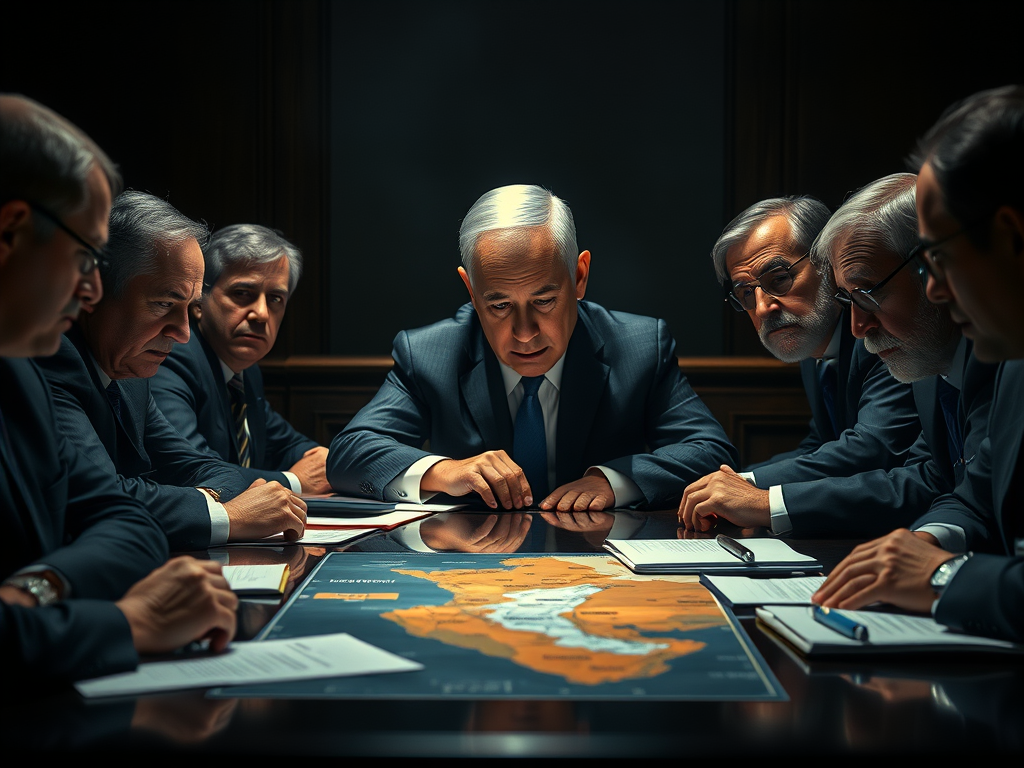

Hamas Postpones Release of More Hostages ‘Until Further Notice’

Hamas has indefinitely delayed the planned release of Israeli hostages who were set to be freed from Gaza this weekend, a spokesperson announced on Monday, accusing the Israeli government of breaching an already fragile cease-fire agreement.https://svtoday.org/
This decision jeopardizes both the six-week truce established last month and the potential for a broader peace agreement. In response, Israeli Prime Minister Benjamin Netanyahu met with his senior advisers Monday night and decided to move up a scheduled security cabinet meeting to Tuesday morning, according to a senior official.
Later that evening, President Trump issued an ultimatum to Hamas, declaring that if all Israeli hostages were not released by noon on Saturday, the cease-fire agreement with Israel should be revoked, warning that “all hell is going to break out.”
“Israel can make its own decision, but as far as I’m concerned, if they’re not released by Saturday at noon, things will escalate,” Trump stated while signing executive orders at the White House.
When asked if he was referring to Israeli retaliation, Trump responded, “You’ll find out, and so will they. Hamas will understand what I mean.” When pressed on whether the U.S. would become involved after the deadline, he replied, “We’ll see what happens.”
Both Hamas and Israel have accused each other of violating different aspects of the cease-fire agreement, though the exchange of Israeli hostages and Palestinian prisoners has continued on a weekly basis.
Hamas’s decision to delay the hostage release came shortly after a Fox News interview aired in which Trump stated that Palestinians would not be allowed to return to Gaza under his plan to relocate the entire population—a proposal that Hamas and much of the international community have strongly condemned. He later suggested cutting aid to Jordan and Egypt if they refused to permanently take in most Palestinians from Gaza.
Earlier on Monday, Hamas spokesman Hazem Qasem rejected what he called “new demands,” stating in an interview with Saudi-based TV channel Al-Hadath, “We have an agreement to uphold. We are open to discussions on new governance structures for Gaza, but deportation is not an option.”
Another Hamas spokesperson, Abu Obeida, confirmed that the hostage exchange scheduled for this weekend was on hold. However, mediators from Qatar and Egypt were expected to work with Israeli and Hamas representatives in an attempt to resolve the dispute before the deadline. A similar mediation effort in January helped both parties move past a prior deadlock.
Meanwhile, Palestinian Authority President Mahmoud Abbas announced modifications to the longstanding policy of financially compensating families of Palestinians jailed or killed by Israel, including those involved in violent acts. This policy has long been condemned by both Israel and the United States. However, the wording of Abbas’s decree remains ambiguous, leaving the extent of these changes uncertain.
A major sticking point between Israel and Hamas remains the second phase of the cease-fire agreement, which calls for a permanent cessation of hostilities, a full Israeli withdrawal from Gaza, and the release of additional hostages and prisoners. Negotiations on this phase were expected to begin last week, but Israeli officials arrived in Qatar without the authority to discuss that portion of the deal, according to four Israeli officials, a mediator, and a diplomat briefed on the talks—all of whom spoke anonymously due to the sensitivity of the matter.
Netanyahu has signaled his reluctance to proceed with the second phase if it requires ending the war, as it would fall short of his stated objective of dismantling Hamas’s military capabilities and preventing it from governing Gaza. Conversely, Hamas has insisted that a permanent cease-fire must be part of the next phase.
On Monday, Hamas military wing spokesman Abu Obeida accused Israel of multiple cease-fire violations in a Telegram statement, citing restrictions on displaced Palestinians returning to northern Gaza, interference with humanitarian aid deliveries, and attacks on civilians.
Tensions further escalated after Hamas failed to release a female hostage whom Israel claimed was due for release in January under the agreement. In response, Israel temporarily delayed the return of displaced Palestinians to northern Gaza. However, the exchange eventually proceeded, and the hostage was freed.
The Israeli military agency COGAT reported on February 7 that more than 12,000 aid trucks had entered Gaza since the cease-fire took effect.
In Israel, outrage has grown over the condition of released hostages, many of whom appeared malnourished, were reportedly mistreated by crowds, and, in some cases, were forced to make statements thanking Hamas. Critics argue that these incidents demonstrate Hamas’s failure to uphold the cease-fire terms.
A spokesperson for Israeli Defense Minister Israel Katz denounced Hamas’s Monday announcement as a “blatant violation” of the cease-fire agreement and hostage deal.
He added that the Israeli military had been placed on high alert, preparing for “any possible scenario in Gaza.” Referencing the October 7 Hamas-led attack that triggered the war, he warned, “We will not allow history to repeat itself.”
Under the six-week truce, which is set to last until March 2, 25 Israeli hostages—along with the remains of eight deceased hostages—were to be exchanged for roughly 1,500 Palestinian prisoners. Approximately half of these exchanges have already taken place.
Additionally, the agreement required the Israeli military to withdraw from a key corridor bisecting Gaza, which had prevented displaced Palestinians in the south from returning to their homes in the north. The Israeli military completed its withdrawal from most of the area, known as the Netzarim Corridor, on Sunday.




Leave a Reply