
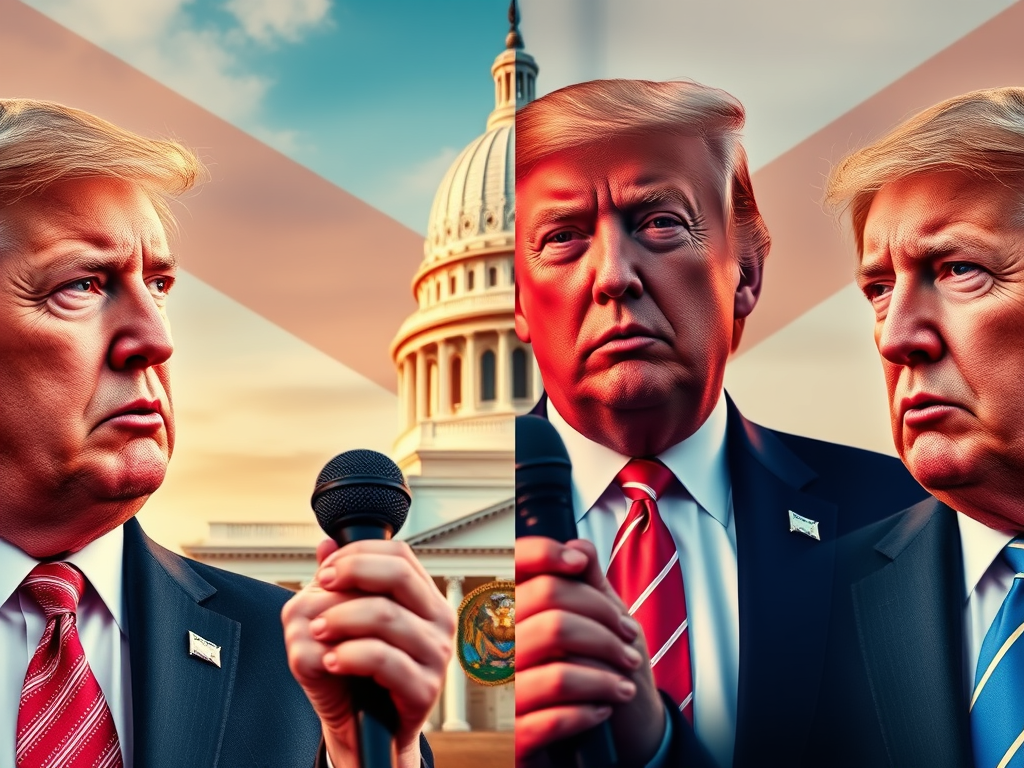

How the New Trump Era Has Upended Florida Politics

No state’s political landscape has been more disrupted by President Trump’s return to power than Florida, the state he has embraced as his own.https://svtoday.org/
Mr. Trump has filled his new administration with Floridians, leaving key positions vacant at the state level. Ambitious Republicans have scrambled to secure these roles through special elections or gubernatorial appointments. This reshuffling has strengthened Governor Ron DeSantis’s influence, allowing him to place loyal allies in prominent positions.
As soon as Mr. Trump was back in the Oval Office, Mr. DeSantis and Republican legislators found themselves locked in a political standoff over a key issue for both the president and voters: illegal immigration. By February, it became evident that Republican lawmakers were prioritizing Mr. Trump’s stance on immigration over Mr. DeSantis’s.
This ongoing dispute—centered on whether the governor or another authority should oversee the state’s immigration enforcement—has highlighted the diminishing grip Mr. DeSantis once held. It has also reshaped the power dynamics for his final two years in office, with Republicans already maneuvering ahead of the 2026 midterms.
At the end of January, Mr. DeSantis announced that his political committee would fund “strong conservative candidates in legislative primaries,” implicitly warning sitting Republicans of potential challengers. He also pledged support for his preferred candidate for governor—a choice that has become a subject of speculation in Tallahassee, as Mr. DeSantis has no clear successor.
However, that may soon change. On Friday, Lieutenant Governor Jeanette M. Núñez was appointed interim president of Florida International University in Miami—an appointment made at Mr. DeSantis’s suggestion, according to the university’s board chairman. Her resignation creates an opportunity for Mr. DeSantis to install a successor of his choosing.
Mr. DeSantis has already appointed former Florida Attorney General Ashley Moody to the U.S. Senate, filling the seat left vacant when Mr. Trump selected Marco Rubio as Secretary of State. He has also indicated that James Uthmeier, his chief of staff, will replace Ms. Moody as attorney general. Meanwhile, he must still appoint a new state chief financial officer to take over for Jimmy Patronis, who is expected to win the congressional seat previously held by Matt Gaetz. Gaetz had briefly been considered for U.S. attorney general under Mr. Trump.
Among the Republicans eyeing a gubernatorial run are Mr. Gaetz, Agriculture Commissioner Wilton Simpson, and Representative Byron Donalds of Naples. While all three enjoy strong ties with Mr. Trump—whose endorsement is likely to be the decisive factor—none share a particularly close relationship with Mr. DeSantis. There is even occasional speculation about whether Mr. DeSantis’s wife, Casey DeSantis, might enter the race.
Mr. Gaetz, who led Mr. DeSantis’s transition team in 2018, endorsed Mr. Trump over the governor in the presidential primary. Mr. Donalds, once an ally of Mr. DeSantis, did the same. Meanwhile, tensions between Mr. Simpson and Mr. DeSantis have been particularly pronounced, especially regarding control over immigration enforcement. The governor has strongly opposed granting those powers to the agriculture commissioner, arguing that it would be akin to putting the “fox in charge of the hen house,” given the industry’s history of employing undocumented workers.
Last week, in what was seen as an effort to ease tensions, Mr. Donalds stated on a podcast that he did not believe the agriculture commissioner should handle immigration enforcement.
Throughout his tenure, Mr. DeSantis has never shied away from political battles. In fact, he has often sought them, taking on public health experts, the Biden administration, school boards, progressive prosecutors—even Disney.
Yet his current feud with the Legislature is different. Republican leaders have increasingly positioned Mr. DeSantis as the state’s second-most influential Republican—behind only Mr. Trump.
The conflict erupted last month when Mr. DeSantis called a special legislative session on illegal immigration, despite resistance from Republican leaders. One of Mr. DeSantis’s political weaknesses has been his lack of interest in cultivating relationships, including with members of his own party. He has largely relied on his staff to manage legislative affairs, expecting lawmakers to align with his agenda.
According to a Senate spokesperson, Mr. DeSantis informed Senate President Ben Albritton of the special session just 15 minutes before announcing it at 9:30 a.m. House Speaker Daniel Perez, who was en route to Tallahassee, received only a voicemail message at 9:22 a.m.
Instead of endorsing Mr. DeSantis’s proposal, the Legislature passed its own version of the immigration bill, prompting the governor to threaten a veto. Days of public infighting followed, with lawmakers openly questioning Mr. DeSantis’s immigration policies and even suggesting they might increase oversight of his administration.
Still, Mr. DeSantis appeared to relish the media attention—perhaps the most he had received since his failed presidential bid.
Despite his landslide re-election victory in 2022, Mr. DeSantis now faces mounting resistance from within his party. Even as he urged Republican and independent voters to protest the Legislature’s immigration bill, he downplayed suggestions of a power struggle, insisting that his priority was making Florida’s immigration laws as strict as possible—regardless of who received credit.
Recently, the tone has shifted, signaling a possible compromise on the horizon.
“We want to bring this to a conclusion,” Mr. DeSantis said on Friday in Tallahassee. “I think we’re getting close.”
How the rest of his term unfolds remains uncertain. The regular legislative session begins on March 4, and Mr. DeSantis is widely believed to be considering another White House run in 2028.
“We’re going to have to work together to solve the state’s problems,” said State Senator Joe Gruters, a Sarasota Republican and sponsor of the immigration bill. “I hope he’s willing to be a partner rather than using every opportunity to position himself for 2028.”
So far, Mr. DeSantis has yet to lay out a clear vision for his remaining time in office, beyond keeping Florida at the forefront of conservative policymaking. He has emphasized that his push for tougher immigration laws—going even further than Mr. Trump’s proposals—aims to establish Florida as a national model before other states act.
“There’s a reason we’ve become a red state,” Mr. DeSantis recently said in Fort Myers. “And it’s not because we’ve been milquetoast.”




Leave a Reply