

Three Men Convicted of Playing a Role in Ring That Preyed on U.S. Museums

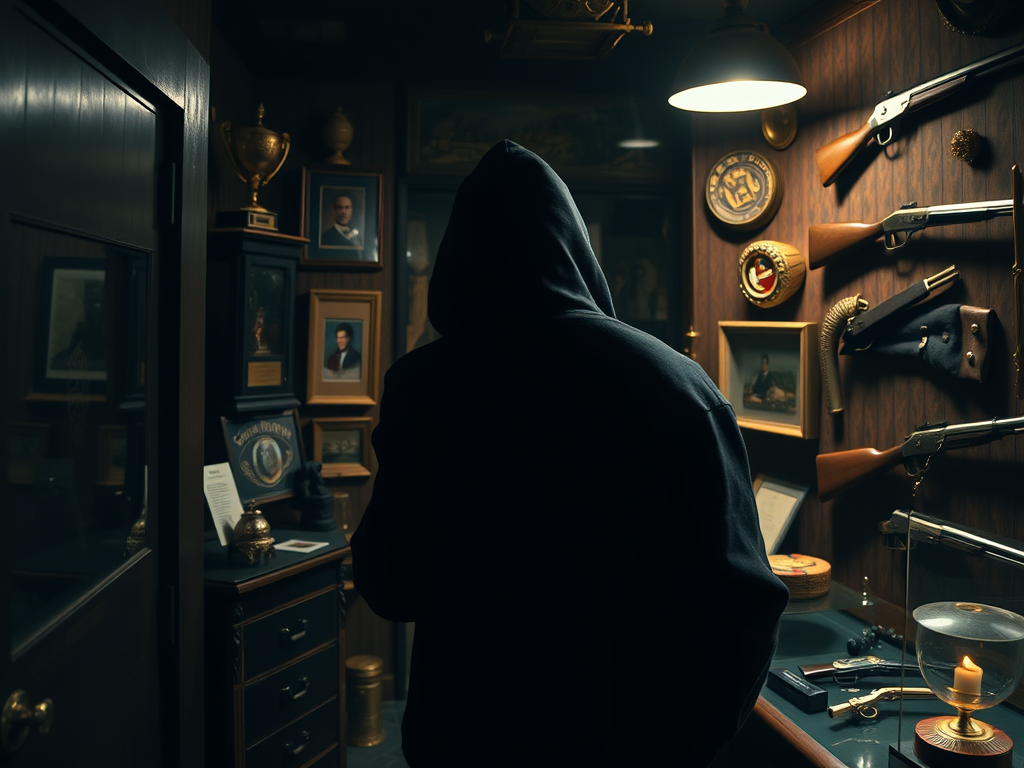
For twenty years, a group from Lackawanna County, Pennsylvania, carried out a series of heists at small museums across the United States. Led by their ringleader, they bypassed security measures to steal valuable artwork and historic memorabilia.
Among the stolen items were significant pieces of American history, including nine of Yogi Berra’s World Series rings, two championship belts belonging to middleweight boxer Tony Zale, and around 30 trophies from golf and horse racing. However, instead of selling these rare collectibles, the thieves melted down much of the loot and profited by selling the raw materials.
On Friday, three members of the theft ring were convicted in U.S. District Court in Scranton on charges of conspiracy to commit major artwork theft.https://svtoday.org/
The verdicts came after testimony from the group’s former leader, Thomas Trotta, who had previously pleaded guilty and became a key witness against his longtime friends—associates he had known since their days at North Pocono Middle School. Prosecutors revealed that Mr. Trotta personally carried out the burglaries, while the other men played supporting roles in planning, melting down stolen goods, or transporting them for sale in New York City.
The three convicted individuals—Nicholas Dombek, Joseph Atsus, and Damien Boland—were also found guilty of concealing and disposing of major artwork, as well as transporting stolen property across state lines. Their sentencing date has yet to be determined.
A fourth defendant, Alfred Atsus, was acquitted of all charges. His brother, Joseph, and Mr. Dombek were also cleared of several counts presented by prosecutors.
Authorities announced that some stolen items, including antique firearms taken in two separate thefts, had been recovered. However, many other missing artworks and artifacts remain unaccounted for. Among them is an Andy Warhol silkscreen that was stolen in 2005 from the Everhart Museum in Scranton.
Mr. Trotta and three additional co-conspirators who have already pleaded guilty are also awaiting sentencing.
The defense maintained that Mr. Trotta fabricated his claims about his alleged accomplices. Matt Clemente, attorney for Mr. Boland, argued that Mr. Trotta had struck a “corrupt deal” with the prosecution in exchange for leniency.
Following the trial, Jason Mattioli, who represented Alfred Atsus, emphasized that Mr. Trotta’s testimony was the only evidence linking his client to the crimes, stating, “There was nothing to support his claims apart from his word.”

During his testimony, Mr. Trotta described how he and his accomplices studied museum security systems, pinpointed vulnerabilities, and scouted escape routes. He admitted to using tools such as an ax, a center punch, and a grinder to break in.
“This was our way of life for two decades,” he confessed in court. “It wasn’t just something we did—it was a lifestyle.”
The Everhart Museum was one of their earliest targets. Mr. Trotta initially intended to steal “Pink Shrimp,” a 1921 painting by Henri Matisse, but upon discovering it had already been sold, he and his team instead took Warhol’s “Le Grande Passion” and a piece attributed to Jackson Pollock, titled “Springs Winter.”
Mr. Trotta recounted how he, Mr. Boland, and Joseph Atsus saw an opportunity one night when local police were preoccupied with a bar fight in Scranton. They seized the moment, driving to the museum, where Mr. Trotta climbed a ladder and smashed open the rear entrance to seize the artwork.
The Yogi Berra Museum & Learning Center in Little Falls, New Jersey, was another major target. Mr. Trotta testified that he and an accomplice barely escaped capture by the police after stealing the World Series rings. He later gave the rings to Mr. Dombek, who removed the gemstones and melted the gold down in his garage. The stolen materials fetched them only about $2,000 for the gems and no more than $15,000 for the metal when sold to a contact in New York City.

Lindsay Berra, the baseball legend’s granddaughter, expressed mixed emotions about the verdict.
“While I’m glad justice was served, I can’t help but feel heartbroken over the loss of the rings,” she said. “It’s senseless—so much history was destroyed for a fraction of its real value.”
Tony Zale’s championship belts, taken in 2015 from the International Boxing Hall of Fame in Canastota, New York, suffered the same fate. His great-niece, Haley Zale, followed the case closely and was relieved by the convictions but saddened by the irreversible loss.
“It’s closure, but it’s devastating to know I’ll never see those belts again,” she said. “This whole ordeal has been heartbreaking.”
The downfall of the theft ring began in 2019 when Pennsylvania state police stopped a maroon Pontiac for reckless driving. Mr. Trotta, who was behind the wheel, was arrested for driving under the influence. A search of the car uncovered incriminating evidence: bolt cutters, a sledgehammer, ski masks, gloves, headlamps, and multiple phones. Investigators later matched DNA from a water cup Trotta drank from in custody to DNA found at several burglary sites.
“I got careless,” he admitted during the trial.
To avoid a harsher sentence, Mr. Trotta agreed to cooperate with law enforcement. He wore a wire, secretly recording conversations with members of the theft ring—including Mr. Dombek, who had once lived in Mr. Trotta’s home and dated his sister, Dawn. The Atsus brothers had also been close friends, even serving as godfathers to his children.
“I doubt they like me now,” Mr. Trotta said on the stand.




Leave a Reply