

Fighting Has Halted in Gaza, but the War Is Not Over

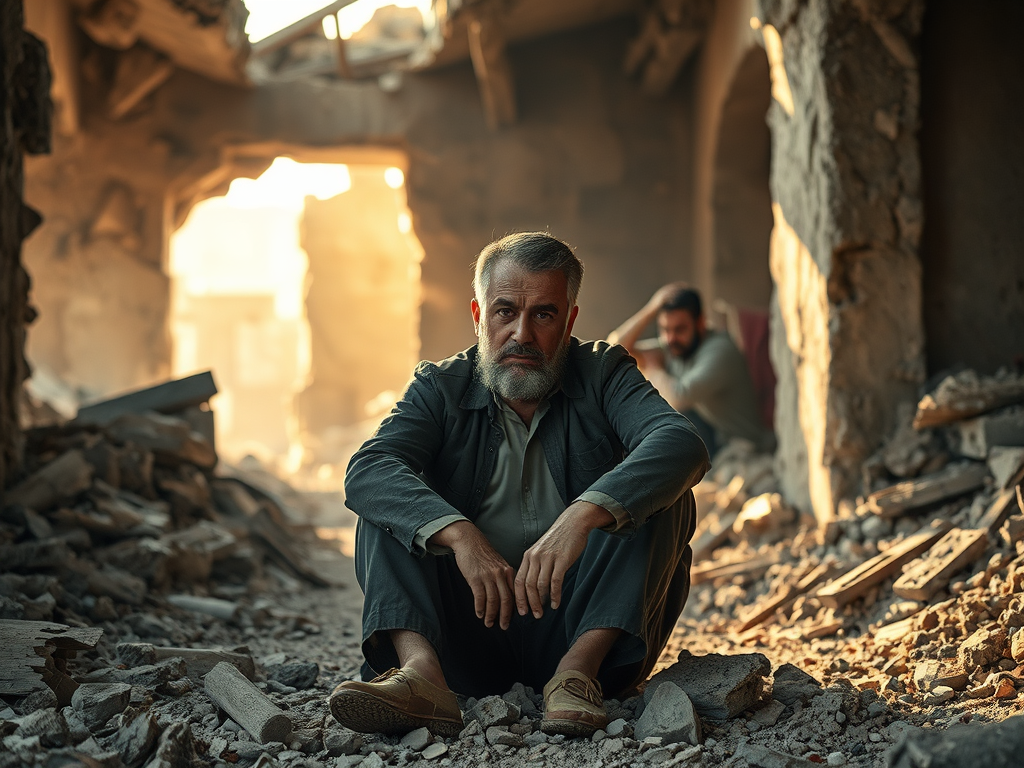
At the close of the 2021 Gaza war, Yahya Sinwar, the leader of Hamas, was photographed sitting in a chair amid the rubble of his destroyed home, a powerful symbol of resistance to Israel.
In the latest Gaza conflict, Mr. Sinwar was killed. Israeli Prime Minister Benjamin Netanyahu had vowed to dismantle Hamas, but despite extensive destruction and loss of life over the past 15 months, a ceasefire was reached on Sunday. Hamas, though severely weakened, has survived and, at least for now, retains control over Gaza.
Thousands of Hamas fighters have emerged from hiding to reassert their dominance.https://svtoday.org/
“Hamas is not only still standing, but remains the dominant force in Gaza,” said Daniel Levy, former Israeli negotiator and president of the U.S./Middle East Project, a research organization in London and New York.
The situation highlights the precariousness of the ceasefire deal, especially with Netanyahu facing significant political pressure at home. Meanwhile, Donald Trump is poised to return to the presidency, which raises uncertainties about his approach to the region, now dramatically different from his first term.
The war is not over. The ceasefire agreement, which mirrors a proposal from President Biden eight months ago, remains fragile. The delayed start of the ceasefire on Sunday only underlined the uncertainty. In 16 days, talks on the second phase will begin.
Transitioning from the first phase to the second, which would mark the effective end of the conflict and the withdrawal of Israeli troops from Gaza, is seen as exceedingly difficult and unlikely. The required concessions, combined with political dynamics on both sides, make progress uncertain.
Trump is credited by many for pressuring Netanyahu to agree to the deal, providing the Israeli leader with the political cover to do so. Whether Trump and his team will invest the necessary time and political capital to push through the next, more challenging phase is unknown.
Natan Sachs, director of the Center for Middle East Policy at the Brookings Institution, notes that Trump will not want fighting to resume on his watch. However, Netanyahu, facing strong opposition within his coalition, may be hesitant to end the war. Hamas, too, intends to continue its military efforts and rearm.
Mr. Netanyahu is likely to seek any violations of the truce by Hamas as an excuse to prevent the second phase, said Sanam Vakil, director of the Middle East and North Africa Program at Chatham House. Netanyahu has already indicated that Israel reserves the right to resume fighting if negotiations on phase two falter.
The ceasefire may halt the immediate fighting, but, much like in Lebanon, it grants Israel military freedom to act at will, Vakil said. Netanyahu has reiterated that Israel reserves the right to resume hostilities if the second-phase talks collapse.
Throughout the war, Netanyahu has refused to discuss alternatives to Hamas’s rule in Gaza, essentially leaving the group in control of the region. This is despite Israel’s efforts to eliminate Hamas, which has cost tens of thousands of lives, both civilians and fighters. The war began after Hamas launched attacks on Israel on October 7, 2023, killing around 1,200 people and capturing 250 others.
Hamas is now in control of Gaza and will oversee the distribution of significant humanitarian aid. Yahya Sinwar’s brother, Muhammad, has assumed leadership of Hamas in Gaza.

For Trump, the situation presents a complex dilemma, especially if he aims to revive efforts for normalizing relations between Saudi Arabia and Israel, a process that had seemed close to fruition before the Gaza conflict erupted.
Mustafa Barghouti, a member of the Palestinian Legislative Council, expressed that while the ceasefire is beneficial for Palestinians — stopping the killing, releasing prisoners, and bringing aid — he cautioned that there were no guarantees it would hold. Palestinians, he added, need a true process that leads to the end of Israeli occupation of Gaza and the West Bank.
During the war, Saudi Arabia has made it clear that it demands concrete steps toward an independent Palestinian state, a position Netanyahu has repeatedly opposed. Some members of Trump’s team advocate for the complete annexation of the West Bank, a move that could render a viable Palestinian state impossible. Trump’s 2017 ambassador nominee to Israel, Mike Huckabee, stated that the West Bank and occupation didn’t exist.

“Annexation of the West Bank would kill any chances for a two-state solution,” Barghouti said.
Aaron David Miller, a former U.S. diplomat with the Carnegie Endowment, warned that Netanyahu will likely come into conflict with Trump, who seeks a deal with Saudi Arabia and Iran.
Domestically, Netanyahu faces challenges, with far-right coalition members like Itamar Ben-Gvir already quitting, signaling a potential collapse of the government if the war resumes. He also faces difficult domestic issues, including a new budget and legislation concerning the conscription of ultra-Orthodox Jews, which will fuel further tensions within his coalition. If the budget is not passed by the end of March, the coalition could dissolve.
“If Netanyahu doesn’t navigate carefully, we may see Trump versus Ben-Gvir and Smotrich as we approach phase two,” Sachs noted.
If Trump pushes for a deal with Saudi Arabia, Netanyahu will face a tough choice: surrender to his coalition’s demands, anger the U.S., or dissolve the government to pursue a broader peace agreement, including steps toward a Palestinian state. The latter option would be risky for Netanyahu, whose lack of popularity with centrist voters led him to ally with far-right parties in the last election.

A looming threat is Iran, which is rapidly enriching uranium. While Iran denies it’s pursuing a nuclear bomb, its regional influence is diminishing, and its economy is struggling. Both Israel and the U.S. are determined to prevent Iran from acquiring nuclear weapons. There’s strong support in Israel for a preemptive strike on Iran’s nuclear facilities.
However, Trump is unlikely to want to engage in another war and has been open to negotiating with a weakened Iran. Iranian President Masoud Pezeshkian has reached out to European and Trump officials to discuss a potential deal on Iran’s nuclear program in exchange for sanctions relief.
Sachs notes that Trump is unpredictable. Netanyahu and Israel will have to navigate a U.S. president who is supportive of Israel but will also act in his own interests.




Leave a Reply