

Many Syrians Want Justice for Regime Crimes. Others Want Revenge.

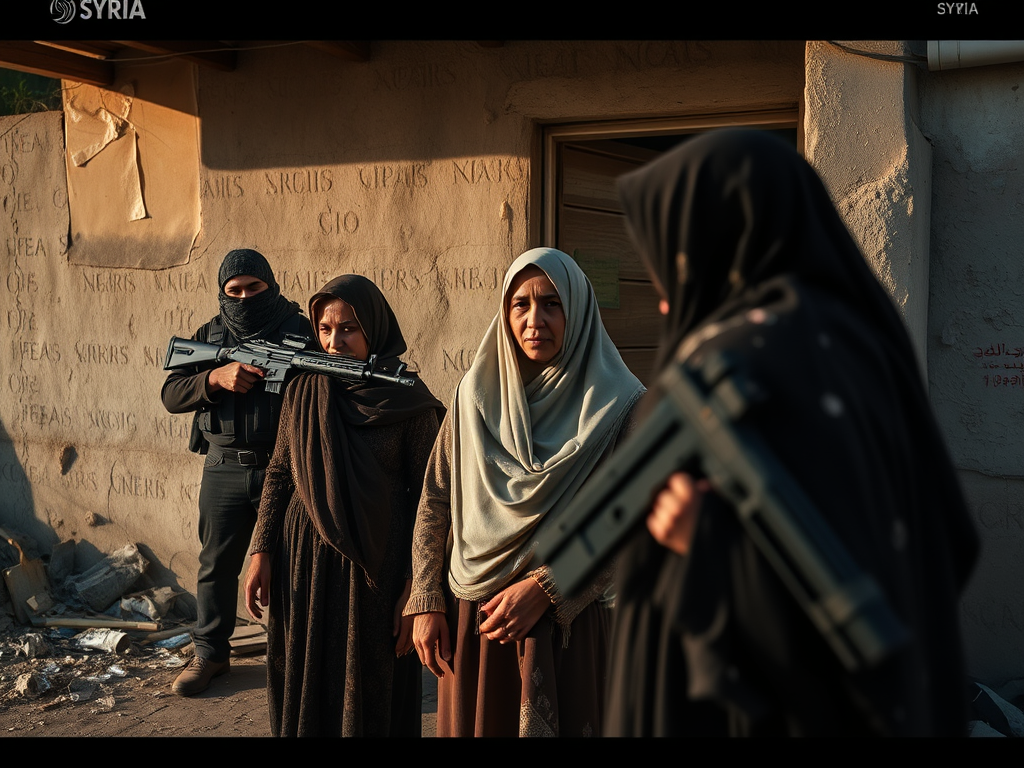
Bashar Abdo had just returned home last month after serving four years in the Syrian military. However, his homecoming turned into a nightmare when an armed mob of neighbors and other locals descended on his family’s front door, accusing him of being a supporter of the ousted regime.https://wordpress.com/
As he tried to hide, his sisters and sister-in-law stood between the mob and the door, attempting to protect him. But the crowd broke in, found Mr. Abdo, 22, in the kitchen, and stabbed him. They dragged him outside, where he was shot, despite his sister Marwa clinging to him, begging them to stop.
The horrific incident, recounted by Mr. Abdo’s family, was corroborated by local police in Idlib. Video footage, widely shared on Syrian social media and verified by The New York Times, captured the gruesome aftermath. In the footage, as Ms. Abdo held her brother’s lifeless body, the crowd continued to kick him. She pleaded with them, pointing out that he was already dead.
“This is your fate,” one man shouted. Later, another video showed the mob tying Mr. Abdo’s body by the neck to a car and dragging it through the streets, all while onlookers shouted insults. The origins of the video remain unclear.

Speaking with The Times four days later, Ms. Abdo, consumed by grief and rage, vowed to seek revenge, reflecting the rising potential for a cycle of retaliatory violence in Syria.
The country is entering a turbulent period of transition after 13 years of civil war and more than 50 years under the Assad regime, a government that maintained power through fear, torture, and mass killings.
Mr. Abdo’s killing highlights the challenges ahead as Syria grapples with unresolved anger and calls for accountability. While many Syrians demand justice for crimes committed during the war, others are driven by a desire for vengeance.
The civil war claimed over half a million lives, with most deaths attributed to Syrian airstrikes or mass executions in prison. Countless others remain missing, according to Syrian human rights organizations.

The newly established interim Syrian government, led by the Islamist rebel group Hayat Tahrir al-Sham, is working to address decades of grievances by setting up courts and police forces. Officials are urging citizens to exercise restraint and avoid taking matters into their own hands.
Ahmed al-Shara, leader of the rebel coalition that overthrew Assad, has promised to prosecute senior regime officials for atrocities like murder, wrongful imprisonment, torture, and chemical attacks. However, he assured that rank-and-file conscripts, like Mr. Abdo, would be granted amnesty.

In an interview, Mr. al-Shara emphasized, “Justice must be sought through the judiciary and the law, not through individuals. If we allow everyone to seek revenge, we will descend into chaos.”
Despite these assurances, many Syrians remain unconvinced. In a recent case, the mayor of Dumar, a suburb of Damascus, was killed by residents accusing him of collaborating with the Assad regime.
Mr. Abdo, a conscripted soldier, had twice attempted to defect by not returning from leave. His family explained that these attempts led to his imprisonment in a military jail. He was eventually freed when the rebels captured the prison during their rapid advances.

After initially hesitating to return home, Mr. Abdo felt reassured by the promise of amnesty. However, shortly after his arrival, the mob came for him, accusing him of betraying neighbors and causing their imprisonment or deaths.
The Abdo family, who still see the perpetrators daily, have avoided confrontation and are now seeking to relocate. Idlib police, under Hayat Tahrir al-Sham, stated that the Abdo family was “notorious for working with the regime” but reiterated that no one has the right to commit assault. No arrests have been made, and the family denies any regime ties, arguing that Mr. Abdo’s actions as a conscript should not have made him a target.

“We will ensure justice, whether through the courts or on our own,” Ms. Abdo, 32, cried as she recounted the tragedy. Bloodstains remain in the kitchen and on the walls, despite the family’s efforts to clean.
Other Syrians are seeking alternative ways to prevent a spiral of violence. Muhammad al-Asmar, a media official, initiated a community grievance form in his village, encouraging residents to document accusations against neighbors. However, his efforts were met with little response, as many insist on taking justice into their own hands.
Meanwhile, officials in the new justice ministry acknowledge their unpreparedness for governance and are appealing to citizens for patience. Public calls for restraint are being made, including sermons by religious leaders.

The difficulty of preventing vigilante justice looms large. In Taftanaz, a village in Idlib province, Alaa Khateeb returned home after Assad’s fall, only to face widespread suspicion despite his family’s assertions that he had deserted the military.
“I’ve done nothing wrong,” Mr. Khateeb, 25, a father of three, said as he worked on renovating a house. Still, even distant relatives like Salah Khateeb remain skeptical of him. “I questioned if I should even greet him,” Salah admitted. “Others may seek revenge.”
The fragile state of Syria underscores the immense challenge of healing a fractured society still haunted by its past.




Leave a Reply