
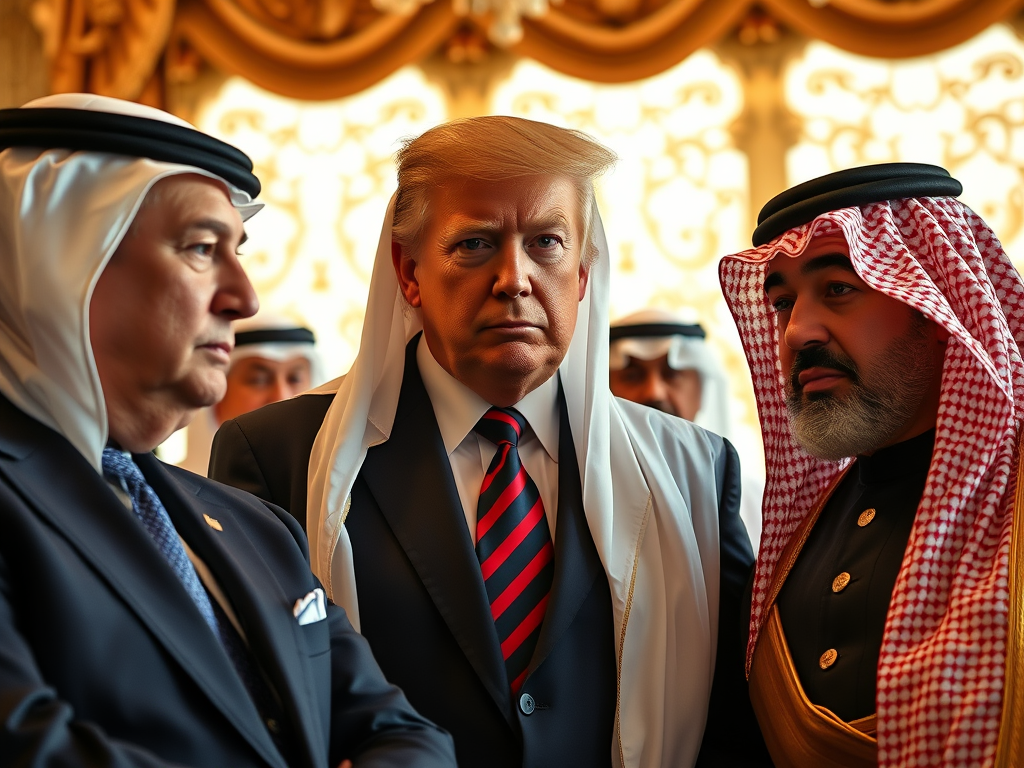

When Donald J. Trump was last in office, he had a largely positive relationship with the wealthy Gulf monarchies. As he prepares to return to the White House, these Gulf leaders have generally welcomed his return.
In an Upended Mideast, Trump Faces a New Divergence With Old Allies

However, this time around, there seem to be several key differences emerging between Trump and the Gulf states, especially on issues like Israel and Iran. Energy policy differences could also become a point of tension.https://wordpress.com/
Although major confrontations with U.S. allies in the Gulf are unlikely, Trump will encounter a region that has undergone significant changes, particularly since Israel launched its military campaign in Gaza following the October 7, 2023 Hamas-led attack, which resulted in around 1,200 deaths and 250 hostages, according to Israeli officials.
The Gaza conflict, in which at least 45,000 people have died, has reverberated across the region. Hezbollah in Lebanon, backed by Iran, has suffered heavy losses in over a year of fighting with Israel, and in Syria, rebels have toppled Bashar al-Assad’s regime.
Now, as Trump fills his cabinet with strong supporters of Israel and hardline positions on Iran, the Gulf leaders have voiced their desire for a softer approach toward Iran and a firmer stance on Israel. They have also urged the U.S. to remain engaged in the region.
For now, the Trump administration seems eager to engage with key Gulf players like Saudi Arabia, Qatar, and the UAE. In December, Trump’s Middle East envoy pick, Steve Witkoff, attended a Bitcoin conference in Abu Dhabi alongside Eric Trump, and visited Saudi Arabia, where he met with Crown Prince Mohammed bin Salman.
Here’s a closer look at the issues Trump will face as he navigates an evolving relationship with these traditional Gulf allies.

U.S. Engagement in the Middle East
A prominent call for Trump to avoid an isolationist approach came from Prince Turki al-Faisal, the former head of Saudi intelligence. In an open letter to Trump published in The National, he emphasized the importance of Trump continuing the Middle East peace efforts initiated during his first term. Turki referred to an assassination attempt against Trump, suggesting that his survival was a sign to continue his work toward peace.
Trump’s administration brokered the Abraham Accords, leading several Arab nations to establish ties with Israel. A similar sentiment was echoed by Anwar Gargash, an adviser to the UAE president, who called for strong American leadership to balance humanitarian concerns with strategic goals.
Hardening Stance on Israel
One of the most significant changes in the Gulf’s approach is its stance on Israel. Saudi Arabia’s Crown Prince Mohammed bin Salman recently labeled Israel’s Gaza military campaign as “genocide,” signaling a tougher position.

Before the Gaza conflict, Saudi Arabia appeared close to normalizing relations with Israel, possibly in exchange for stronger U.S. defense ties and support for a civilian nuclear program. However, recent statements suggest these diplomatic moves are now far off, with the Crown Prince reaffirming that Saudi Arabia will not establish ties with Israel until a Palestinian state is formed—something that remains distant due to Israeli opposition.
The UAE, which signed the Abraham Accords, has also toughened its stance, with its foreign minister emphasizing support for Palestinians.
Despite this public position, U.S. diplomats suggest that Saudi Arabia may still be privately open to advancing normalization with Israel under Trump, contingent upon a ceasefire in Gaza and concrete progress on Palestinian statehood.

A Potential Shift in Iran Relations?
During Trump’s first term, Gulf nations like Saudi Arabia and the UAE supported his aggressive stance on Iran. They applauded Trump’s withdrawal from the Iran nuclear deal and his authorization of the assassination of Iranian General Qassim Suleimani.
However, since then, the region has changed. Saudi Arabia and Iran reached a rapprochement in March 2023, reducing tensions and opening the door for high-level diplomatic talks. Bahrain, which had long been at odds with Iran, has also made overtures toward re-establishing diplomatic ties.
For Saudi Arabia, the goal is clear: creating a stable environment for its economic diversification plan. Iran, facing economic isolation and domestic unrest, has a similar incentive to reconcile with Riyadh.
Iran may be open to engaging with Trump as well. In November, Elon Musk, a close Trump ally, met with Iran’s U.N. ambassador, and Trump himself suggested that a deal with Iran was essential due to the potential consequences of Tehran pursuing nuclear weapons.

Potential Friction Over Oil
While the Gulf countries have generally embraced Trump’s pragmatic diplomatic approach, his economic policies could lead to disagreements, particularly over oil.
Trump has promised to increase U.S. oil and gas production, which could undercut Gulf economies reliant on high oil prices. If the U.S. boosts its production, it could limit the Gulf’s ability to raise output without causing a price drop.
Additionally, Trump is expected to push forward with liquefied natural gas projects, increasing U.S. exports, especially to Europe. Qatar, one of the largest producers of LNG, could be significantly impacted, though it has not voiced strong objections so far.



Leave a Reply