

The Flying Maestro: A Top Conductor Moonlights as an Air France Pilot

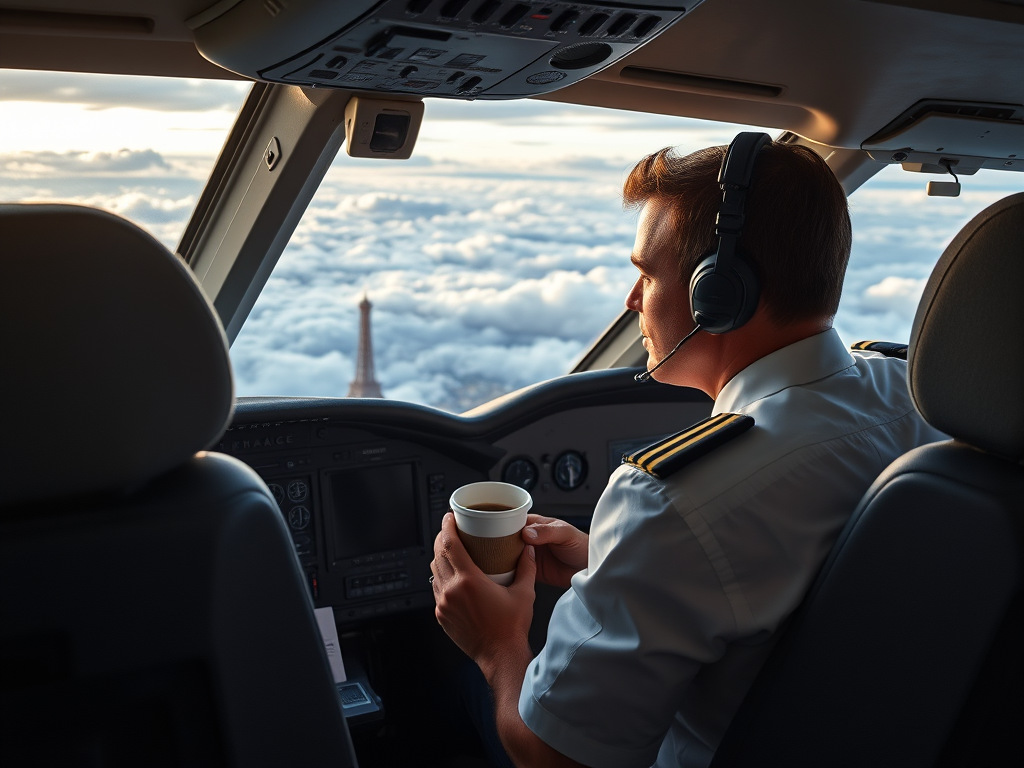
On a turbulent afternoon, more than 34,000 feet above Paris, Air France Flight 1205 began its descent. Flight attendants moved through the cabin, ensuring seat backs were upright and tray tables stowed, while drowsy passengers slowly woke from their naps.
From the cockpit, the voice of First Officer Daniel Harding broke the calm, providing a weather update (cloudy, 54°F) and noting the flight’s remaining 30 minutes.https://wordpress.com/


“Thank you for flying with Air France,” Harding added. “And don’t forget: rehearsal is at 6 p.m.”


The cabin burst into cheers and applause. Harding, 49, wasn’t just a seasoned Air France pilot—he was also one of the world’s top orchestral conductors. On this December day, he was flying the Orchestra dell’Accademia Nazionale di Santa Cecilia, Italy’s unofficial national orchestra, from Rome to Paris to kick off their European tour. A handful of unaware passengers were also onboard.
For years, Harding has balanced two demanding careers: piloting commercial planes across Europe and conducting symphonies by Mozart and Mahler. He thrives on the precision required in aviation—analyzing fuel levels, monitoring weather, and accounting for passengers and cargo—while embracing the unpredictability of live music.

“In aviation, the goal is to anticipate and avoid every threat,” Harding explained. “In music, it’s the opposite: you aim to get as close to the edge as possible.”
Harding’s dual career is a rarity. While the classical music world often expects total dedication to the art, Harding has carved out a life that thrives both in the skies and on the stage.

“Loving something doesn’t mean you need to do it 24/7,” he said. “That’s not how we’re wired as humans.”
Renowned conductor Simon Rattle, who mentored Harding as a teen prodigy, believes the balance has improved Harding’s artistry.
“Flying grounds him—literally and metaphorically,” Rattle said. “It’s made him a better musician and a calmer person.”

In the Cockpit
On that December day, Harding remained focused, a coffee cup at hand. He had recently begun his role with the Santa Cecilia orchestra, and this flight was a way to mark the start of his tenure.
He joked about the pressure of landing with his musicians onboard:
“If I botch the landing, they’ll remember it for decades,” he quipped.
The orchestra, meanwhile, kept the cabin lively, debating whether to call him “Maestro,” “Captain,” or simply “Pilot.” During the journey, they sang songs like “Volare,” and clarinetist Alessandro Carbonare performed a Puccini excerpt from his seat in row 19.
When Carbonare told his mother Harding was flying the plane, she was skeptical.

“A conductor who pilots?” Carbonare said, laughing. “I just hope we land safely. That’ll be enough.”
Before landing, Harding invited the orchestra’s concertmaster and assistant conductor into the cockpit to witness the descent. As turbulence shook the cabin, passengers nervously chuckled while a flight attendant quipped over the intercom, “Prepare for a maestro landing.”
An Unusual Path
Born in Oxford, England, Harding grew up in a musical household. By age 8, inspired by a Christmas performance of Handel’s Messiah, he took up the trumpet and began dabbling in conducting. By 13, he was studying at Chetham’s School of Music in Manchester.
At 17, Harding impressed Simon Rattle, then director of the City of Birmingham Symphony Orchestra, with his skill conducting Schoenberg’s Pierrot Lunaire. Rattle took him under his wing, providing mentorship and countless ham sandwiches.
By 19, Harding was assisting Claudio Abbado, the Berlin Philharmonic’s chief conductor. At 21, he debuted with the orchestra; by 22, he had signed his first recording contract.
Despite early success, Harding faced challenges. Some American orchestras found him aloof, and he struggled with communication, leading him to hire a conducting coach in his 30s. Around the same time, a divorce left him reevaluating his life.

To find balance, Harding pursued his childhood dream of flying. In 2014, he enrolled in flight school, studying aerodynamics and aviation law between concerts. Years later, he earned his Airbus A320 certification and began flying for Air France in 2021.
“Conducting is the ultimate team activity,” Harding said, explaining how his musical background reassured airline evaluators.
A Day in Two Worlds
Harding now spends about a week each month flying for Air France, fitting flights around his conducting schedule. With over 1,300 flight hours logged, he has become known for his adventurous routes and calm demeanor under pressure.
When Flight 1205 touched down smoothly in Paris, the orchestra cheered, shouting “Bravo!” Harding, in his Air France uniform, greeted each musician with handshakes and hugs.
“This is the first time I’ve seen someone fly a plane in the morning and conduct a concert at night,” violinist Leonardo Micucci remarked.
Later that evening, Harding donned a bow tie, picked up his baton, and took to the stage in Paris. Reflecting on his dual careers, he noted a shared need for composure.
“No one wants a tense leader, whether in the cockpit or on the podium,” he said. “This morning’s mission is complete. Now it’s time for a great concert.”




Leave a Reply