
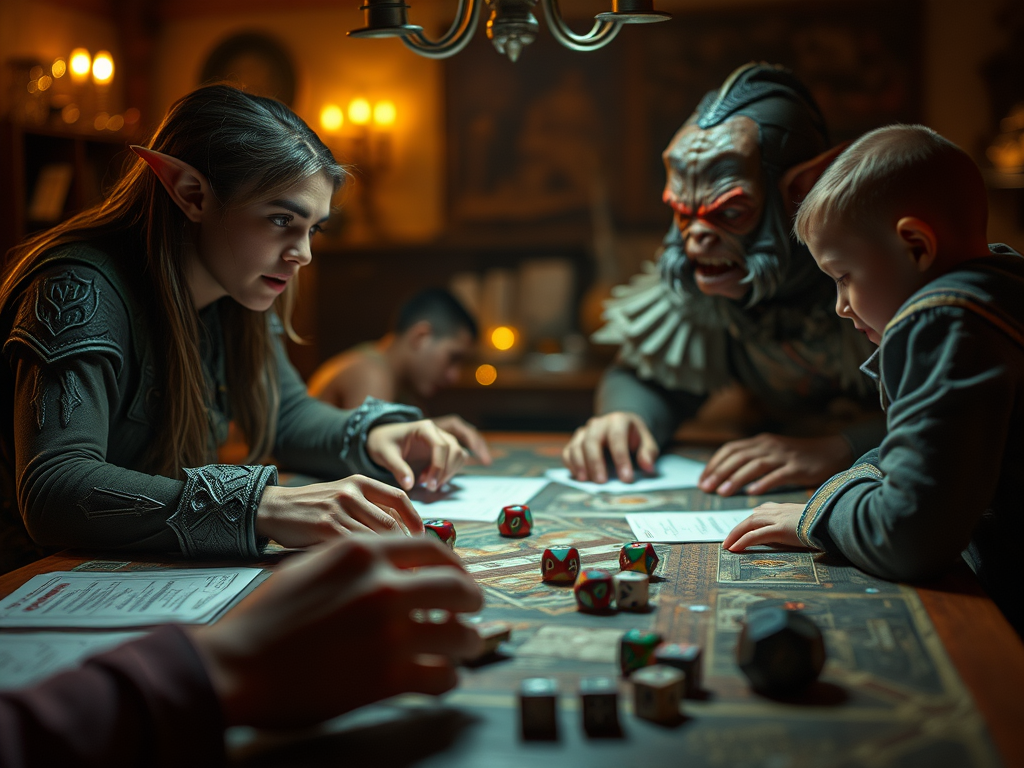

Dungeons & Dragons Rolls the Dice With New Rules About Identity

In the world of Dungeons & Dragons, players who take on the roles of elves, orcs, and halflings rely on their character’s abilities and personalities, where qualities like innate charisma and strength play a crucial role in success—just as much as the unpredictable rolls of the 20-sided dice.https://wordpress.com/
This is why the game’s first major rule changes in a decade, which were officially introduced this fall during its 50th anniversary, have sent ripples through the Dungeons & Dragons community and beyond. The revisions have sparked both approval and criticism at game tables, alongside heated YouTube debates and even grumbles on social media from figures like Elon Musk.

One of the most noticeable shifts is the change from “races” to “species,” alongside a separation of some character traits from biological identity. For example, a mountain dwarf is no longer inherently strong or resilient, and a high elf doesn’t automatically possess intelligence and dexterity. Additionally, Wizards of the Coast, the publisher of Dungeons & Dragons, has embraced a broader trend in role-playing games that allows players to stop the game if they feel uncomfortable.


“The goal here is to signal to both current and future players that Dungeons & Dragons is a safe, inclusive, and thoughtful approach to fantasy storytelling,” explained Ryan Lessard, a writer and experienced dungeon master.
These changes have sparked division among Dungeons & Dragons enthusiasts—a passionate group with a deep connection to the game—leading to broader cultural debates about inclusivity versus tradition.
Robert J. Kuntz, a renowned game designer who frequently collaborated with Gary Gygax, a co-creator of Dungeons & Dragons, expressed his dissatisfaction with Wizards of the Coast imposing top-down changes. He believes dungeon masters should have the flexibility to shape their own campaigns without interference from such rules.
“It’s unnecessary,” Kuntz said. “It’s as if they’re making an issue out of something that doesn’t need to be addressed, like the word ‘race’ being somehow offensive.”

While the changes may align with corporate diversity efforts, they also form part of Wizards of the Coast’s broader financial strategy. The game’s fourth edition, released in 2008, was met with a lukewarm reception, and Dungeons & Dragons was far from the cultural phenomenon it is today, before shows like Stranger Things and The Big Bang Theory had made the game more mainstream.
“The D&D audience was shrinking,” said Jeremy Crawford, the game’s lead designer. “The game was becoming too tailored to one specific style of play and was no longer as welcoming as it could be.”

In response to feedback, Wizards of the Coast introduced changes in the 2014 fifth edition, making the game more adaptable. The “2024 Player’s Handbook,” which has broken sales records, further expands on this flexibility, allowing players more creative freedom in character creation.
Critics, however, argue that these changes dilute the charm of the game, particularly the unique traits of species that gave it its distinctive feel.
“Now all the species are becoming essentially humans with costumes,” lamented Devin Cutler, a longtime player who expresses frustration over the shift.

Despite this, some players, including those in a New Hampshire campaign, continue to embrace the new flexibility in character creation, such as a tabaxi raised in an elven family. For these players, the cultural or species identity of their characters remains integral to the story and gameplay.
Dana Ebert, co-founder of a gaming pub in Oregon, observed that most players seem to be welcoming the new changes. She noted that Wizards of the Coast is simply following in the footsteps of competitors like Paizo, the publisher of Pathfinder, which has already moved away from the term “race” in favor of “ancestry.”

The shift in terminology has stirred debate about whether it compromises the authenticity of the game’s original spirit. Critics argue that the changes reflect an unnecessary capitulation to contemporary cultural pressures.
“There are certain things in the game’s history that simply can’t be ignored,” said Jason Tondro, a designer at Dungeons & Dragons, in response to critiques over historical insensitivity in the game’s early years.

In contrast, some players and designers, such as Akshay Arora, argue that these changes create a more comfortable environment for everyone involved. “This is a game for fun,” Arora said. “You shouldn’t have to engage with something that makes you uncomfortable.”
Ultimately, the success of these changes will be judged by the players themselves. John Stavropoulos, a user-experience consultant who helped design a tool for identifying discomfort in games, believes the direction Dungeons & Dragons is taking is a positive one.
“When you’re in a game, you’re in a small community,” Stavropoulos said. “Everyone should have fun, and Dungeons & Dragons has always been about making the game your own.”




Leave a Reply