

How Mexican Cartels Test Fentanyl on Vulnerable People and Animals

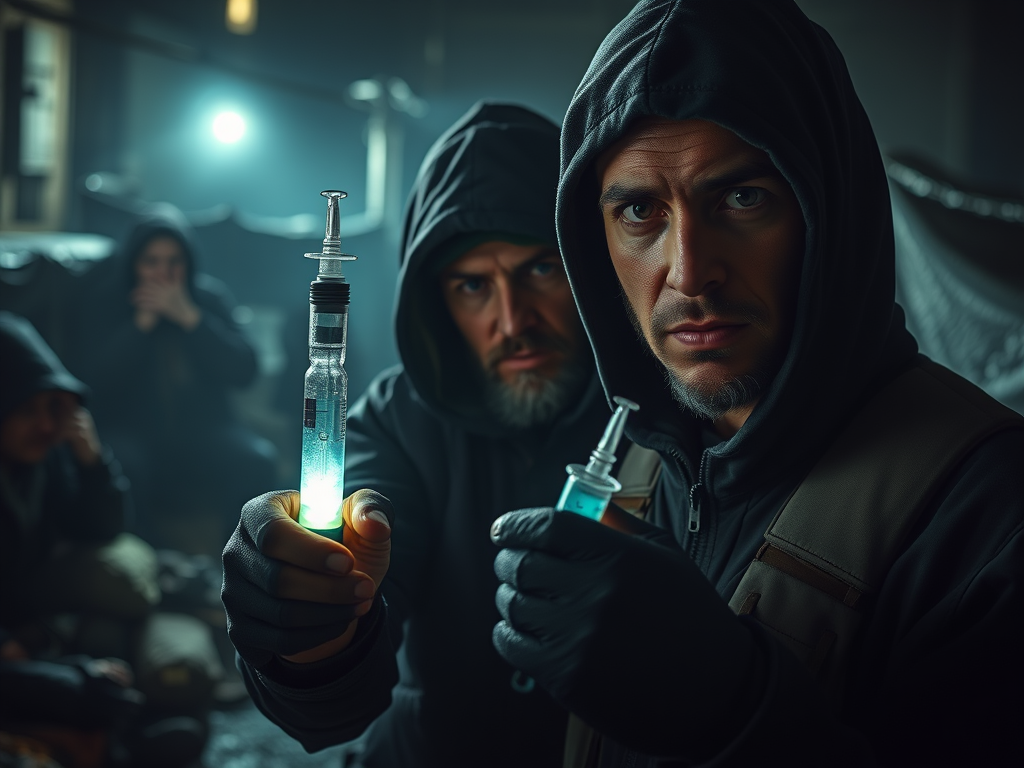
The cartel operatives arrived at the homeless encampment carrying syringes filled with their latest fentanyl concoction. The offer was straightforward, according to two men living at the camp in northwest Mexico: $30 for anyone willing to inject themselves with the dangerous substance.https://wordpress.com/
Pedro López Camacho, one of the men, shared that he volunteered numerous times—sometimes the operatives came by every day. They would observe the drug’s effects, taking pictures and videos of his reactions. He survived, but he witnessed many others who did not.
“When it’s too strong, it either knocks you out or kills you,” said Mr. López Camacho about the drugs administered. “People here died.”
This illustrates the extreme lengths to which Mexican cartels will go to dominate the fentanyl trade.
Global efforts to curb the synthetic opioid’s spread have made it harder for these criminal groups to obtain the chemical compounds required for production. The original source, China, has restricted the export of these raw ingredients, prompting the cartels to find new and perilous ways to keep fentanyl production going while maintaining its potency.
According to cartel members, the experimentation now involves mixing fentanyl with a variety of additives, such as animal sedatives and other hazardous anesthetics. To test these experimental mixtures, the cartel’s cooks—who create the fentanyl for the cartel—inject the concoctions into human subjects as well as animals like rabbits and chickens.
If a rabbit survives longer than 90 seconds, the drug is considered too weak for sale in the U.S., say six cooks and two U.S. Embassy officials monitoring cartel activities. When Mexican law enforcement has raided fentanyl labs, they’ve sometimes found dead animals used for testing scattered around the premises.

“They experiment like Dr. Death,” said Renato Sales, a former national security commissioner in Mexico. “They’re testing the potency of the drug, saying, ‘With this they die, with this they don’t, that’s how we adjust it.’”
To understand how these criminal groups have adapted to the crackdown, The New York Times observed fentanyl being manufactured in both a lab and a safe house. They spent months interviewing several people involved in the production process, including nine cooks, three chemistry students, two high-level operatives, and a recruiter for the Sinaloa Cartel, which the U.S. government blames for fueling the synthetic opioid epidemic.
All cartel affiliates spoke under the condition of anonymity for fear of retaliation.

One cook explained that he recently started blending fentanyl with an anesthetic commonly used in oral surgery. Another cook revealed that the best additive he had found was a sedative intended for dogs and cats.
One cook even demonstrated for The New York Times reporters how to produce fentanyl at a safe house in Sinaloa State, northwest Mexico. He explained that if the batch was too weak, he would add xylazine, a powerful animal tranquilizer also known on the street as “Tranq”—a combination that U.S. officials warn can be deadly.
“You inject this into a hen, and if it takes between a minute and a minute and a half for it to die, that means it’s really good,” the cook explained. “If it doesn’t die or takes too long, we’ll add xylazine.”
These accounts align with Mexican government data showing an increase in fentanyl mixed with xylazine and other substances, particularly in cities near the U.S. border.

“The illicit market gains much more profit by cutting substances like fentanyl with things like xylazine,” said Alexiz Bojorge Estrada, deputy director of Mexico’s mental health and addiction commission.
“By enhancing it, you need less product and therefore make more money,” she added, referring to fentanyl.
U.S. drug researchers have also noticed an increase in what one described as “weirder and messier” fentanyl. After testing hundreds of samples, they found a growing diversity of chemical compounds in fentanyl found on American streets.
“It’s like the wild west of experimentation,” said Caleb Banta-Green, a research professor at the University of Washington School of Medicine, who helped coordinate the testing of more than 580 fentanyl samples in Washington State this year.
He called it “absolute chaos.”
The Experiments
The synthetic opioids reaching American streets often start in cartel labs, where precision is not always the focus, according to the cooks. They mix chemicals in makeshift laboratories, often exposing themselves to toxic substances that cause hallucinations, vomiting, fainting, and even death.


The cartels actively recruit chemistry students from universities to work as cooks. One student employed by the cartel revealed that to test their formulas, the group would bring in homeless drug users, injecting them with the synthetic opioid. While no one has died in these tests, there have been severe reactions.
“We’ve seen people convulsing or foaming at the mouth,” the student explained.
Mistakes were harshly punished, she added: Armed men locked offenders in rooms with rats and snakes, leaving them without food or water for extended periods.
The cooks and high-ranking operatives described the Sinaloa Cartel as a decentralized organization, with many cells operating independently, meaning no single leader or faction has complete control over fentanyl production.

Some cooks said they wanted to create a consistent, non-lethal product. Others viewed the deadly nature of their product not as a problem, but as a marketing tactic.
In a U.S. federal indictment involving the sons of notorious drug lord Joaquín Loera Guzmán, known as El Chapo, prosecutors claimed that the cartel sent fentanyl to the U.S. even after an addict died testing it in Mexico.
Rather than deterring consumers, cartel members, drug users, and experts say that many Americans actively seek out more deadly batches, believing they will get higher from them.
“One dies, and ten more addicts are born,” said one high-ranking cartel operative. “We don’t care about them.”
The Boss
The boss knew something was wrong when the hens stopped dying. He had been in the drug trade since he was 12, learning from older men at a heroin processing site. Now, at 22, he had built his own business and was running three fentanyl labs. The business had made him millions.
Every time he checked the potency of his product, he would bring four or five rabbits from the local pet store. If the fentanyl was strong enough, only one rabbit would need to be injected to confirm its effectiveness.

Two pet store employees in Sinaloa, who spoke on condition of anonymity for fear of cartel retaliation, confirmed that rabbits were routinely purchased for drug testing.
The boss also used hens from a nearby ranch for testing. Many cooks use chickens to test fentanyl, according to U.S. Embassy officials.
Until recently, every time the boss injected fentanyl into a hen, it would either die, collapse, or stagger around as if drunk. Locals knew not to consume the chickens or their eggs.
But recently, the hens weren’t reacting strongly to the drug, despite the process being unchanged.
The boss eventually concluded that the chemical ingredients from China were too diluted, leading to a weak product.
“It’s too weak,” he said.
To fix the problem, he first tried mixing fentanyl with ketamine, but users didn’t like the bitter taste when smoked. He found procaine, a local anesthetic used in dental procedures, worked much better.
When asked if he felt any guilt about producing a drug that causes mass death, the boss dismissed it.
“We’re just giving people what they want,” he said. “If there weren’t so many people in the U.S. looking to get high, we wouldn’t be selling it. It’s their fault, not ours. We just take advantage of the situation.”

The Cook
One cook we spoke with got involved in the fentanyl trade to pay off mounting debts. At first, he regularly became sick from the fumes. The cartel’s enforcers had little patience for this.
“You may throw up at first,” the cook recalled, “but soon enough, one of them will scream at you to get back to work.”
Once, a boss shot him simply for not answering a question quickly enough, he said, showing a scar on his stomach.
The cook is constantly experimenting to make fentanyl stronger, tweaking the formula and testing it on his lab assistants, many of whom have become addicted in the process. If the batch is potent enough, he passes it to his supervisors to try.
He knows the product is unpredictable. Each batch varies, meaning clients buying identical fentanyl pills could get vastly different doses.
He has never fully explained his job to his family, telling them only that he works and comes back with a lot of cash. The money and his fearful expression keep questions at bay.
“There is no retirement here,” the cook said. “Only work and death.”



Leave a Reply