

In Southern Lebanon, Trauma and Grief Mark a Somber Christmas

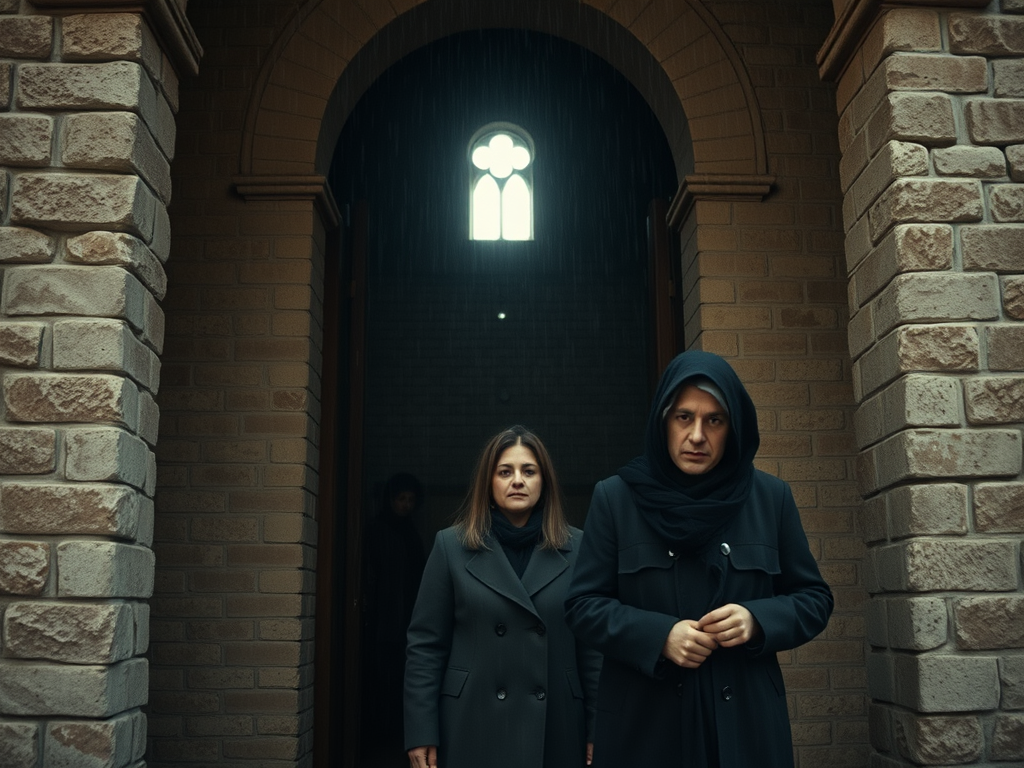
One by one, the churchgoers trudged into the bare-brick cathedral in the southern Lebanese city of Tyre, soaked by the rain and burdened by the shadows of war, for the last Sunday Mass before Christmas.
This year, there were no celebrations for the children, no music performances, and no Christmas tree in the city center. Much of the city lay in ruins—collapsed apartment buildings, mangled cars, and shattered, deserted shops. After months of Israeli airstrikes, the holiday season began not with joy, but with funerals, as churchgoers mourned their dead.
The pastor, Yaacoub Saab, attempted to lift spirits as he approached the altar. “It is a great blessing to gather and pray together,” he said. But later, speaking privately, he admitted, “It is difficult for us to celebrate.”https://wordpress.com/


Amid the ceasefire between Israel and Hezbollah, Tyre’s ancient Christian community has resigned itself to a subdued Christmas. While most of the city’s 125,000 residents fled the war, the Christian district, located near the harbor with its narrow streets, was one of the few areas where some remained. For months, they lived off bread handouts, cut off from the outside world as essentials like water, electricity, and medicine dwindled.
Though the violence has subsided in recent weeks, the scars of trauma and loss linger. When friends or relatives meet on the street, festive greetings are absent. Instead, the common phrase is, “Thank God for your safety.”
After Mass on Sunday, 11-year-old Charbel Alameh rushed outside with friends to ring the church bells, jumping as they tugged at the heavy ropes. Charbel had not seen these friends for months. His mother, Souraya Alameh, pregnant at the time, had chosen to stay behind when other families fled. She feared giving birth in a hospital crowded with war casualties.
Like many Lebanese, the Alameh family was caught off guard by Israel’s sudden bombing campaign in late September. The intensified airstrikes followed nearly a year of tensions between Israel and Hezbollah, which had launched rockets in support of Hamas in Gaza.
With one of the most intense bombardments in modern warfare, hundreds of thousands of people tried to flee, and the roads in southern Lebanon were choked with miles of traffic.


“There was nowhere for us to go,” recalled Ms. Alameh, sitting in the family’s small, damp home, watching her young daughter Christina sleep in her cot—a child born into a world still defined by war.
After months spent sheltering under the roar of Israeli fighter jets, the Alameh family clung to what little holiday spirit they could muster. They had prepared and wrapped their gifts months ago, ready to carry them away if they needed to flee. Charbel and his younger brother Elias had decorated a small Christmas tree in the corner, and the boys enjoyed baklava while local clergy visited to see the newborn baby.
Both boys are receiving trauma counseling at school. “We tried to explain what we could, in terms children could understand,” Ms. Alameh explained. “But by the end of the war, even the adults needed help understanding what had happened.”
Next door, the Kahwaji family’s home was devoid of decorations. Where a Christmas tree would have stood, empty water bottles piled up. With water in short supply during the airstrikes, family members made dangerous trips to the outskirts to fill their containers. They survived on boiled potatoes, cooked on a simple burner powered by a gas canister.


“We surrendered ourselves to God,” said Rita Kahwaji, gesturing to the Christian symbols that adorned their dilapidated walls.
This wasn’t the first time they had lived through war.
Ms. Kahwaji’s daughter, Nazha (known as “Nana”), is deaf in one ear after a strike hit a relative’s home more than 30 years ago. Ms. Kahwaji herself was injured in the blast, with shrapnel still near her heart.
“We’ve lived our whole life in war,” she said.
Nana sat on the couch, wearing a small gold cross around her neck, occasionally straining to hear her family. She had quickly volunteered to create the nativity scene for the church as soon as the ceasefire was declared, but it did little to lift the spirits of her normally cheerful 7-year-old daughter.
“There are almost no celebrations this year,” Nana said. “Mentally, we are unable.”
Since the ceasefire, life in Tyre has begun to slowly return to normal. Thousands of residents have come back to the coastal city. Teenagers take selfies by the seafront. Fishermen repair their nets. Groups of friends gather in cafes, sipping bitter, cardamom-flavored Arabic coffee.


But the destruction remains impossible to ignore.
On the city’s main shopping street, once-bustling stores are now ruined, some of them blackened by fire. Jewelry shops, restaurants, and boutiques are reduced to rubble, with mannequin torsos scattered amidst the debris. In one collapsed residential building, only a single curtain fluttered in the winter breeze, the floors below it pancaked in ruins.
“We’re still alive,” one man called out as he sifted through what was left of his apartment.
At Nour and Mahdi Akanan’s toy store, the couple had just reopened after an airstrike destroyed their building, wiping out nearly $35,000 worth of stock. Their store now advertises with nothing but a piece of paper, and they placed one of the few surviving items— a saxophone-playing Santa Claus—out front, hoping to attract customers.
“There’s little demand for toys this year,” Ms. Akanan said. Since reopening, they had sold just seven items and may soon have to close again.
“Priorities,” she said. “People don’t want to celebrate anything.”




Leave a Reply