

‘I Was Destroyed by It’: 4 Men on Abuse at Ireland’s Catholic Schools

Initially, survivors came forward in small groups, but soon their testimonies began to emerge in waves.https://wordpress.com/
In the past two years, dozens of individuals, primarily men in their 50s and 60s, have come forward to report incidents of sexual abuse at schools run by Catholic religious orders in Ireland.
These accounts, experts suggest, only hint at the broader scale of a national crisis. In September, a preliminary government inquiry revealed nearly 2,400 allegations of sexual abuse at religious schools between the 1960s and 1990s, involving 884 alleged perpetrators. Ireland’s Minister for Education, Norma Foley, described the scale of the abuse as “truly shocking” and has called for a comprehensive government investigation.
While Ireland has long struggled with the legacy of abuse within Catholic institutions, these recent revelations have exposed how several schools may have sheltered serial offenders for decades.
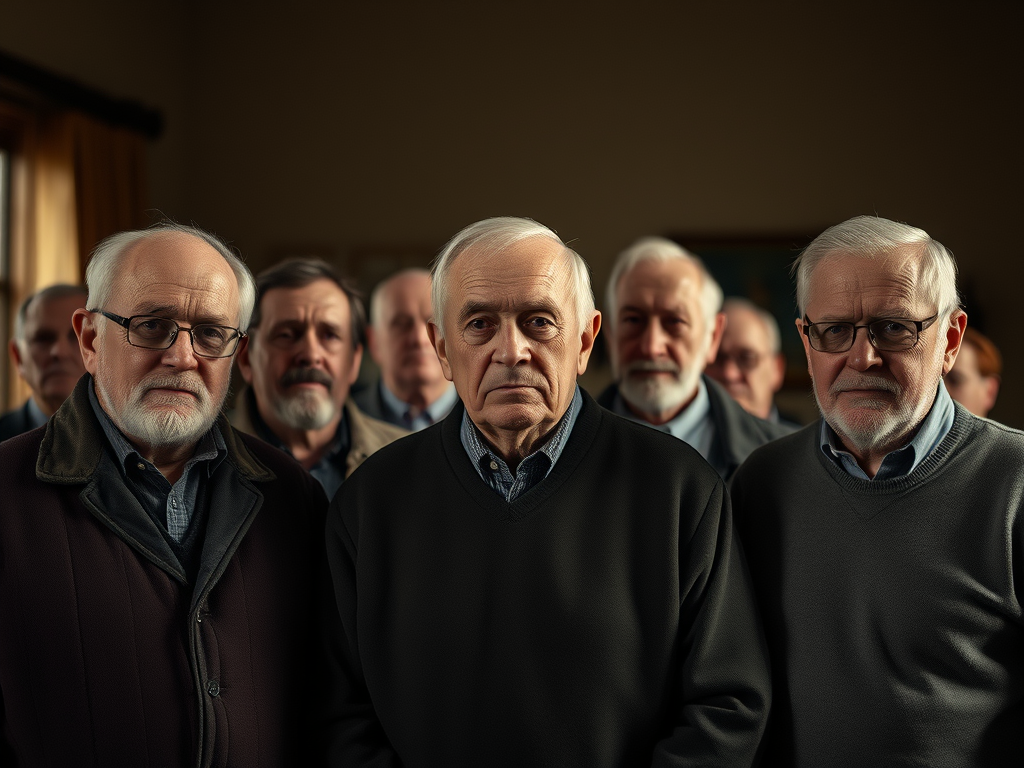
The push for accountability has largely been spearheaded by a group of older men who are challenging societal taboos surrounding sexual abuse, masculinity, and shame.


“The number of survivors is substantial, and the ripple effect of this trauma must resonate across Irish society,” said Tim Chapman, an academic and practitioner of restorative justice, a process that facilitates communication between victims and offenders in the hope of achieving resolution.
The reckoning began in 2021 when former students of two private boys’ schools, Willow Park School and Blackrock College, began sharing their experiences of abuse in a Facebook alumni group. The following year, Ireland’s national broadcaster RTÉ aired a documentary, “Blackrock Boys,” featuring harrowing testimonies from two brothers who were abused for years at Blackrock.
Both Willow Park and Blackrock are run by the Spiritans, a Roman Catholic religious order. In November 2022, the head of the Spiritans at the time, Father Martin Kelly, issued a formal apology to the victims of Blackrock, calling their abuse “cruel and indefensible.”
Since then, more survivors have come forward from other schools managed by different Catholic orders in Ireland.
Chapman was first contacted by survivors of Blackrock in 2021 and was later hired by the Spiritans to facilitate dialogue between the religious order and the abuse survivors. “I always tell these men, you have the power to stand up for the child you once were,” he said. “Now, they are able to share their stories.”
John Coulter, 63

John Coulter, who attended Willow Park and Blackrock in the late 1960s and early 1970s, vividly recalls two priests: one who molested students during music lessons, and another who would lean students over desks during math class and rub himself against them. Coulter still remembers the smell of one priest and the way saliva would collect at the corners of his mouth.
In 2021, while part of the alumni Facebook group, Coulter and his friends began sharing their abuse experiences. “In our time alone, we now know of 10 individuals who were molesting, abusing, and raping boys,” he said.
As the magnitude of the abuse became clearer, the men decided to take action. They formed a nonprofit advocacy group, Restore Together, to demand accountability. As a result, the Spiritans are now funding counseling for survivors and are in the process of establishing a formal reparations program.
“When you reach your 60s or late 50s, you might have the emotional capacity to deal with this,” Coulter explained.
Corry McMahon, 65

Corry McMahon was on a train between Dublin and its affluent southern suburbs when he saw the Spiritans’ formal apology to victims. He was overcome with emotion.
The significance of the setting was not lost on him: it was the same train route he used to take as a child, heading to Willow Park and Blackrock College. “I think about it more on this train,” he said, reflecting on the abuse he and his classmates endured.
McMahon was abused at 12 by two priests and a lay teacher. As part of Restore Together, he and three classmates held a press conference in November 2022 to encourage others to come forward, helping to break the silence surrounding such abuses.
“Picture a 12-year-old child you know. That was us,” he said, his voice cracking.
While he welcomes the government’s promise to investigate, he fears the inquiry will move too slowly. “There are men we know who need immediate action,” he said. “This is the time to address it, not in 10 years when many may be gone.”
The Department of Education stated that it was “keenly aware of the urgency” of addressing historical sexual abuse and would establish the terms of its inquiry as soon as possible.
Michael O’Keeffe, 65

Michael O’Keeffe, who was born with a visual impairment, was only 8 years old when he was sent to St. Joseph’s School for the Visually Impaired in Dublin, run by the Rosminian Catholic order. He recalls enduring both sexual and physical abuse, including being beaten by a priest, Louis Summerling, who had previously been accused of sexual abuse by another former student.
O’Keeffe remembers being forced to bend over the priest’s knee while being struck with a hairbrush. “I remember the shame and humiliation of that moment, from a so-called man of God,” he said. “We felt powerless to stand up to them.”
O’Keeffe reported the abuse to the police 15 years ago, but the investigation went nowhere.
The Association of Leaders of Missionaries and Religious of Ireland, which oversees the work of the Rosminians, expressed deep regret for the abuse in religious schools.
O’Keeffe, now a retired professor, chose to speak out in The Irish Times after the Blackrock revelations made national headlines and the government’s preliminary inquiry was published. “In Ireland, we just didn’t talk about these things,” he said. “We lacked the language for it, but now people are being given permission to speak.”
Mark Vincent Healy, 64

Mark Vincent Healy attended St. Mary’s College in Dublin, also run by the Spiritans. Between 1969 and 1973, he was sexually abused by two priests.
“I felt utterly destroyed by it,” he said. “It shattered my childhood.”
Healy eventually had a breakdown but later became an advocate for victims. He emphasized that the lasting impact of abuse goes beyond the crimes themselves. “What’s not always told is how your entire life is torn apart—economically, socially, in every relationship,” he explained.
Healy is one of the few victims to have successfully pursued a criminal case against one of the priests, Henry Maloney, who pleaded guilty in 2009 to abusing Healy and another boy at St. Mary’s.
Healy advocates for more than just a government inquiry; he calls for greater mental health support for survivors. “If we don’t learn from the past, we won’t protect today’s children,” he said.


Leave a Reply