

From the Surf to the Sermon: The Christian Surfers of Costa Rica

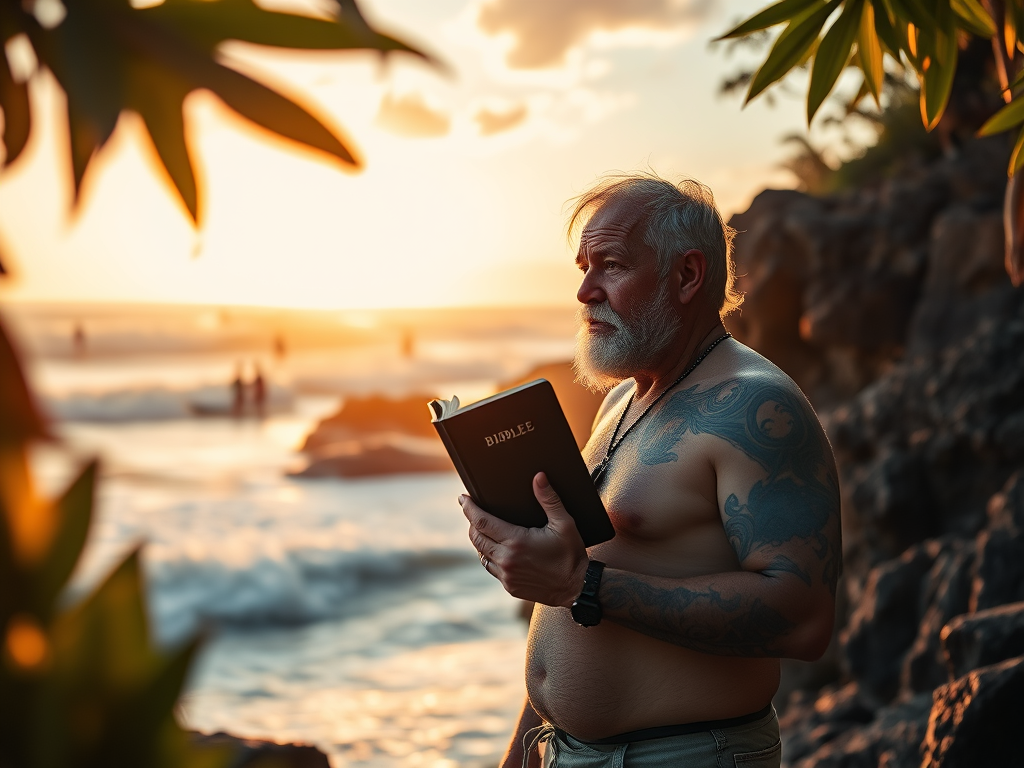
Chandler Brownlee stood on a rocky outcrop overlooking a secluded beach in Costa Rica, holding a Bible and gazing at one of the world’s most famous surfing waves.https://wordpress.com/
But today, his focus wasn’t on chasing the perfect wave—that part is a given. Instead, he was searching for surfers open to embracing Jesus Christ as their savior.

A native Floridian, 52-year-old Brownlee is a real estate agent, wildlife conservationist, and father to three daughters. Yet, his identity holds seemingly contrasting layers: a former Baptist minister and a tattooed, hardcore surfer. These facets have shaped him into a senior member of Christian Surfers, a global network of surf-loving missionaries.

As the sun dipped below the horizon, Brownlee watched the tide settle and surfers make their way back to shore. Strolling away from the beach, he stumbled upon three sunburned Canadians hanging out by their weathered R.V., passing around a joint.
“Where are you guys coming from?” he asked.
“Squamish,” one replied, referencing a small town near Vancouver, Canada. “We’ve been on the road for over a year, driving through Nicaragua. It’s been rough at times, but man, the waves down here are unreal.”

Brownlee’s face broke into a wide grin, framed by salt-and-pepper stubble.

“That’s what makes surfers such great missionaries,” he said with a chuckle. “They’re used to roughing it—sleeping wherever, eating whatever, waiting patiently for that perfect swell. And, sometimes, for the perfect chance to talk about God.”
Christian Surfers bridges the connection surfers feel with nature—a spiritual experience many acknowledge—and points them toward a deeper relationship with God.
The interdenominational group boasts over 175 chapters in more than 35 countries, from Japan to Norway and the United States. This year, they launched a new chapter in Pavones, Costa Rica, a small town near the Panamanian border renowned for having the world’s second-longest left-hand wave.
Pavones, with its population of roughly 4,000, attracts only the most dedicated surfers due to its isolation, lack of infrastructure, and dirt roads. For Brownlee, this commitment mirrors a deeper yearning.

“Even if you catch the perfect wave out here, you might still feel a void inside,” he said. “That’s where God steps in.”

He added with a grin, “People go searching for themselves through ayahuasca, but why not find meaning in knowing the Lord instead?”
Christian Surfers treads lightly to avoid pushing potential converts away. They trade button-up shirts for swimsuits and embrace tattoos, barefoot living, and casual conversations. Rather than pressuring anyone to attend church, they aim to “bridge the beach to the church,” as their motto suggests. The Surfers’ Bible they hand out features a wave on its cover instead of a traditional cross.
“When you say ‘church,’ surfers picture pews, stained glass, and organs,” Brownlee explained. “We’re not here to force anything. We’re here to hang out, surf, and show love.”

The Surfers’ Bible includes personal stories, like one from Bianca Buitendag, a South African surfer and Tokyo 2020 Olympic silver medalist. Her faith helped her handle losses with grace, learn from mistakes, and move forward.

Founded in Australia in the late 1970s, Christian Surfers was born out of a need to counter stigma. Its founders were criticized by churches for their tattoos and laid-back lifestyle and ostracized by surfers for being perceived as uptight and judgmental.
The group builds community by surfing when conditions are good and gathering over food or drinks to connect and discuss scripture when they’re not.
In Costa Rica, the Leon family has been pivotal in expanding Christian Surfers’ reach. In Esterillos Oeste, Kyle Leon prepared a pasta dinner as teenagers and young adults arrived for a Bible study led by her husband, Dennis.

Kyle first joined Christian Surfers in California during the 1990s. As one of the few women surfing at the time—and likely the only religious one—she felt out of place in traditional youth groups. But Christian Surfers offered a unique alternative: surfing with fellow believers and casual, beachside Bible discussions.
When her family moved to Costa Rica, they introduced the organization to Esterillos Oeste, where she met Dennis, who had recently joined a Pentecostal church but had quit surfing due to its association with partying.
Meeting Kyle helped Dennis reconcile his faith with surfing. “Jesus didn’t stay in a church,” he explained. “He taught through nature. His disciples were fishers of men.”
At the Leon household, teens lounged on couches, while dogs wandered in and out. Surfboards leaned against the walls, and a small cross hung beside stickers from skate brands.

“This isn’t a church,” Kyle said, gesturing to the cozy living room. “It’s a place where people can feel safe. You don’t have to believe to belong.”
After watching surf videos and sharing dinner, the group transitioned to Bible study. Dennis compared Apostle Paul to legendary surfer Kelly Slater, encouraging the group to draw from their faith, love of surfing, and connection with nature to serve their communities.
Their church, Pura Vida—meaning “pure life”—hosts beachside worship services during the dry season and gatherings near the local basketball court when it rains.
Dennis estimates about 40% of their attendees haven’t yet embraced Christianity, but he’s optimistic.
“This isn’t about pressure,” he said. “It’s just Dennis’s house.”

As the evening wound down, Dennis closed in prayer.
“Lord,” he said, “thank you for bringing us together—for the food, the waves, and this time to connect. Amen.”


Leave a Reply