
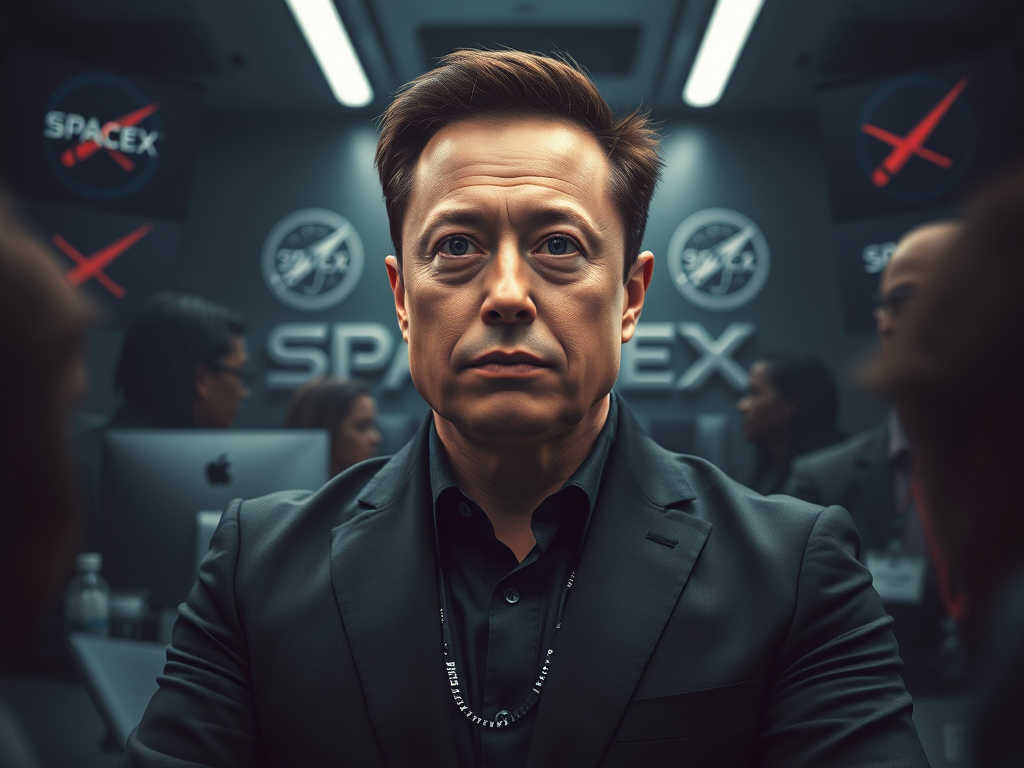

Elon Musk and SpaceX Face Federal Reviews After Violations of Security Reporting Rules

Elon Musk and his aerospace company, SpaceX, have repeatedly failed to meet federal reporting standards designed to safeguard national security, including withholding details about his meetings with foreign leaders, according to insiders and internal documents.
These lapses have raised significant concerns, particularly about Musk, the CEO of SpaceX, leading to at least three federal investigations, according to eight sources familiar with the matter. The Department of Defense’s Office of Inspector General launched a review this year, and last month, both the Air Force and the Pentagon’s Office of the Under Secretary of Defense for Intelligence and Security initiated separate inquiries.https://wordpress.com/

Additionally, the Air Force recently revoked Musk’s high-level security clearance, citing potential security threats. Several allied nations, including Israel, have also raised alarms over the possibility of Musk sharing sensitive information, according to defense officials.
Internally, SpaceX has a team tasked with ensuring compliance with national security protocols, but some of its members have raised concerns with the Defense Department’s Inspector General and other authorities about the company’s inconsistent reporting practices, dating back to at least 2021. Between 2019 and 2023, SpaceX secured over $10 billion in federal contracts from the Pentagon and NASA, making it a key defense contractor.

Musk’s increasing global influence, through his ventures like SpaceX, social media platform X, and electric vehicle company Tesla, has made his actions subject to greater scrutiny. While Musk has long challenged conventions that don’t align with his interests, the stakes are particularly high when it comes to matters of national security.
For years, SpaceX employees tasked with adhering to disclosure protocols reluctantly allowed Musk to bypass many of these procedures, fearing for their jobs, according to company insiders. However, as Musk’s power grows, this issue has reached a critical point. A vocal supporter of President Donald Trump, Musk was recently appointed to help streamline the federal bureaucracy and has participated in calls with foreign leaders, adding to concerns.

SpaceX workers have expressed concerns about Musk’s handling of sensitive information, particularly as he freely shares details on X about everything from video games to diplomatic meetings. These worries are heightened by Musk’s top-secret security clearance at SpaceX, which grants him access to classified materials, including advanced U.S. military technology.
Security clearance rules require Musk to disclose personal information and foreign travel as part of a “continuous vetting” process, allowing the government to assess his suitability to handle sensitive information. However, since at least 2021, Musk and SpaceX have not complied with these requirements, withholding details about his travels and meetings with foreign leaders, as well as his use of prescription drugs.

It remains unclear why Musk did not report some of this information, especially given his public posts on X, which sometimes contradict the details he has withheld from the Defense Department. It is also unclear whether Musk directly instructed SpaceX not to report this information. No federal agency has accused him of leaking classified material.
Senator Jeanne Shaheen, a New Hampshire Democrat and member of the Senate Armed Services and Foreign Relations Committees, expressed concern, noting the potential risks of having someone with major government contracts in a position where they could inadvertently or intentionally disclose sensitive information. Last month, she asked the Air Force and the Defense Department’s Inspector General to investigate Musk’s interactions with foreign leaders, including Russian President Vladimir Putin.
The Air Force and the Pentagon launched their reviews following inquiries from Shaheen and another legislator. On Friday, after The New York Times questioned Air Force Secretary Frank Kendall about the matter, he replied that federal privacy laws prevented him from discussing Musk’s case but emphasized that the Air Force takes security issues seriously.
It is uncertain what impact these investigations will have on Musk or SpaceX. Some employees who raised concerns about the company’s reporting practices have been fired or pushed out, sources said. Two defense officials revealed that senior Pentagon leaders had been advised to avoid discussing the matter to avoid making themselves targets of Musk, who has threatened to cut government staff and budgets in his new role.
As per constitutional law, President Trump could grant security clearance to anyone he chooses after his inauguration, even if objections arise within the government.

Musk and his legal team have not responded to requests for comment. After the publication of this article, Musk posted on X, claiming, “Deep state traitors are coming after me, using their paid shills in legacy media.” He added, “I prefer not to start fights, but I do end them…”
A Pentagon spokesperson declined to comment, and the Office of the Inspector General, an independent watchdog, stated that it could neither confirm nor deny the existence of an ongoing investigation.
Musk’s security clearance has been a contentious issue for years. Until 2018, he held a mid-level clearance, but that year, SpaceX applied for a top-secret clearance on his behalf. Many SpaceX employees hold some level of clearance, as the company is a defense contractor involved in missions such as launching NASA astronauts and providing Starlink satellite internet to the military. SpaceX is also assisting the U.S. government in building a new network of spy satellites.
Security clearances are essential for protecting intelligence and state secrets. Applicants undergo thorough vetting, including checks on their financial background, personal relationships, and interviews with family and friends.
Musk’s top-secret clearance took more than two years to approve — an unusually long process. This delay was partly due to concerns about his business dealings in China and his appearance on Joe Rogan’s podcast, where he smoked marijuana — a violation of federal regulations for clearance holders. Despite these concerns, Musk ultimately received the clearance.
Individuals with security clearance must self-report various details about their lives, including foreign travel and personal conduct, as part of continuous vetting. The Air Force, as part of its contracts with SpaceX, pays the company to ensure compliance with these rules.
Until recently, SpaceX’s continuous vetting team was overseen by retired Air Force General Terrence O’Shaughnessy, a key Musk ally. Under his leadership, some executives without proper clearance were allowed into classified meetings, and there was resistance to reporting violations of security clearance rules, including by Musk.
General O’Shaughnessy referred questions to SpaceX, and Daniel Collins, a former Defense Department official now overseeing the team, did not respond to requests for comment.
Some SpaceX employees expressed fear of retaliation for speaking out. On November 2, Cody Miller, an Army veteran responsible for security clearances, emailed executives accusing the company of selectively enforcing government rules. SpaceX’s human resources department contacted Miller the same day and urged him to resign.
Despite the challenges, the issue of Musk’s compliance with security rules continues to raise serious questions, with concerns about his ability to handle classified information mounting both within the U.S. and among international allies.

Leave a Reply