

Hegseth’s Guard Left the Army After the Beating of a Civilian During Training

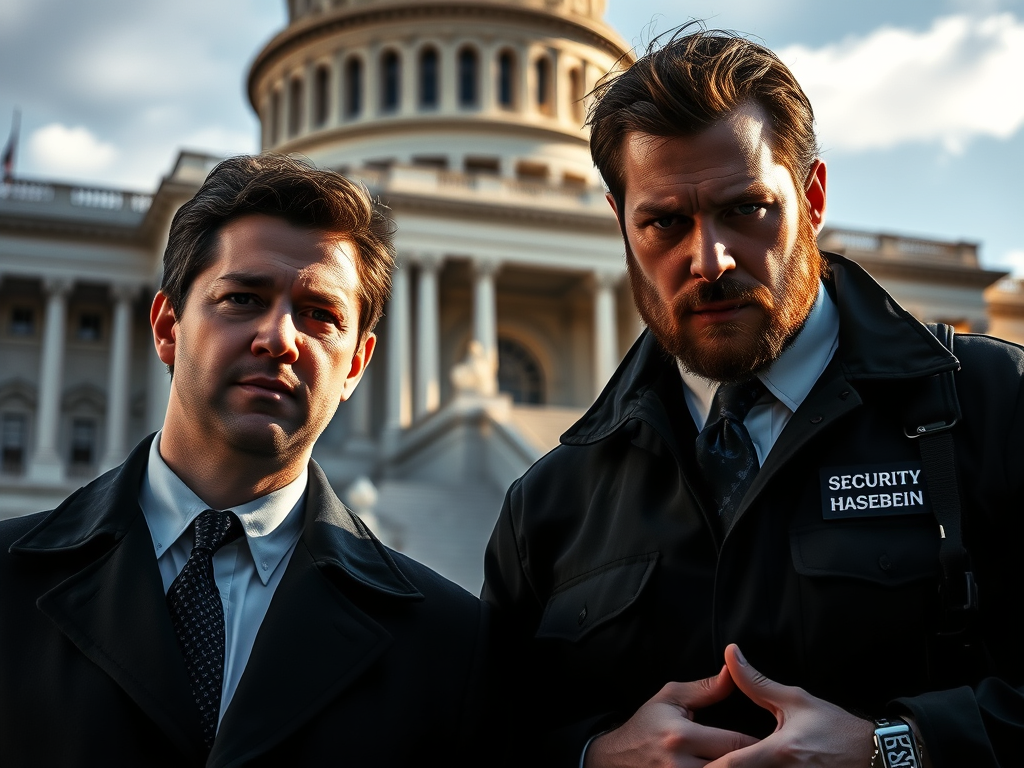
When Pete Hegseth visited Capitol Hill this month to meet with senators and demonstrate his qualifications to lead the Department of Defense, he was accompanied by a security guard with a troubling past.https://wordpress.com/
The guard, John Jacob Hasenbein, a former Army Special Forces master sergeant, left the military after a 2019 training incident in which he was accused of beating a civilian role player. The victim was allegedly kicked, punched, and left hogtied in his own blood after the altercation.
Hegseth’s decision to have Hasenbein as his security escort continues a pattern of him supporting soldiers with controversial histories. Hegseth has repeatedly criticized military leadership for being overly “woke” and for waging a “war on warriors.”
Hegseth’s lawyer, Timothy Parlatore, defended Hasenbein, claiming that he had been unjustly treated by a flawed military justice system. Parlatore also stated that Hegseth was proud to work with Hasenbein, emphasizing that stories like his highlight the need for change within the Department of Defense.
Hasenbein was charged with aggravated assault and reckless endangerment after the incident. In 2020, a military court found him guilty of the assault, but the case was declared a mistrial when it was revealed that one of Hasenbein’s friends had been influencing a juror. The military chose not to retry the case.

Ahmed Altameemi, the man allegedly assaulted by Hasenbein, spoke out, describing him as someone with “real anger issues” and questioned why Hasenbein was hired in the first place, given his history. He also expressed concern about whether proper background checks were conducted.
In a statement to The New York Times, Hasenbein insisted that he had not been convicted and had been honorably retired after 22 years of service. He emphasized that his military career ended due to an agreement rather than another trial, following allegations that false and misleading statements from a private contractor’s employees led to his forced departure.
It is unclear whether Hegseth was aware of Hasenbein’s past when he hired him, but details about the case have been available online for years.
Michèle A. Flournoy, a former undersecretary of defense under President Obama, criticized Hegseth’s decision, calling it “not a good look” and pointing to a broader pattern of Hegseth disregarding efforts to hold the military accountable.
Hegseth’s road to confirmation as defense secretary has been filled with obstacles. He has faced accusations of excessive alcohol use, which he denies, and was previously accused of rape in 2017—a claim he denied, though it led to a financial settlement outside of court. While initially some Republican senators had doubts about him, President Trump has consistently supported Hegseth.

The incident that ended Hasenbein’s military career occurred at Fort Knox, Kentucky, during a training exercise for his Special Forces group. Hasenbein’s team, working with a private contractor, was simulating a hostage rescue. Altameemi, a former Iraqi counterterrorism officer now living in the U.S., was playing the role of an ISIS fighter with knowledge about the hostage. The situation, however, escalated into what Altameemi described as an unprovoked, brutal assault.
Multiple witnesses reported that Hasenbein used excessive force, including knee strikes and hammer-fist blows, even after others tried to deescalate the situation. Altameemi was left with serious injuries, including a broken nose and facial trauma, and had to be hospitalized after the exercise.
During the court-martial, Hasenbein’s defense argued that his actions were justified given Altameemi’s behavior, but the prosecution contended that the force used was excessive, especially considering Altameemi was not wearing protective gear. The jury found Hasenbein guilty of aggravated assault but acquitted him of reckless endangerment, and he received no punishment.
Following the court-martial, the case was dismissed due to improper influence on the jury, after it was revealed that one of Hasenbein’s friends had been speaking to a juror.
Hasenbein later filed a defamation lawsuit against the private contractor involved in the exercise, accusing them of a conspiracy to damage his reputation. He claimed he was forced out of the military due to false statements made by the contractor’s employees. That case was settled in 2021.
After leaving the military, Hasenbein found work in the private security industry.





Leave a Reply