
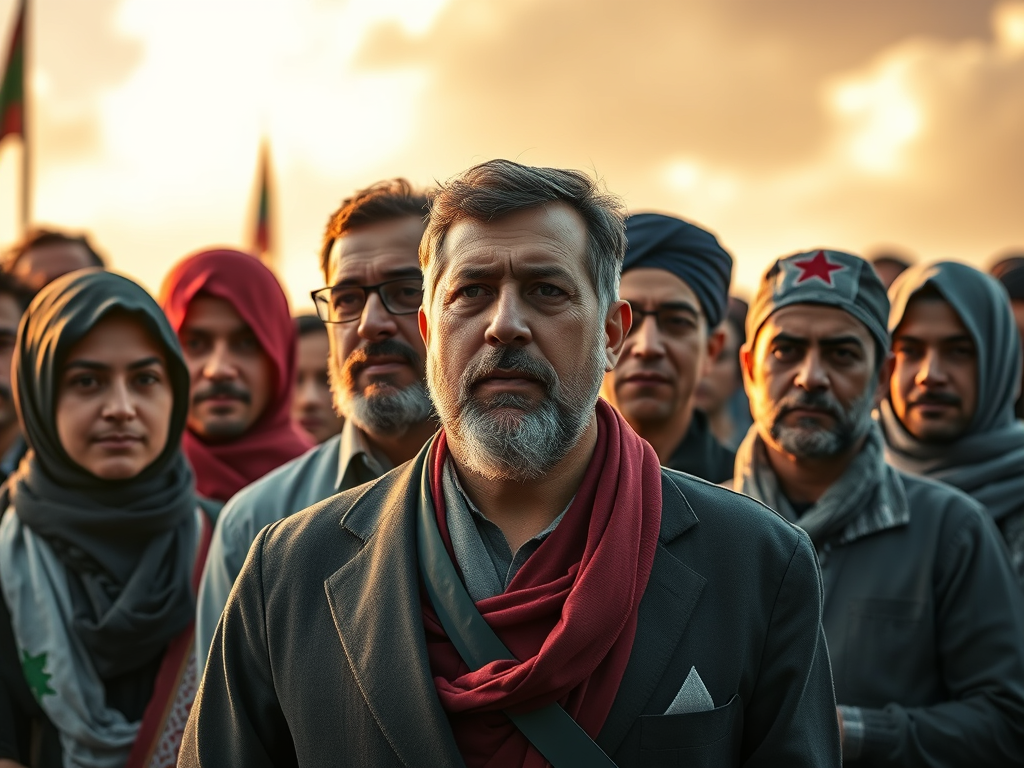

Revolutions Swept the Middle East in 2011. Will Syria’s End Differently?

In 2011, when protesters began their efforts to overthrow Syrian President Bashar al-Assad, they were part of a broader wave of uprisings known as the Arab Spring, which aimed to remove autocratic leaders throughout the Middle East.https://wordpress.com/
While opposition movements in other countries saw rapid success, Syria’s revolution spiraled into a devastating 13-year civil war that has claimed hundreds of thousands of lives, displaced millions, and divided the country into competing factions.

The fall of President al-Assad offers Syrians a moment of joy that their counterparts in Egypt, Libya, Tunisia, and Yemen experienced more than a decade ago, where dictators were ousted much faster.
However, the experiences of these four countries since their uprisings also offer cautionary lessons. In Egypt and Tunisia, new authoritarian figures emerged, undermining attempts to build democratic systems. In Libya and Yemen, rival militias clashed for power, plunging both nations into civil war and division.

“The survivors of the past 13 years deserve to celebrate their victory before turning their attention to the future,” said Alistair Burt, a former UK minister who played a key role in shaping the country’s Middle Eastern policy during the Arab Spring. “But we must also remember the region’s track record since 2011,” Burt added. “While we hope for the best, we must be prepared for the worst.”
Syria’s situation is particularly complex. The Islamist rebel coalition that led the charge against Damascus, Hayat Tahrir al-Sham, is one of several rival opposition groups that must now agree on how to manage the country in the post-Assad era.
Though Hayat Tahrir al-Sham is currently the most powerful faction in Syria, it is vying for influence with another Turkey-backed group in the north and a Kurdish-led, U.S.-supported alliance in the east. Meanwhile, southern Syria is controlled by local militias, including groups led by the Druse, an Islamic sect.
Previously linked to Al-Qaeda, Hayat Tahrir al-Sham has worked to position itself as a moderate force that promises to protect Syria’s minority groups, including Christians, Druse, and Alawites—who make up much of al-Assad’s base.
However, analysts warn that unless the group, which is designated a terrorist organization by the U.S., lives up to its promises, it could prolong the conflict. Militias from different minorities might feel compelled to defend their territories against the new central government.
“You can’t simply tell people they are safe—they need to believe it,” said Burt. “This is why the actions of Hayat Tahrir al-Sham and other armed groups in the newly liberated cities are so critical.”
International powers like Iran, Turkey, Russia, and the United States, which back different factions, are likely to try to maintain influence, further complicating Syria’s political future.
The role of al-Assad’s former generals and security leaders remains unclear, and their actions could be pivotal in shaping the country’s next chapter, as military leaders did in other nations after the fall of their dictators.

In Egypt, after Hosni Mubarak’s ouster, the military controlled the transition, eventually staging a coup in 2013 that removed Mohamed Morsi, the country’s first democratically elected president. Morsi’s Islamist rule alienated many Egyptians, leading to a return to military dominance.
Libya, after the fall of Muammar Gaddafi in 2011, descended into civil war, and the country remains divided. In Yemen, the departure of Ali Abdullah Saleh in 2012 also triggered a civil war, allowing the Iran-backed Houthi group to take control of the capital.
Tunisia was once the success story of the Arab Spring, holding free elections after the fall of Zine el-Abidine Ben Ali. But in 2021, Tunisia returned to autocratic rule as President Kais Saied began consolidating power and curtailing freedoms.
Some analysts worry that al-Assad’s departure will only exacerbate Syria’s divisions, widening the rifts caused by the long civil war. However, others believe that Syrians, shaped by their brutal experiences, may be more prepared than their counterparts in Egypt and beyond to navigate the transition.
According to Sanam Vakil, head of the Middle East and North Africa program at Chatham House, the prolonged suffering in Syria has allowed the population more time to prepare for a post-Assad era. “What sets this moment apart for Syria,” Vakil explained, “is that there has been significant learning, mobilization, and activism.”
For now, many Syrians are simply relishing the moment of al-Assad’s downfall. Al-Assad’s government was notorious for its brutality, throwing countless opponents into overcrowded, filthy prisons where many were tortured or killed. His forces used barrel bombs and chemical weapons on civilians, and his refusal to step down in 2011 sparked the civil war.
“No matter what happens next, it can’t be worse than al-Assad’s regime,” said Hashem Alsouki, a former Syrian civil servant who was detained and tortured early in the war. He later fled to Europe with his family. “Yes, there are concerns about the future, but I believe we can overcome this phase. The Syrian people have learned a lot over the past 13 years.”




Leave a Reply