
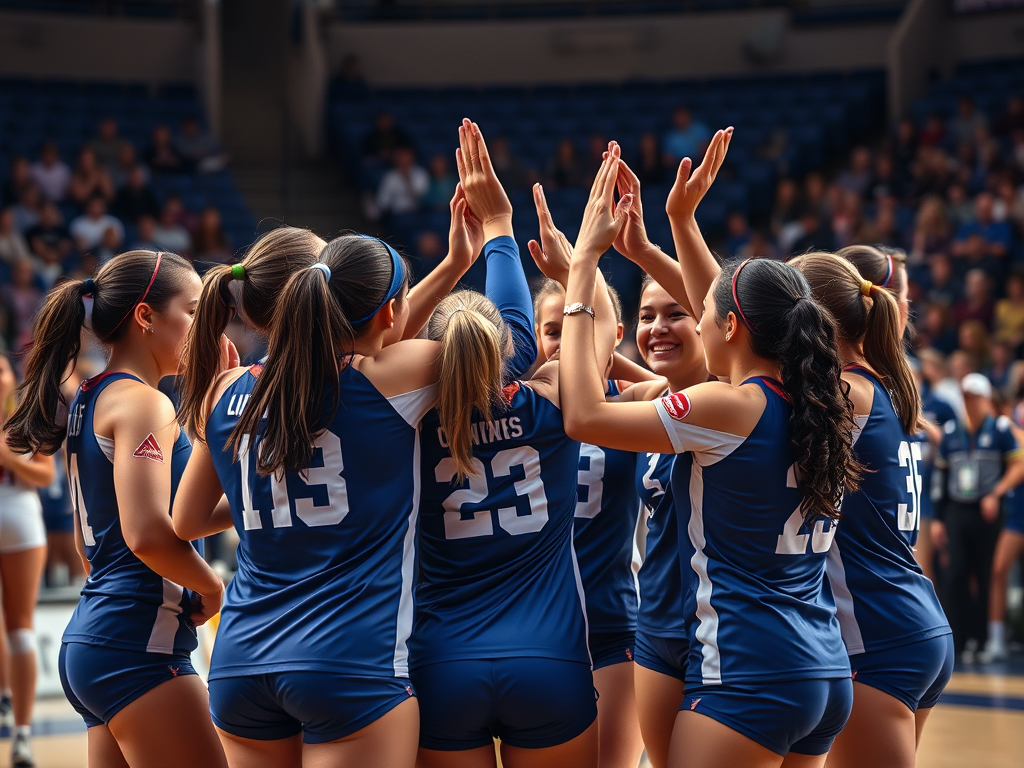

After months of intense debate surrounding a transgender woman’s right to play on a women’s sports team, San Jose State University concluded its season on a disappointing note, losing the conference volleyball championship on Saturday. This marked the end of a turbulent season, overshadowed by a controversy that extended well beyond sports.
In a match held near the Las Vegas Strip, the Spartans were defeated by Colorado State University in the Mountain West Conference tournament, thus failing to secure a spot in next month’s NCAA tournament. Had they advanced, the spotlight on San Jose State would have intensified even more.
The Spartans lost to Colorado State, the tournament favorites, three sets to one. Remarkably, the team reached the final without having played a single game in the tournament. They had received a first-round bye, and then, for the third time this season, Boise State refused to play in the semifinals, citing a protest over the inclusion of San Jose State’s transgender player.
This player, who had been with the team for three seasons without issue until this year, did not speak publicly after the game, and has remained silent throughout the season. For privacy reasons, The New York Times has chosen not to identify her, and the university has not confirmed whether she is transgender, citing educational privacy laws.
In addition to Boise State, four other teams forfeited matches against the Spartans this season due to the player’s participation, thrusting San Jose State into the heart of one of America’s most divisive issues. The controversy sparked heated reactions from both supporters and detractors of the transgender player, drawing unusual attention to women’s college volleyball.
Despite the turmoil, the final game proceeded without incident. Fans cheered for every player introduced, and there were no protests to disrupt the match. In what would be their final game together, the Spartans played as if the controversy hadn’t affected them. Between points, the players high-fived, motivated and supported one another. After the match, they embraced each other, and some players climbed into the sparsely filled stands to take photos with family and friends.
Todd Kress, the team’s coach, expressed pride in his players, noting in an email that they stayed united through a challenging season and played with passion for the sport. “They put their love for the game above all else,” Kress wrote, “and played as a team every match.”
The parents of Randilyn Reeves, a Spartan player, acknowledged the challenges the athletes faced, particularly when dealing with hostile protests at some games. Jennifer Reeves stated that while she didn’t necessarily agree with the inclusion of transgender women in women’s sports, she respected her daughter’s desire to play volleyball, as long as it remained legal under NCAA regulations.
Earlier in the week, two women protested outside the arena, calling for the protection of women’s sports. One held a sign reading “Protect Women’s Sports,” while the other wore a red hat with the slogan “Make Women Female Again,” echoing the language of Donald Trump’s campaign. Both argued that the issue shouldn’t be politicized.
However, on Saturday, there were no visible protests before the championship match.
With the Spartans’ loss, the immediate turmoil surrounding the team has subsided, but the larger debate over transgender women’s rights in sports is far from over. Legal battles regarding transgender athletes’ participation in sports are ongoing across the country, especially as 25 states have introduced laws banning transgender athletes from competing in teams that align with their gender identity, according to the Movement Advancement Project, an LGBTQ advocacy group. Some of these laws are currently being contested in courts.
In recent years, courts have largely sided with transgender athletes, upholding their right to compete. However, new cases continue to emerge, such as a federal judge’s decision in August to temporarily stop a Virginia school district from preventing a transgender middle school student from joining a girls’ team.
Another high-profile case involves a lawsuit filed by a group of athletes who challenged the NCAA’s decision to allow transgender swimmer Lia Thomas to compete in the 2022 national championships. There are also pending lawsuits involving transgender minors in Idaho and West Virginia that could ultimately reach the Supreme Court.
This month, in an interview, Spartans’ team captain Brooke Slusser expressed feelings of betrayal, citing the public revelation of her transgender teammate’s identity through a conservative website in April. Slusser voiced her belief that it was unfair for a transgender woman to compete on a women’s team. As a result, Slusser, along with the Spartans’ assistant coach, filed a lawsuit seeking to remove the transgender player from the team, arguing that her inclusion violated Title IX, which mandates gender equity in federally funded institutions.
Along with 10 other current and former players from the Mountain West Conference, Slusser and the assistant coach filed a suit against the conference, San Jose State’s head coach, and others. They hoped the transgender player would be removed before the tournament, as they felt that advancing to the final without playing any games due to forfeits was unfair to other teams.
This week, a federal judge dismissed the lawsuit, allowing the transgender player to remain on the team. Another judge later rejected the plaintiffs’ appeal.
Judge S. Kato Crews, appointed by President Biden to the U.S. District Court in Colorado, ruled that legal precedents, including Title IX and the 14th Amendment, protect transgender individuals’ right to compete in sports. He emphasized that the plaintiffs had plenty of time to address the issue before the tournament, given that the player had been on the team for several seasons.
Bill Bock, representing Slusser and the other plaintiffs, stated on Friday that they would continue pursuing their lawsuit against the conference and San Jose State, seeking damages for what they claim is a violation of Title IX, the Equal Protection Clause, and the First Amendment. They are also requesting a court order to prevent the defendants from implementing policies that allow males to compete in women’s sports.




Leave a Reply