
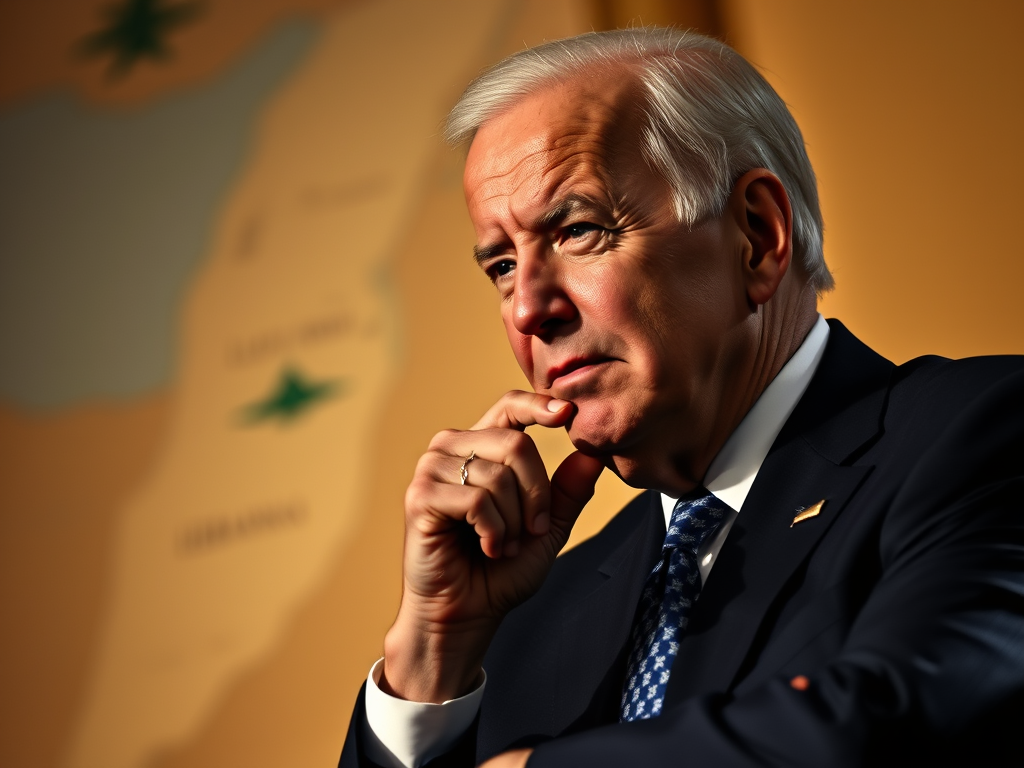

After facilitating a ceasefire in Lebanon, President Biden expressed optimism that the deal could serve as a model for a similar breakthrough in Gaza. However, analysts cautioned on Wednesday that this assessment may be premature, as the situation in Gaza is far more complex than in Lebanon.
The truce in Lebanon was partly achievable because Hezbollah, weakened by months of targeted killings and military setbacks, lost much of its leverage in negotiations. On the Israeli side, Prime Minister Benjamin Netanyahu was able to make concessions, as a deal in Lebanon posed no serious risk to his domestic power.
In contrast, achieving a breakthrough in Gaza is much more difficult. Hamas still holds approximately 100 hostages, a powerful negotiating tool that allows their lead negotiator, Khalil Al-Hayya, to maintain a hardline stance. Additionally, Netanyahu faces domestic pressures that make it politically dangerous to compromise with Hamas. His far-right coalition, many of whom support the idea of settling Gaza with Jewish civilians post-conflict, has threatened to withdraw from his government if the war ends without Hamas’s complete defeat. In Lebanon, Netanyahu faced fewer such domestic constraints.
“The Lebanon deal happened because Netanyahu wanted it and Hezbollah needed it — and because it wasn’t a deal breaker for Netanyahu’s coalition,” said Aaron David Miller, a former U.S. peace negotiator. “The Gaza situation is fundamentally different.”
Despite these challenges, both U.S. and Israeli officials have expressed hope that the Lebanon truce could mark a turning point. President Biden reiterated his belief that the agreement could reignite momentum in the stalled Gaza negotiations, even as they remain at an impasse. On social media, Biden committed to pushing for a renewed effort on Gaza, despite the lack of progress for months.
Netanyahu suggested that Hezbollah’s withdrawal from the conflict might weaken Hamas by depriving it of a key ally, thereby forcing it to capitulate. “Hamas was counting on Hezbollah to fight by its side,” Netanyahu said in a recorded speech. “With Hezbollah out of the picture, Hamas is left on its own. We will increase our pressure on Hamas to help us release our hostages.”
However, Palestinian analysts argued that Hamas, despite suffering setbacks, is unlikely to surrender the hostages or relinquish control over Gaza. Though Hamas’s leadership has been weakened and Gaza’s residents are suffering, the group’s remaining leaders are holding out for a deal that ensures its survival.
“Hamas is unlikely to give up or compromise,” said Mkhaimar Abusada, a Palestinian political scientist. “There is no light at the end of the tunnel for Gaza.”
The situation in Gaza is complicated by Israel’s military strategy. Although Israel has inflicted heavy damage on Gaza, it has avoided occupying large parts of the land it has taken. This pattern of retreat, after defeating local Hamas forces, has allowed Hamas to regroup. Breaking this cycle would require a comprehensive plan for Gaza’s post-war future, which Netanyahu has yet to propose. He faces the delicate task of balancing the conflicting demands of his coalition partners and international allies.
Saudi Arabia has indicated it might normalize relations with Israel if a Palestinian state is established in Gaza and the West Bank, but Netanyahu’s coalition partners oppose such a move. A deal with Saudi Arabia could strengthen Netanyahu’s foreign policy legacy, especially following the disastrous Hamas-led attack on Israel in October 2023. However, such a deal could risk fracturing his domestic coalition, leaving him vulnerable both politically and legally, given his ongoing corruption trial.
Some analysts believe Netanyahu’s reluctance to compromise over Gaza may stem from his fears of angering his base or of losing political support, particularly after making concessions in Lebanon. “He’s less likely to make concessions in Gaza,” said Michael Koplow of the Israel Policy Forum. “The pressure from his coalition will only increase, urging him not to make any premature compromises.”
On the other hand, some have speculated that Netanyahu’s willingness to compromise in Lebanon may have been driven by fear of losing U.S. diplomatic support or facing a potential arms embargo. In 2016, during the Obama administration, Israel faced a diplomatic blow when the U.S. chose not to veto a U.N. resolution condemning Israeli settlements. Netanyahu fears that Biden could follow a similar course.
At the same time, some hope that Netanyahu, having navigated domestic opposition to a deal in Lebanon, might be willing to take similar risks in Gaza. For families of hostages, a diplomatic deal seems to be the best hope for their loved ones’ survival, and they are intensifying their calls for negotiations.
For now, Netanyahu appears to have bought himself some time, according to Mazal Mualem, a biographer of the Israeli prime minister. “Netanyahu is always buying time and maneuvering,” Mualem said. “Yesterday, he bought time until President Trump takes office.”




Leave a Reply