
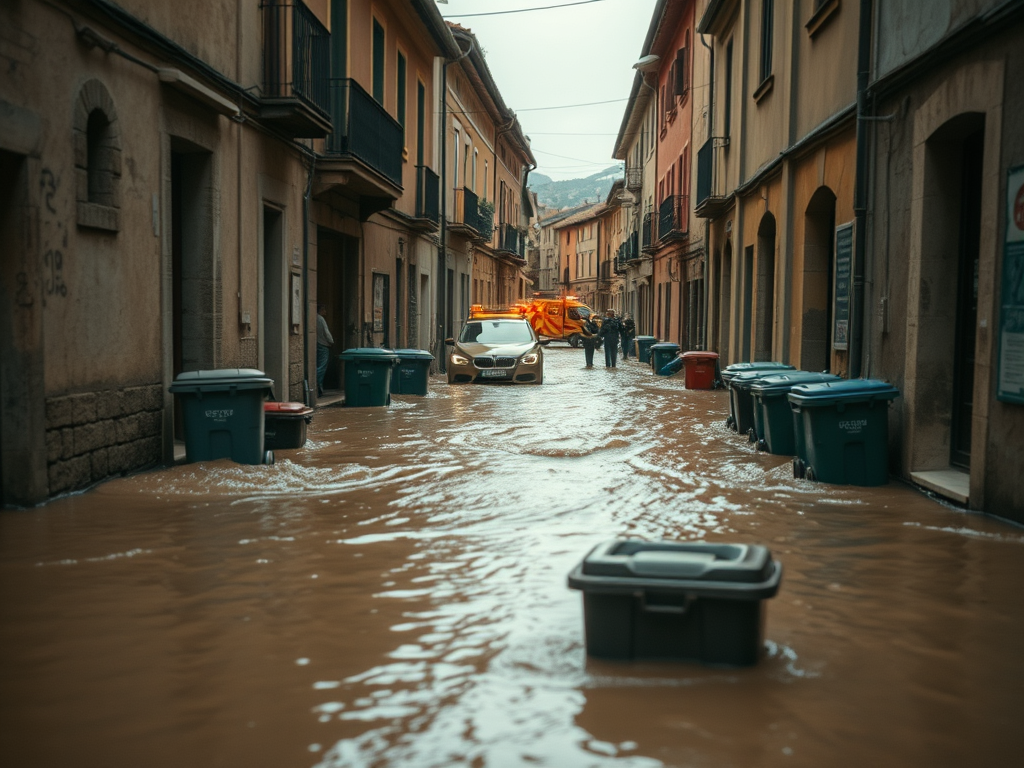

Just hours before a torrent of mud swept through towns around Valencia, claiming the lives of hundreds and leaving many trapped, water began surging through the small municipality of Utiel in Spain.
Utiel, a quiet wine-producing town situated inland along the upper reaches of the Magro River, is about an hour’s drive from Spain’s densely populated eastern coastline. This region was recently devastated by some of the worst flooding Europe has seen in decades.

On the morning of October 29, heavy rainfall began in Utiel. By early afternoon, water several inches deep covered the town’s narrow cobblestone streets. By 2 p.m., the Magro River had overflowed, sending a surge of muddy water through the streets, reaching the windows of low-lying homes. Trash cans and vehicles were swept along like toys in the deluge. By 3 p.m., Mayor Ricardo Gabaldón had contacted firefighters and the military emergency unit for assistance.
“Everyone knew we were drowning,” Gabaldón said.
Despite this, regional authorities failed to warn communities downstream that the Magro was overflowing and heading their way, local mayors said. Hours later, the floodwaters struck those areas as well.

“We weren’t warned,” said José Javier Sanchis Bretones, the mayor of Algemesí, where evening floods claimed at least three lives.
The cause of the delayed alert remains unclear. Officials suggested that the severity of the situation and its potential impact may have been hard to predict. However, anger among residents is growing as they question whether the disaster could have been less deadly if they had received timely warnings.
More than two weeks after the floods, residents in towns around Valencia are still removing mud that coated everything below eye level. The tragedy claimed at least 221 lives, with seven people still missing. Streets remain blocked by debris, and countless businesses and homes are in ruins.
This extraordinary weather event, likely exacerbated by climate change, highlights how such disasters are becoming more frequent and unpredictable. Yet the catastrophe also exposed significant delays in the authorities’ response.

Throughout the day, weather and river-monitoring agencies had repeatedly warned regional authorities about torrential rain and dangerously high water levels in typically dry rivers and ravines. While the warnings underestimated the disaster’s full scope, the seriousness of the situation became evident by midday. A national weather agency official even appeared on Spanish television, explaining that one area had received the equivalent of five gallons of water per square foot.
The official cautioned that downstream communities, where it was not raining, could still face severe flooding, creating a false sense of security. Yet the Valencia regional authorities, responsible for managing such emergencies, argued they lacked sufficient information to grasp the magnitude of the threat.
“If we didn’t have the information, we couldn’t act,” said Salomé Pradas, the regional official overseeing emergencies.

However, Pradas admitted that she only became aware of an emergency text-alert system at 8 p.m., hours after the region was inundated. The system had been implemented in 2023. This past week, the regional president dismissed her from her position.
By the time the first general alert was sent out at 8:11 p.m., many residents were already waist-deep in water or worse.
“When the alert came, my grandfather had already drowned,” said Carlos Cervera, a resident of Paiporta, where over 50 people lost their lives.

‘Things Were Already Bad’
Utiel’s mayor, Ricardo Gabaldón, awoke at 6 a.m. on that October morning to find heavy rain lashing his window. He contacted neighboring mayors and quickly decided to close local schools.
Shortly afterward, the national weather agency issued a red alert—the highest level—to regional authorities, warning of severe rainfall in Valencia. But according to Gabaldón, conditions in Utiel were already deteriorating.

The Magro River, prone to rising near Utiel, was on the verge of breaching its banks as relentless rain continued to fall. By midday, regional authorities responded to the alerts by posting warnings on social media, advising people to avoid rivers and monitor conditions.
For Utiel, though, the situation was already critical.
At 1 p.m., resident Rosalía Arenas filmed a few inches of water on her street. By 1:49 p.m., her road was submerged, and within another half-hour, the water was nearly at her home’s windows. Around 2 p.m., Gabaldón requested help from national and regional authorities, though he didn’t notify downstream mayors, assuming that higher authorities were already aware of the situation.
“What was I supposed to do? Let my neighbors die while I searched for phone numbers of mayors I didn’t even know?” he said.

Tragically, rescue efforts could not save everyone in Utiel.
A Downstream Catastrophe
The torrential rains also affected other waterways, such as the Rambla del Poyo, a gorge originating inland that flows through Valencia’s suburbs. Downstream towns like Paiporta experienced a false sense of security under clear skies.
Construction workers continued their tasks, residents returned from hair appointments, and older individuals relaxed in their ground-floor apartments. No one anticipated the flood.

It wasn’t until 6 p.m., when a town employee reported high water levels, that Paiporta’s mayor, María Isabel Albalat, realized the danger. By 6:30 p.m., floodwaters engulfed her home, rising nearly six and a half feet.
She immediately called Pilar Bernabé, the Spanish government’s Valencia representative, warning, “My town is flooding, and many people are going to die.”




Leave a Reply