
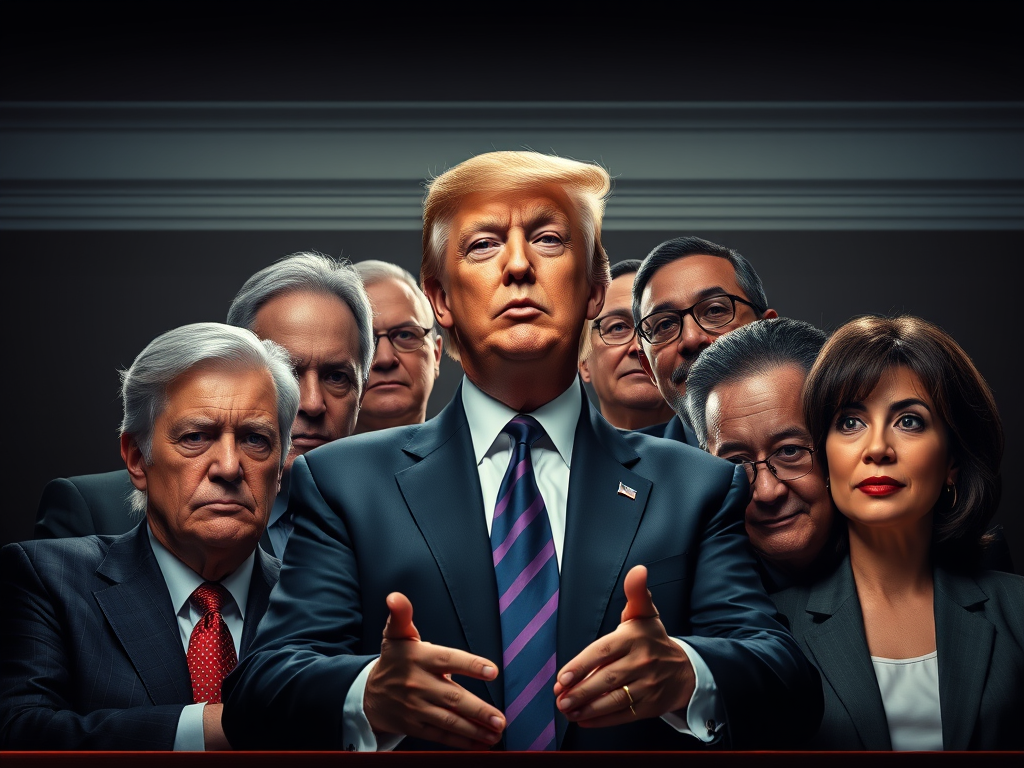

President-elect Donald J. Trump has finalized his cabinet selections and key appointments, crafting what his team describes as a cohesive, loyal, and MAGA-focused administration. However, a closer examination reveals at least three distinct factions and a mix of ideologies, temporarily subdued to navigate the confirmation process.
One faction, informally called the “revenge team,” consists of nominees tasked with dismantling the Justice Department, intelligence agencies, and the Defense Department. Their mission is to root out the so-called deep state and those involved in Mr. Trump’s previous legal battles.
Another faction, dubbed the “calm-the-markets team,” features figures like Scott Bessent, a Wall Street billionaire and Mr. Trump’s Treasury Secretary pick. While Bessent aligns with MAGA priorities such as deregulation and tax cuts, his goal is to ensure that extreme measures, like high tariffs that could spark inflation, don’t derail the post-election stock market rally.
A third group, the “government shrinkage team,” led by Elon Musk and Vivek Ramaswamy, aims to significantly reduce federal spending. Musk has proposed cutting $2 trillion annually from the budget—an amount exceeding the total federal payroll. This ambitious plan underscores their commitment to reducing government size.
The extent to which these groups will collaborate—or clash—remains uncertain, presenting one of the incoming administration’s biggest challenges.
Diversity of thought within a presidential cabinet is typically seen as a strength. Yet, what stands out about Mr. Trump’s recent appointments is the variety of backgrounds and ideologies concealed beneath a surface-level loyalty to MAGA and the President himself. Some nominees seem more at home in boardrooms or academic institutions than at a MAGA rally.

“There’s more ideological variety here than I anticipated,” remarked presidential historian Michael Beschloss. He noted that historical precedent suggests debates among cabinet members, if conducted respectfully, could lead to successful policy outcomes. However, Chris Whipple, author of The Gatekeepers, pointed out that Mr. Trump’s unpredictable decision-making process makes ideological consistency among his nominees unlikely.
Scott Bessent exemplifies this ideological complexity. Despite a late embrace of MAGA principles, he acknowledges the importance of gradually implementing tariffs to avoid economic disruption—an approach Mr. Trump has not publicly discussed. Bessent, a gay, married father, also holds a personal identity and past affiliations, including his work with George Soros, that conflict with the views of many MAGA supporters.

Another example is Representative Lori Chavez-DeRemer, Mr. Trump’s Labor Secretary nominee. An Oregon Republican, Chavez-DeRemer has supported labor-friendly legislation, including protections for unionizing workers, and has advocated for increased government involvement in public safety. Her appointment has drawn cautious optimism from labor organizations despite broader skepticism of Mr. Trump’s policies.
Conversely, some picks, such as Brooke Rollins for Agriculture Secretary, align closely with Trump’s vision. Rollins, a former domestic policy adviser and head of the America First Policy Institute, has consistently supported MAGA priorities like reducing civil-service protections and accelerating energy production.
On the national security front, Michael Waltz and Alex Wong bring their own complexities. Waltz, the incoming National Security Advisor, shifted his stance on Ukraine aid, while Wong, a former State Department official, played a key role in Mr. Trump’s summits with North Korean leader Kim Jong-un. Their experience suggests a more nuanced approach to global challenges than Mr. Trump’s campaign rhetoric might imply.
Finally, Musk and Ramaswamy lead the newly formed “Department of Government Efficiency” (nicknamed “DOGE” by Musk). Although unofficial and composed of volunteers, this initiative reflects their shared belief that reducing bureaucratic growth is essential for preserving the republic.
In summary, while the administration is publicly unified under the MAGA banner, the divergent goals and ideologies of its members suggest a more complex reality—one that could shape the trajectory of Trump’s presidency.




Leave a Reply