
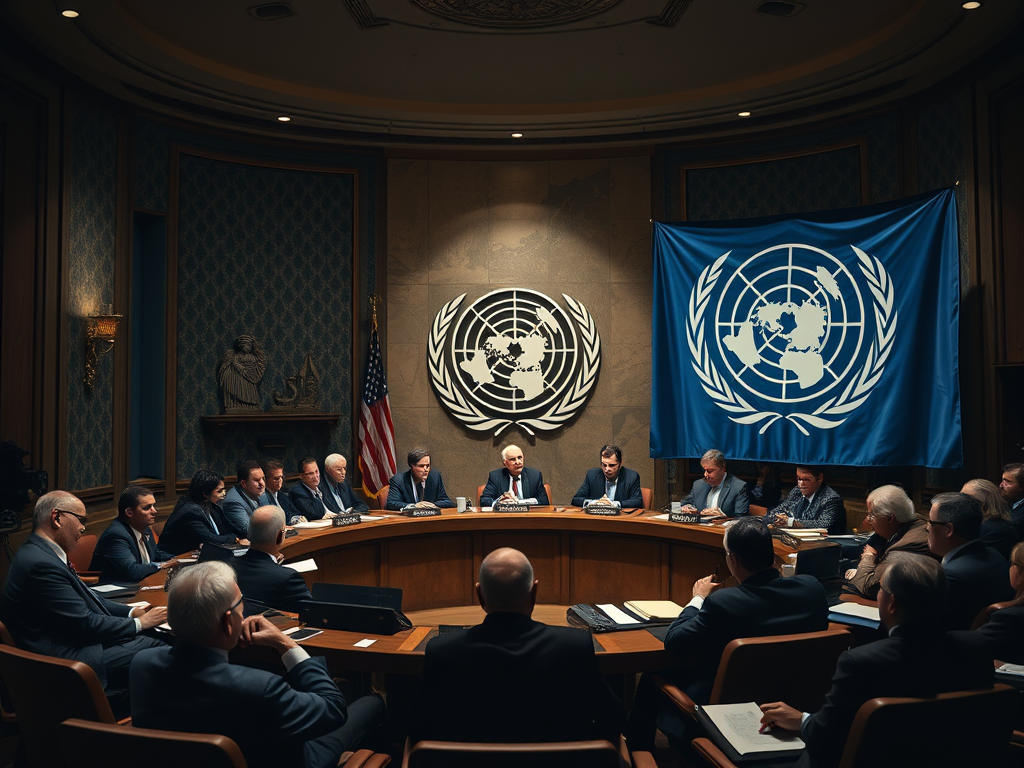
On Wednesday, the United States vetoed a UN Security Council resolution calling for an immediate and unconditional ceasefire between Israel and Hamas in Gaza, where conflict has been ongoing for over 13 months and the humanitarian situation is worsening.
The U.S. was the only country to oppose the resolution, with the other 14 Council members voting in favor. Washington argued that the resolution did not link the ceasefire to the release of hostages still held in Gaza. While the resolution mentioned the release of all hostages, it implied that their release would occur only after a ceasefire was in place.
This veto contrasts with ceasefire negotiations in Lebanon, where a senior U.S. envoy, Amos Hochstein, reported “additional progress” in efforts to end the fighting between Israel and Hezbollah, a Lebanese group aligned with Hamas. Hochstein, traveling to Israel later that evening, expressed hopes to bring these discussions to a conclusion.
Hezbollah’s leader stated that the war’s outcome now depends on decisions made by Israeli leaders.
The U.S. veto on Wednesday marked the fourth time it has blocked a UN resolution calling for a ceasefire in Gaza since the outbreak of conflict last year, which began with a deadly Hamas attack on Israel that killed approximately 1,200 people and resulted in the abduction of over 200 hostages. According to Gaza’s health authorities, more than 40,000 people have died in the region since then, with experts warning of the growing risk of famine.

During the Council session, diplomats from the 14 countries who supported the resolution condemned the humanitarian crisis in Gaza, calling for the fighting to stop as a necessary first step to facilitate the release of the hostages and protect civilian lives.
The U.S. decision has led to criticism of President Biden’s legacy, with some UN diplomats feeling that his stance on Gaza undermines his international standing. Richard Gowan, the UN director at the International Crisis Group, remarked that Biden’s strong support for Israel would likely tarnish his reputation, especially after being initially seen as a welcome change from former President Trump.
Despite the importance of Security Council resolutions as international law, the Council lacks enforcement mechanisms, and sanctions would require unanimous approval from member states.
Washington, which has been collaborating with Qatar and Egypt for months on a potential ceasefire and hostage release, maintains that the two goals must be pursued simultaneously.
Robert A. Wood, the U.S. ambassador to the UN, explained the veto by stating that the resolution failed to ensure the release of hostages before a ceasefire. “These two urgent goals are inextricably linked,” he said.
After the vote, Israel’s ambassador, Danny Danon, expressed gratitude to the U.S. and blamed Hamas for Palestinian suffering, declaring that the resolution would not lead to peace but instead to more violence and death.

The resolution, proposed by the 10 non-permanent Council members, called for an immediate ceasefire, the withdrawal of Israeli troops from Gaza, improved humanitarian aid delivery, and unhindered operations for the UN agency that assists Palestinians, UNRWA, in Gaza and the West Bank.
Majed Bamya, deputy Palestinian ambassador, stated that a ceasefire would save lives and could be the first step toward broader solutions to the conflict.
The resolution was drafted over weeks by Algeria, Ecuador, Guyana, Japan, Malta, Mozambique, South Korea, Sierra Leone, Slovenia, and Switzerland, and was supported by 14 Council members. Algeria’s ambassador, Amar Bendjama, called the veto a “sad day” for the UN and the international community.
The U.S. veto comes amid broader frustrations with the Council’s inability to take decisive action on Gaza and other crises, such as the war in Ukraine. Both Russia and China blocked a U.S.-backed resolution in March calling for a ceasefire in Gaza.

Humanitarian organizations criticized the U.S. veto, with Oxfam’s Brenda Moyfa calling it “shameful” that the U.S. continues to block a ceasefire while approving arms transfers to fuel the conflict.
The U.S.’s stance has also led to tensions with its closest allies, France and the UK. France’s ambassador, Nicolas de Rivière, expressed regret over the Council’s failure to act, emphasizing that there was no credible justification for opposing the resolution’s calls for a ceasefire and hostages’ release.
Meanwhile, in Lebanon, U.S. envoy Hochstein’s extended visit raised hopes for progress in ceasefire negotiations between Israel and Hezbollah. The situation in Lebanon, where tensions with Hezbollah have escalated since September, has already resulted in over 3,500 deaths and the displacement of a significant portion of the population, making it the deadliest conflict there since the Lebanese Civil War.

Hezbollah’s leader, Naim Qassem, stated that any potential ceasefire depends on Israel’s response and its commitment to ending hostilities. If talks fail, he warned, Hezbollah is prepared for a prolonged conflict.




Leave a Reply