
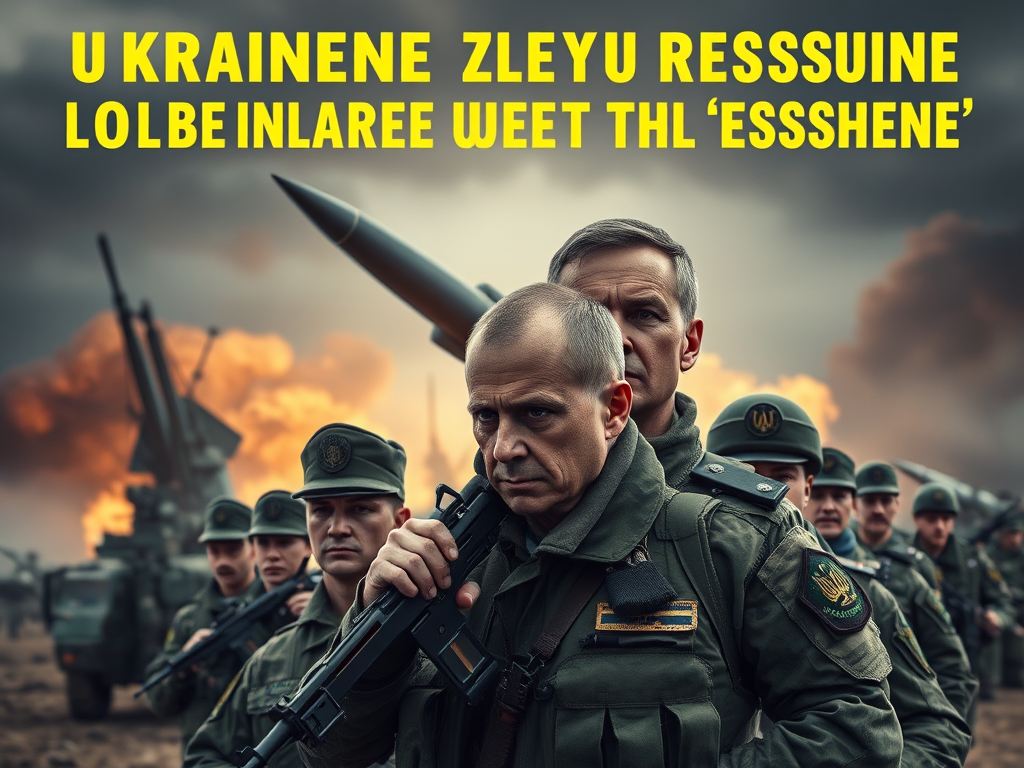

On the 1,000th day of the war in Ukraine, President Volodymyr Zelensky seized an opportunity to utilize Washington’s newfound readiness to approve the use of long-range missiles targeting Russian territory. Until this weekend, President Biden had refrained from such authorization, concerned it could escalate tensions and risk triggering a global conflict like World War III.
Coinciding with this development, Russia officially unveiled a new nuclear doctrine. This policy, hinted at two months earlier, extended the conditions under which Russia might resort to nuclear weapons. For the first time, it declared that such weapons could be used not only to ensure national survival but also to counter any attack posing a “critical threat” to its sovereignty and territorial integrity. This announcement was particularly relevant to the unfolding situation in the Kursk region, where U.S.-supplied ballistic missiles were striking Russian military assets.
A striking addition to Russia’s doctrine was its claim of a right to deploy nuclear weapons against a non-nuclear state if that state was supported by a nuclear power. This stipulation appeared to directly target Ukraine, which is backed by three nuclear-armed NATO members: the United States, Britain, and France.
Despite the gravity of these changes, Washington’s reaction on Tuesday was remarkably subdued. U.S. officials dismissed the doctrine as empty rhetoric, focusing instead on domestic issues like speculation over the next Treasury secretary and debates about the potential appointment of controversial figures such as Matt Gaetz to high-profile roles.
The war in Ukraine has profoundly reshaped global dynamics. It has claimed countless lives, destabilized Europe, and deepened hostility between Russia and the United States. Yet, it has also normalized the rhetoric around nuclear threats, reducing fears of their use to little more than a shrug. Today, the possibility of one of the world’s nine nuclear-armed states—or soon-to-be nuclear-armed Iran—pressing the button rarely spurs urgent diplomatic action.
“This is merely a signaling effort,” said Harvard professor Matthew Bunn, a longtime analyst of nuclear risks. “The aim is to intimidate Europe and, to a lesser degree, the United States into withdrawing support for Ukraine. While the immediate risk of Russian nuclear action hasn’t increased, the long-term probability of nuclear war might have edged up slightly. U.S. support for strikes deeper into Russian territory is likely amplifying Putin’s animosity toward the West, which could provoke reciprocal responses and heighten mutual hostility.”
President Biden’s decision to supply Ukraine with Army Tactical Missile Systems (ATACMS) marked a significant shift in U.S. policy. Meanwhile, President-elect Donald Trump, who is set to take office in about nine weeks, has pledged to reduce U.S. support for Ukraine, even claiming he could end the conflict within 24 hours.
For Russian President Vladimir Putin, the revised nuclear doctrine appears to be part of a broader strategy to wield his country’s nuclear arsenal as a tool of influence, compensating for Russia’s lagging global power in economic and conventional military terms.
The Biden administration condemned the doctrine but refrained from any escalatory responses, emphasizing that it saw no immediate change in Russia’s nuclear posture. According to Vipin Narang, a nuclear expert from MIT, while the new doctrine is unsettling, the U.S. and NATO’s conventional and nuclear deterrence capabilities remain robust enough to counter any potential Russian misstep.
Throughout the war, Putin has avoided direct attacks on NATO members, wary of provoking their full involvement in the conflict. However, past incidents, such as intelligence reports in late 2022 about potential Russian plans to use tactical nuclear weapons, have highlighted the persistent risks of escalation.
These risks underline how far the world has moved from the disarmament optimism of the post-Cold War era. When Ukraine gave up its Soviet-era nuclear arsenal in exchange for security guarantees, many Ukrainians trusted in a more stable future—a sentiment now deeply regretted by some. Initiatives like President Barack Obama’s vision of a nuclear-free world have since faded, replaced by renewed arms races and shifting alliances.
With the impending expiration of the New START treaty, which limits the number of strategic nuclear weapons the U.S. and Russia can deploy, discussions in Washington are increasingly focused on modernizing America’s arsenal to counter the growing partnership between Russia and China.
Ultimately, Putin’s new strategy is not about bringing nuclear weapons back into global relevance—they never truly disappeared.




Leave a Reply