

Stay updated on the latest developments as Donald Trump selects his cabinet and White House team.
On Sunday, President-elect Donald J. Trump announced Brendan Carr as his choice for chairman of the Federal Communications Commission (FCC). Carr, a seasoned Republican regulator, has previously voiced support for the Trump administration’s agenda to reduce regulations, confront Big Tech, and address perceived political bias in television networks.
Currently serving on the FCC, Carr is poised to make significant changes to the agency responsible for regulating airwaves, phone rates, and broadband expansion. Before the election, Trump expressed interest in revoking the licenses of broadcasters like NBC and CBS for what he described as unfair reporting.
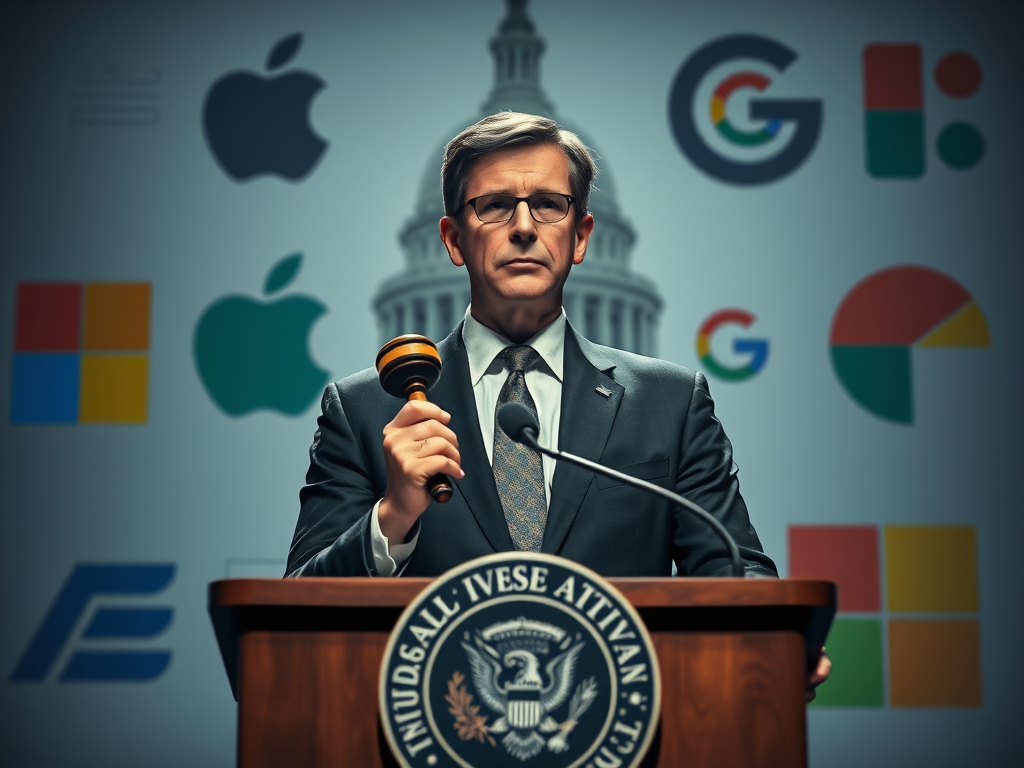
At 45, Carr contributed to the conservative Project 2025 blueprint, advocating for the FCC to oversee major tech companies such as Apple, Meta, Google, and Microsoft. “The censorship cartel must be dismantled,” he declared in a recent post on X (formerly Twitter).
Legal experts and telecom analysts predict that Carr’s leadership could dramatically reshape the FCC, potentially expanding its scope and aligning it with conservative political objectives. They anticipate efforts to assert regulatory authority over tech giants, setting the stage for intense conflict with Silicon Valley.
“Carr is proposing initiatives that far exceed his jurisdiction and, in some cases, misinterpret the rules entirely,” said Jessica Gonzalez, co-CEO of Free Press, a nonpartisan public advocacy group.
In contrast, Trump praised Carr’s record, calling him “a warrior for free speech” and commending his opposition to regulations that stifle freedoms and hinder economic growth.
Carr has yet to respond to requests for comment.
Despite his ambitions, Carr faces significant limitations. The Federal Trade Commission (FTC) and the Department of Justice (DOJ) currently play primary roles in tech regulation through antitrust actions and consumer protection enforcement. Expanding the FCC’s authority over companies like Google and Meta would require new legislation, as these firms are not classified as communication services under existing law. Additionally, Congress controls the FCC’s budget, and the agency cannot penalize broadcasters for editorial decisions unless they violate obscenity laws or children’s television standards.
However, Carr could still exert influence by leveraging the agency’s platform to pressure companies, block mergers, or investigate compliance failures, which could lead to fines or license revocations.
“Brendan is the most skilled politician on the commission right now,” noted Blair Levin, a former FCC chief of staff and policy adviser at New Street Research. “The key question is how far he can go within the FCC’s current authority.”
A seasoned telecommunications attorney, Carr earned his law degree from Catholic University in Washington. He joined the FCC in 2012 as a legal adviser and later became its general counsel. Appointed to the FCC by Trump in 2017, Carr has prioritized expanding high-speed wireless internet, particularly in rural areas, and supported the rollback of net neutrality regulations under former chairman Ajit Pai. These rules, which treated internet service providers as utilities, were recently reinstated under a Democratic-led FCC and are now under legal challenge.
Following the election, Carr stated that the FCC would play a critical role in holding Big Tech accountable, ensuring broadcasters serve the public interest, and fostering economic growth while addressing national security and law enforcement priorities.
Carr’s alignment with billionaire Elon Musk further highlights his position. In 2020, the FCC awarded Musk’s Starlink internet provider $885 million through the Rural Digital Opportunity Fund to expand broadband access to underserved areas. However, the grant was revoked in 2022 by the Democratic-led FCC for failing to meet speed standards and adequately connect rural homes. Carr strongly opposed the decision, accusing the Biden administration of targeting Musk unfairly.
In a recent Wall Street Journal op-ed, Carr described the move as “regulatory lawfare” against Musk, a prominent critic of the left.unding to bring high-speed internet to rural homes and businesses.
But the Democratic-led F.C.C. revoked that grant in 2022 because Starlink failed to meet speed requirements and couldn’t prove it would serve enough unconnected rural homes, according to the F.C.C.
Mr. Carr vociferously opposed the decision, saying in a statement that the Biden administration had targeted Mr. Musk.
“In my view, it amounted to nothing more than regulatory lawfare against one of the left’s top targets: Mr. Musk,” Mr. Carr wrote in an opinion piece in The Wall Street Journal published last month.




Leave a Reply