
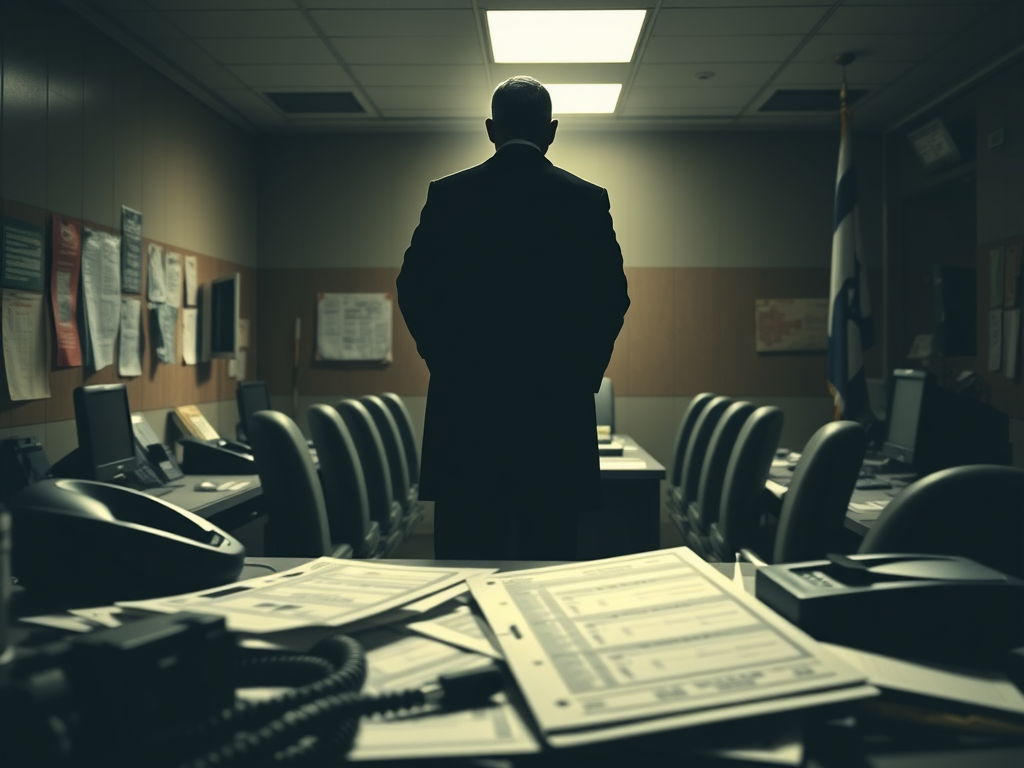

On the morning of the Hamas attack on Israel last year, a senior Israeli general informed Prime Minister Benjamin Netanyahu about the possibility of a large-scale invasion by militants. However, aides to Netanyahu are now under investigation for allegedly altering the official records of that conversation, according to four officials familiar with the case.
This investigation is viewed as highly significant in Israel, as it could have serious implications for Netanyahu’s political future. The timing and content of the call, along with whether Netanyahu was informed in advance about the invasion, are central to understanding the political and military leadership’s roles in what is being seen as one of Israel’s most significant military failures.
The investigation into these alterations is just one of several allegations against Netanyahu’s team. While Netanyahu himself is not under investigation, his aides are accused of leaking classified military documents, tampering with official transcripts of his communications, and attempting to intimidate those who had access to these records in an effort to shape his public image during Israel’s war with Hamas.
These actions have fueled criticism, with some accusing Netanyahu’s team of using unethical methods to improve his public image, possibly at the expense of national security or the truth. Netanyahu and his office have strongly denied these accusations, arguing that it is his critics who are undermining Israel by spreading falsehoods during a period of national crisis.
The full scope of the claims remains largely undisclosed due to a gag order on the case. The officials who provided this information to The New York Times did so anonymously, as they were prohibited from discussing the matter publicly.
Case 1: Phone Call Records
On October 7, 2023, the day of the Hamas assault, Netanyahu was in frequent communication with senior security officials, including his military secretary, Major General Avi Gil. Investigators are looking into whether Netanyahu’s aides altered the official records of these calls. The investigation began after General Gil raised concerns with the attorney general, alleging that one of Netanyahu’s senior aides had pressured a transcriber to alter the transcripts.
During one of the early calls that morning, General Gil reportedly warned Netanyahu that hundreds of Hamas operatives appeared to be preparing to invade Israel. The investigation suggests that the details of this conversation, including its timing, were changed in the official record.
The accuracy of these records is important as they could influence how Netanyahu is viewed by both the public and historians. For over a year, Netanyahu has denied receiving prior warning about the invasion and has resisted calls for a state inquiry into the events surrounding it.
Case 2: An Embarrassing Video
Complicating the situation further, there are allegations that a Netanyahu aide tried to intimidate a military officer who controlled access to the phone records. The officer was filmed on security cameras in a compromising situation, and the aide reportedly informed the officer that they had the footage, which could be used for blackmail. The officer reportedly expressed concerns about potential future threats from the aide.
Case 3: A Leaked Document
Netanyahu’s aides are also accused of leaking a sensitive document to a foreign news outlet. The document, published in early September, was part of a broader discussion about a potential cease-fire with Hamas. Netanyahu had been under pressure from various groups within Israel to agree to a cease-fire in exchange for the release of hostages, but he opposed the deal, arguing it would allow Hamas to regroup.
The document, which was leaked to Bild, a German newspaper, allegedly contained information about Hamas’s psychological tactics in the hostage negotiations. Netanyahu referenced the article in a statement to bolster his position against the cease-fire. Investigators are now looking into whether Netanyahu’s aides were behind the leak.
The Shin Bet, Israel’s domestic intelligence service, is investigating this leak in particular because the document was taken from a highly classified military intelligence database. One of Netanyahu’s aides, Eli Feldstein, has been arrested in connection with the leak, along with four other officers accused of facilitating the document’s release. The investigation is focused on how these unauthorized individuals had access to such classified materials and whether the leak endangered Israel’s intelligence operations.
While this case is being scrutinized, another article published in The Jewish Chronicle that appeared to support Netanyahu’s position has since been retracted, as it is believed to have been entirely fabricated. This is not considered a security threat, and therefore, it is not part of the investigation.
The Political Fallout
The accusations have angered many of Netanyahu’s opponents, who believe his aides have prioritized his political survival over national security. Critics argue that, at a time when Israel needed strong leadership to defend itself, Netanyahu’s team was instead focused on improving his public image.
This perception has been compounded by Netanyahu’s refusal to resign despite ongoing legal troubles, including charges of bribery and fraud. His critics see this as an indication that his personal interests are taking precedence over the country’s well-being.
Netanyahu’s Response
Netanyahu and his office have dismissed these accusations as part of a political witch hunt. They argue that, like previous efforts to discredit him, this investigation will ultimately prove unsubstantiated. In response to the detentions associated with the investigation, Netanyahu’s office has also denounced the conditions under which individuals are being held, calling them a violation of democratic principles.
These investigations are ongoing, and the political implications for Netanyahu’s leadership continue to unfold.




Leave a Reply