
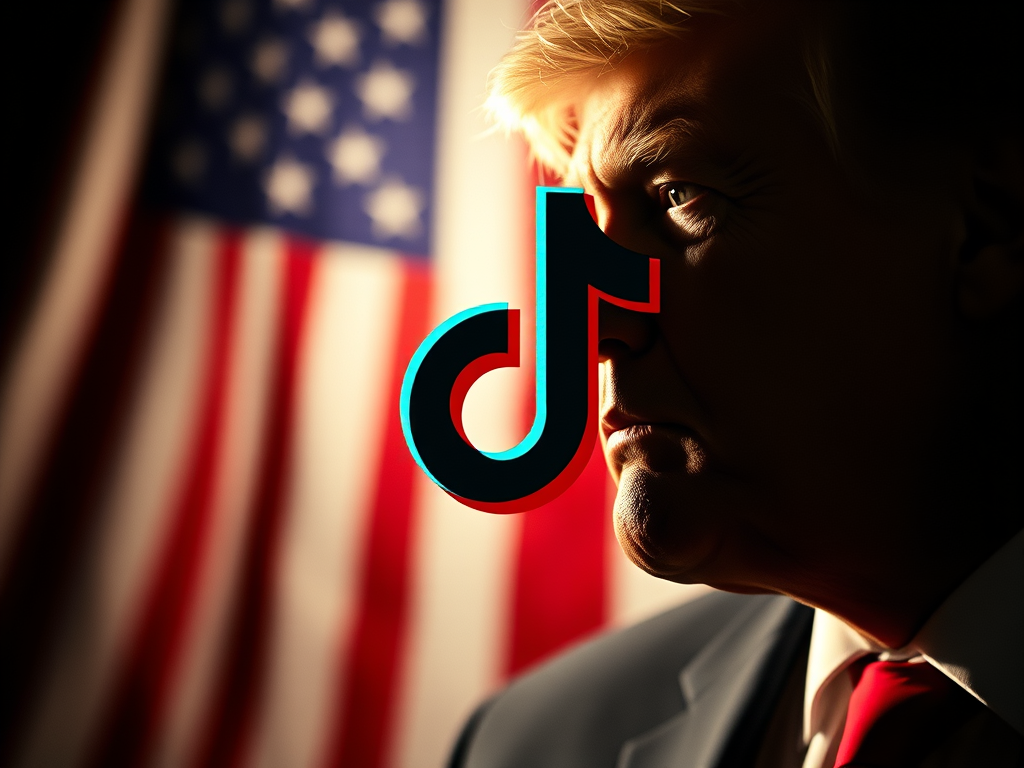

TikTok, the Chinese-owned video app facing a potential U.S. ban in just two and a half months, is hoping President-elect Donald J. Trump can find a way to save it, following a series of promises made during his campaign.
Trump’s team insists he will “deliver” on those promises, although specifics remain unclear.
“President Trump was re-elected with a strong mandate to fulfill the promises he made on the campaign trail,” said Karoline Leavitt, spokesperson for Trump and Vice President-elect JD Vance’s transition team. “He will deliver.”
A potential endorsement of TikTok would be a stark reversal from Trump’s 2020 stance, when he sought to ban the app in the U.S. and forced its sale to an American company due to concerns about its ownership by the Chinese tech giant ByteDance.
A federal law passed in April mandates that TikTok, which boasts 170 million U.S. users, must sell to a non-Chinese company by January 19 — the day before Trump’s inauguration — or face a ban in the U.S.
TikTok has fought the law in court, arguing that a sale is impossible due to restrictions from the Chinese government and that a ban would violate the First Amendment.
Despite TikTok’s efforts, the law passed with overwhelming bipartisan support, and many experts predict a federal court in Washington will side with the government.
Trump’s transition team’s comments came after TikTok worked hard this year to build connections with Trump’s campaign. However, his spokesperson did not clarify whether Trump would allow ByteDance to continue owning TikTok. The company declined to comment for this article.
In March, Trump appeared to soften his stance on TikTok. Around that time, he met with Jeff Yass, a billionaire investor and prominent Republican donor, who holds a significant stake in ByteDance. Trump has stated that they did not discuss the company during their meeting. Yass, co-founder of the trading firm Susquehanna International Group, is a key supporter of the anti-tax lobbying group Club for Growth, which hired Kellyanne Conway, a former senior advisor to Trump, to lobby for TikTok in Washington.
TikTok has also made efforts to reach out to Republicans through Tony Sayegh, a former Treasury official under Trump. According to sources familiar with the discussions, Sayegh has been involved in weekly strategy calls with TikTok executives, offering guidance on the app’s relationship with the Trump administration. Sayegh declined to comment.
TikTok has also courted Democrats, including former strategists such as David Plouffe, who previously worked with Vice President Kamala Harris’s presidential campaign. Harris’s TikTok success, with over nine million followers, has been widely praised.

Despite TikTok’s considerable employee base in the U.S., some insiders remain indifferent to the looming threat of a ban. Several former employees reported that executives downplayed the potential for a ban, even joking that it could one day become the subject of a Hollywood film.
However, experts and former employees remain uncertain about how a Trump administration could affect TikTok’s future, especially as the deadline approaches and the law’s provisions come into play. A repeal would require action by Congress, which seems unlikely.
“Trump’s election might improve TikTok’s situation slightly,” said Ian Tang, an analyst at Capstone, a policy research firm. “But it will still face significant challenges, and some structural changes will be necessary for it to continue operating in the U.S.”
One possible avenue for Trump to intervene could be the section of the law that gives the president the authority to determine whether ByteDance has sufficiently removed TikTok’s Chinese control. If ByteDance makes certain adjustments, Trump could potentially use that as a basis to extend the deadline or declare that the law’s requirements have been met.
Jacob Helberg, a senior adviser at Palantir and a supporter of Trump, expressed confidence that the president would find a solution that allows TikTok to remain in the U.S. while addressing concerns about Chinese ownership.

The U.S. government has raised national security concerns about TikTok, arguing that the Chinese government could use the app to collect sensitive data on Americans or spread propaganda. However, no public evidence has been provided to support the claim that TikTok’s content decisions are influenced by Beijing.
For now, TikTok’s immediate challenge is its ongoing legal battle to overturn the ban, with a decision expected soon from a three-judge panel in the U.S. Court of Appeals for the District of Columbia Circuit. Both TikTok and the Biden administration are prepared to appeal the ruling to the Supreme Court if it does not go their way, which could affect the January 19 deadline. However, there’s no guarantee that the Supreme Court will take up the case.
“It’s still uncertain for TikTok, but this is probably the best outcome they could have hoped for,” said Alan Rozenshtein, a former national security advisor at the Justice Department.

Leave a Reply