
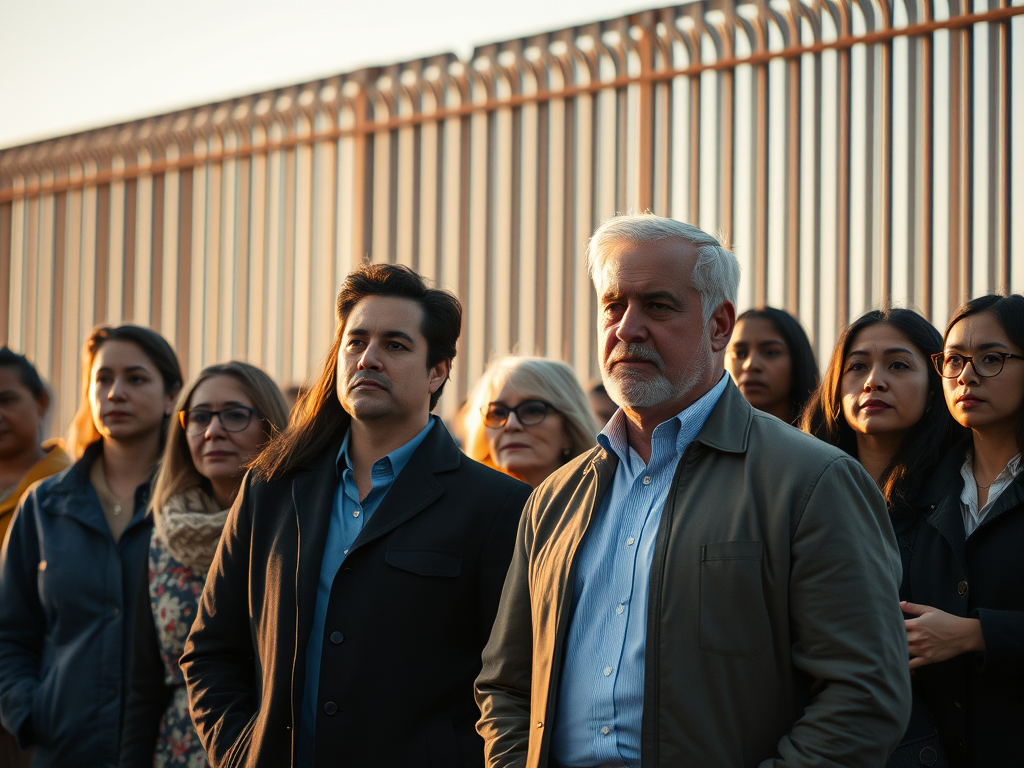

During his campaign, Mr. Trump pledged to carry out the largest deportation initiative in U.S. history. However, he avoided specifying whether the targets would be undocumented immigrants who have been in the country for many years or those who recently crossed the southern border — or both. According to the Pew Research Center, as of 2022, approximately 11 million undocumented individuals reside in the U.S., with nearly two-thirds having been there for over a decade.
With current enforcement resources, deporting millions of people would be extremely challenging. Yet, Mr. Trump has suggested placing American troops at the Mexico border and collaborating with governors to deploy the National Guard throughout the nation.
In his early Wednesday victory speech, Mr. Trump said the voters had given him “an unprecedented and powerful mandate” to carry out his plans. The political landscape for immigrant advocacy groups will look very different when Mr. Trump assumes office in January. Many Americans’ views on immigration have shifted, showing greater support for stricter policies.

This time, Mr. Trump has won both the Electoral College and the popular vote, marking the first Republican to do so in two decades. His victory follows a campaign with strong immigration rhetoric. With three of his initial appointees on the Supreme Court, he will assume office with a judiciary that reflects some of his earlier policy priorities.
“We’re going to secure our borders, address the issues within our country, and tonight, we’ve made history for a reason,” he declared.
Immigration lawyers and advocates have been preparing for months for possible escalations, including extensive workplace raids, neighborhood sweeps, stricter asylum rules, expanded detention, and the end of protective programs for some immigrants.
“The Trump team might think they’re ready,” said Camille Mackler, CEO of Immigrant ARC, recalling the wave of legal support mobilized when the travel ban was enforced in 2017. “But we’re ready too.”

Becca Heller, founder of the International Refugee Assistance Project, reminded that a popular mandate doesn’t permit the president to sidestep constitutional protections. “He must remain within the bounds of the Constitution and the Bill of Rights,” she said. Having faced the Trump administration once, Heller noted that they are equipped to challenge it again. “We have months of planning on our side,” she said, emphasizing their commitment to defend vulnerable individuals.
Mr. Trump’s immigration agenda will also have support from a coalition of Republican attorneys general, like Texas’s Ken Paxton, who have frequently contested President Biden’s immigration policies. While some of these challenges stalled Biden’s initiatives, others were blocked by the courts. These legal battles have kept immigration central to public discourse.
Though states leading these legal challenges against Biden are unlikely to oppose the Trump administration’s agenda, they could play a vital role in supporting federal efforts on immigration, according to Lenni Benson, a New York Law School immigration law professor.
In 2016, Arizona’s attorney general declared that sheriffs could implement a “show-me-your-papers” policy, provided it was applied universally. Mr. Trump is expected to issue a series of executive orders to seal the borders and detain undocumented immigrants across the U.S.

Though there is an emphasis on prioritizing criminals in enforcement, Mr. Trump’s advisors have clarified that all undocumented individuals may be targeted. Legal battles are expected to mount.
“We’re prepared for this, just like the last time,” said Lee Gelernt of the ACLU, who has argued in cases that halted family separation policies and blocked a citizenship question from the 2020 census.
United We Dream Action, a group led by young immigrant activists, has also been preparing, organizing “know-your-rights” training, letter-writing campaigns, and vigils. One of the biggest concerns is the future of Deferred Action for Childhood Arrivals (DACA), which protects hundreds of thousands of young undocumented immigrants from deportation.
Bruna Bouhid-Sollod, a senior director at United We Dream and a DACA recipient, said she joined the group in 2016 out of fear that Trump would dismantle the program. Although a Supreme Court ruling prevented Trump’s attempt to end DACA, challenges have continued, with a ruling now under review that could affect the program.
“We’re clear-eyed about what lies ahead,” she noted. “That’s what separates 2016 from 2024.”
Benjamin Johnson, Executive Director of the American Immigration Lawyers Association, emphasized that the organization has spent years analyzing Mr. Trump’s promises, preparing to legally contest any policy that may infringe on clients’ rights.
In his campaign, Mr. Trump referenced using the Alien Enemies Act of 1798, a law historically used for mass detentions, and even cited deportation models from the Eisenhower era, which involved sweeping operations targeting Mexican laborers. “He has threatened to invoke powers not used since WWII,” Johnson remarked. “We’re determined to meet this challenge head-on.”moment.”




Leave a Reply