
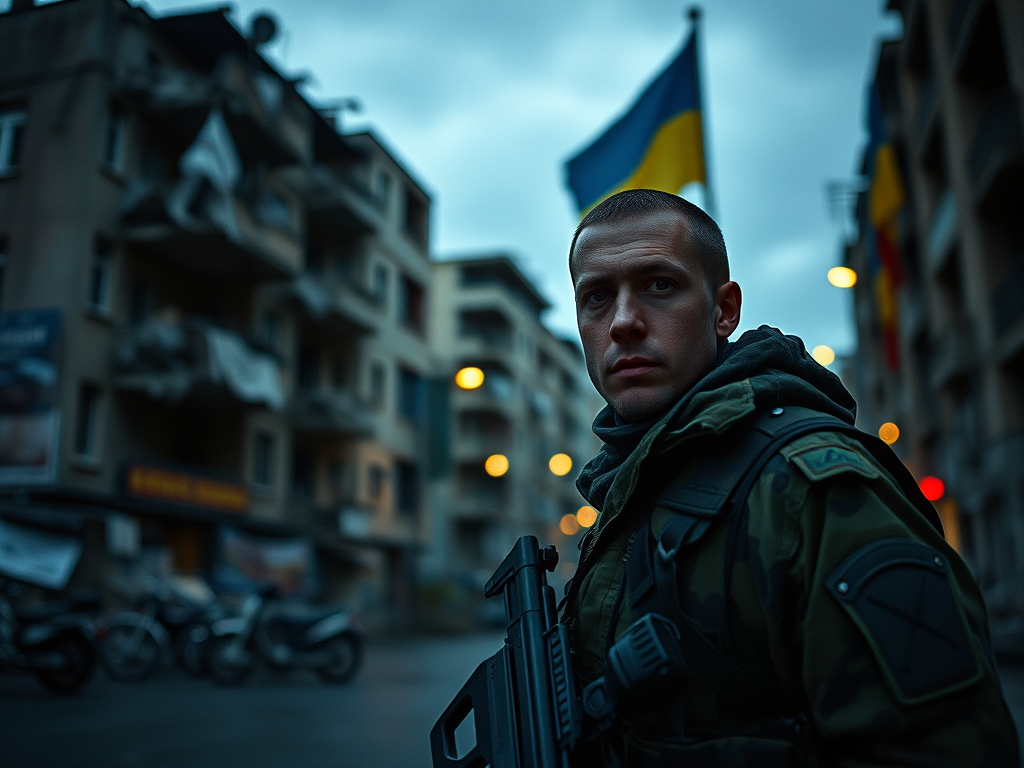

With Donald J. Trump’s victory in the U.S. presidential election, Ukrainians now face the likelihood of a significant shift in American policy amidst a challenging war situation. Russia has made substantial territorial advances recently, and multiple countries are involved in diplomatic efforts to reach a negotiated settlement.
Entering office, Trump carries a record of skepticism, if not outright opposition, to continued U.S. assistance for Ukraine. He has stated he could end the war in a single day, though without elaborating on the method. His promise to end the conflict quickly has raised concerns in Kyiv, where there is unease that he may pressure Ukraine into an unfavorable peace agreement.
On Wednesday, the Royal United Services Institute, a London-based think tank, noted, “His eagerness for a deal—and a swift one—doesn’t bode well for prolonged U.S. support,” referring to Trump.
The group added that Russia would likely respond to Trump’s win by leveraging its numerical advantage on the battlefield, anticipating a possible decrease in Western support.
In a commentary on the American election, Ukrainian news outlet Ukrainska Pravda observed that the war in Ukraine holds less prominence in U.S. politics than previous wars like Vietnam or Korea, where “American boys fought and died.”
Throughout the year, Ukraine has affirmed its readiness to work with either a Republican or Democratic administration. In September, President Volodymyr Zelensky met with Trump while visiting the United States, and promptly congratulated him after the election, acknowledging Trump’s commitment to a “peace through strength” approach in global affairs. “This principle could help bring just peace closer for Ukraine,” he wrote, expressing hope for collaboration.
As Trump assumes office, he inherits the U.S. role as Ukraine’s most vital supplier of military and financial aid. While the European Union, collectively, provides substantial assistance, the U.S. remains Ukraine’s single most significant supporter.

Trump has not only questioned the need for continued support but has also praised Russian President Vladimir V. Putin, while being critical of Zelensky. His pledge to resolve the war within a day has heightened Kyiv’s worries that he might push for a peace deal on terms unfavorable to Ukraine.
Former Economy Minister Tymofiy Mylovanov expressed skepticism on Facebook about Trump’s claim of a swift resolution, though he acknowledged that Ukrainian government bonds might benefit from hopes of a negotiated settlement.
As Trump’s electoral victory became apparent, the war continued to rage in Ukraine, with air raid sirens blaring in Kyiv and reports of 71 airstrikes by Russia as of Tuesday night.
For Ukrainian soldiers, the election outcome is another complication in an already difficult fight. Oksana Vedmid, a private stationed in eastern Ukraine, noted the loss of hope for increased support from Trump, given his past sympathies toward Russia. “Knowing his stance, it feels like we have lost some hope for better support in this hard struggle,” she said, adding that the situation had grown so dire that even existing aid was insufficient to turn the tide.
Lt. Pavlo Velychko, after returning from a night patrol, suggested the result might prompt Europe to take a more prominent role in defending its eastern borders. “We should not expect a miracle from across the ocean,” he said, alluding to the U.S. “Europe is awakening, and that will be essential for effectively resisting Russian aggression.”

The battlefield situation has grown increasingly dire for Ukraine. Russian advances in the Donbas region, initially gradual, have recently accelerated, straining Ukrainian defenses. With troop shortages, Ukraine has had to shift forces to various front-line hotspots, creating vulnerabilities elsewhere.
This shuffling of troops has allowed Russia to exploit gaps, as soldiers moved from one front are replaced, only for the vacated sectors to come under fresh attack. Conscription has waned since summer amid reluctance to fight in the trenches, leading to a rise in desertions, with prosecutors recording about 51,000 cases of soldiers being absent without leave from January to September—more than double last year’s number.
Some of Ukraine’s elite forces were deployed in August for an offensive in the Kursk region of Russia, intended to distract Moscow’s forces. However, Ukraine has since lost approximately 40% of the ground it had gained, with Russia maintaining its presence in the Donbas region.
Russia has also refined its methodical, grinding advance, using infantry to push through Ukrainian defenses. In recent battlefield maps, the front lines have shown multiple U-shaped formations as Russian forces set up for potential encirclement.

Adding to Ukraine’s concerns, North Korean soldiers have reportedly joined Russia’s forces, though the numbers currently deployed are not considered decisive.
The grim military picture clouds prospects for a peace settlement. Trump has not clarified the terms on which he would negotiate an end to the conflict.
Delicate, multi-party negotiations have made some progress in recent months, but it remains unclear how Trump’s involvement might influence these efforts, according to diplomats who spoke anonymously. Aside from a broad ceasefire, Zelensky has recently hinted at the possibility of side agreements, such as suspending strikes on energy infrastructure or securing commercial shipping routes in the Black Sea.
Amidst frustration over delays in U.S. arms deliveries, some Ukrainians were measured in their response to Trump’s win. “I’m sure the impact of the election on Ukraine is exaggerated,” said Natalia Chepeliuk, a Kyiv restaurant director. “We still need to fight for our country, no matter who is the U.S. president.”




Leave a Reply