

Nothing distorts culture quite like a culture war. Bill T. Jones’s “Still/Here,” a dance piece that sparked more controversy than almost any other in the 1990s, seemed less charged when viewed at its 30th-anniversary revival at the Brooklyn Academy of Music. The experience felt a bit like seeing the magician’s trick revealed: “Still/Here” is a dance—an elegant and visually appealing one—but when separated from the storm of its original context, it appears surprisingly ordinary.
“Still/Here” was born out of what Jones called “survivor workshops” with volunteers who, like him, were facing life-threatening illnesses—he himself was living with HIV. From these workshops, he developed a two-hour performance incorporating movement, sound, and video, presented by the Bill T. Jones/Arnie Zane Dance Company in 1994. (Jones’s collaborator, Arnie Zane, had died of AIDS in 1988.)
Dance critic Arlene Croce of The New Yorker famously refused to attend but wrote a critique nonetheless, accusing the piece (and Jones) of being a prime example of what she called “victim art.” This sparked a wave of responses from cultural commentators in opinion pieces and letters, leading to a heated debate.
The revival preserves the original video work by Gretchen Bender, featuring clips of the volunteers and a 42-year-old Jones. While the cast is entirely new, with some members too young to have been born in 1994, the performance opens with dancers naming volunteers and performing each one’s self-defining movement phrase. These motions are modest, often awkward, yet Jones strives to elevate them through his artistic vision. The result, however, doesn’t quite reach a transcendent level.
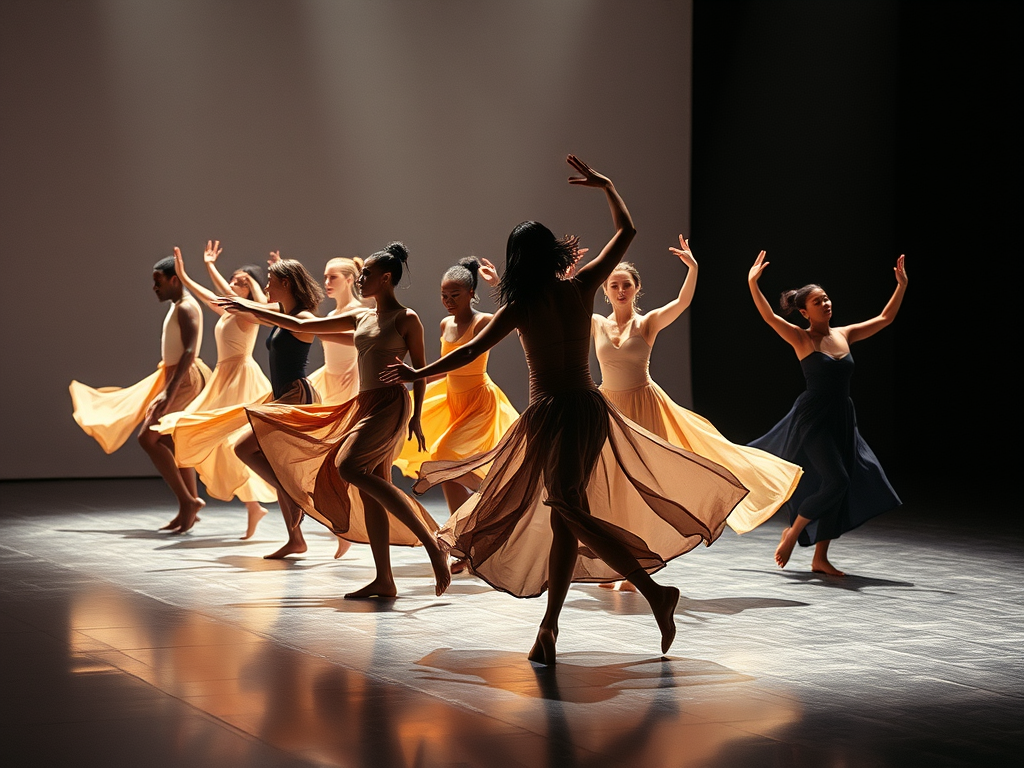
Despite the controversy overshadowing it, “Still/Here” offers dynamic, often beautiful dance. The cast, filled with young, skilled dancers, creates a series of flowing formations, running, leaping, and supporting one another. Some moments evoke ballet, others martial arts, with motifs like balancing on one leg while stretching the other and the torso to form a cross-like shape.
When a recorded voice shares a volunteer’s memory of their diagnosis, the dancers do not act out the scene literally. Similar prompts—like imagining one’s death—are abstractly represented through other dancers’ movements. Yet parts, such as the breast cancer scene, feel overly literal, and much of the choreography resembles polished versions of trust-building exercises.
In the first half, Kenneth Frazelle’s songs, based on the volunteers’ words and sung by the powerful Odetta, add emotional depth, especially during her solo on the spiritual “You May Run On.” Frazelle’s music, however, occasionally veers toward sentimentality, and it struggles to match the potency of Odetta’s lyrics: “I assaulted God. The next morning, He was in me.”
After intermission, the music shifts to a livelier score by Vernon Reid from Living Colour, adding murmurs, paper crumples, and drill sounds. Reid’s live guitar solo brought an energy boost on Wednesday night. Although the second act also features new costumes by Liz Prince, now in red, and expressive lighting by Robert Wierzel, the distinction between the two parts is subtle. Jones describes the first half as addressing the moment of diagnosis and the second as coping with it, but the difference isn’t clear. New themes of survival, triumph, and hope emerge, yet the repeated material feels like a prolonged second ending.
The new performers give it their all but maintain a sense of distance. When Barrington Hinds, in a powerful performance, speaks about his mother’s death, he isn’t Lawrence Goldhuber from the original, who was recounting his real mother’s passing. And Hinds’s mention of becoming used to friends dying doesn’t resonate as strongly outside the immediacy of the AIDS crisis.

Many might disagree with this assessment. Still, it’s unlikely this revival will reignite the original culture war since the controversy was never entirely about the dance itself. Questions linger over the possible exploitation of the volunteers’ stories and whether using dancers as symbols of survival addresses this issue. Only one of the original volunteers is reportedly still alive, yet all are preserved, in a sense, through the art.
Jones remains a symbol of resilience, as he demonstrated with a triumphant bow on Wednesday night. “Still/Here” feels like something he needed for himself, an expression of survival as a public figure grappling with grief and illness. Thirty years later, he continues to live and create, making “Still/Here” a testament to endurance in its own right.




Leave a Reply