
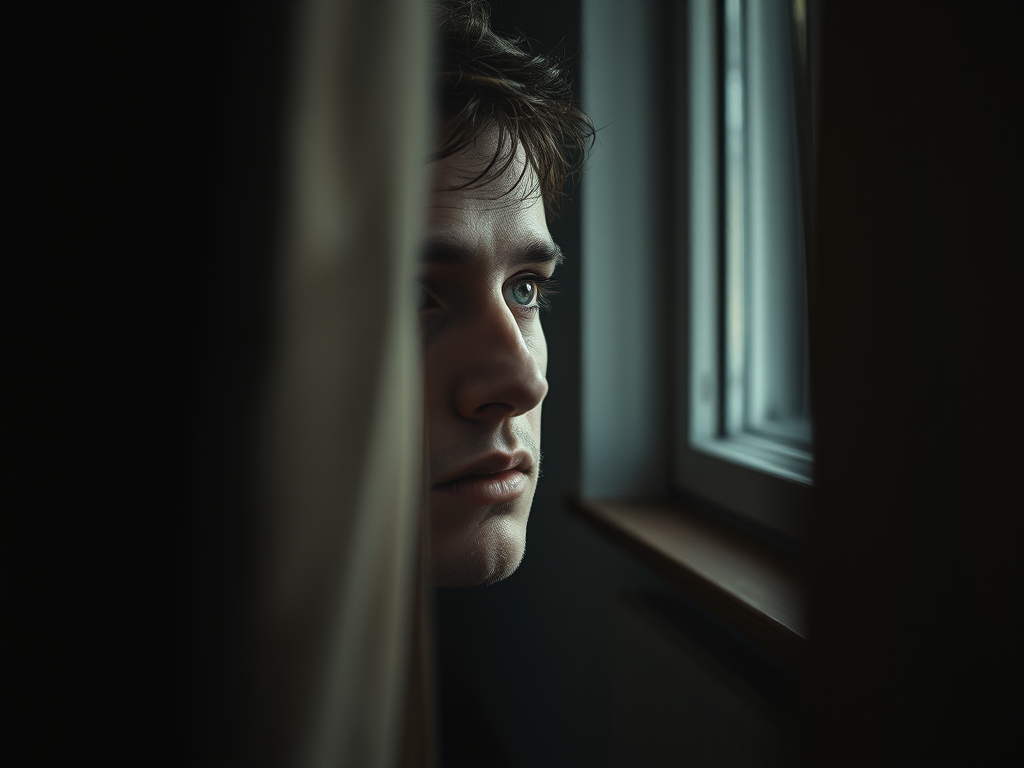

For months following the Russian military’s occupation of his southern Ukrainian hometown, Yevheny plotted his escape. Each attempt, however, was met with obstacles—warnings of gunfire along the roads and, once, the mysterious disappearance of a driver he had hired.
Then came the soldiers. They searched his home, took him to a nearby village, and imprisoned him in a dark cellar for a brutal week-long interrogation.
Yevheny’s ordeal exemplifies the oppressive colonial regime Russia has established in the occupied regions of Ukraine—a system reminiscent of the worst Soviet practices, comprising over 100 prisons, detention centers, and makeshift camps.
Investigations by a team of reporters, based on extensive interviews with former detainees, human rights organizations, and Ukrainian officials, have unveiled a highly structured and often brutal repression system orchestrated by Moscow, aimed at controlling an area of about 40,000 square miles—equivalent to the size of Ohio.
These abuses often occur away from the public eye, as regions under Russian control are largely inaccessible to independent journalists and human rights monitors. Nevertheless, Ukrainian officials and human rights organizations have closely tracked the situation, relying on accounts from civilians who remain in the area or have managed to escape.
Human rights advocates assert that Moscow’s ultimate goal is to erase Ukrainian identity through tactics such as propaganda, forced re-education, torture, coerced Russian citizenship, and relocating children to Russia.

According to the United Nations, Russia occupies roughly 20% of Ukraine, affecting more than four million people. The occupied territories include Crimea, annexed by Russia in 2014, parts of eastern Ukraine also seized that same year, and a large expanse of eastern and southern Ukraine captured in 2022.

The fate of Ukrainians in these areas is a significant reason why President Volodymyr Zelensky has stated he will not accept a peace deal that entails ceding territory to Russia. “Ukraine does not trade its land, nor does it abandon its people,” he declared at a conference on Crimea in Kyiv last September.
Moreover, Russian forces are currently detaining around 22,000 Ukrainians, including approximately 8,000 prisoners of war and many civilians, often on dubious charges, as reported by human rights organizations and Ukrainian officials.
Those who escaped Russian occupation describe their experience as akin to living in a cage, marked by restricted movement and a constant fear of arbitrary violence or detention. Information is tightly controlled, and residents are subjected to relentless propaganda across various platforms.
For many, the Russian invasion in February 2022 came so swiftly that they had little time to react or escape. Some lacked the means to leave, while others hoped the conflict would be brief.
At the time of the invasion, Yevheny lived by the coast in southern Ukraine. Initially, he noted that Russian troops did not enter his small town.
However, ten months later, in December 2022, he was sought out by eight masked men in uniforms. During the ensuing interrogation, he was subjected to severe beatings and torture, including waterboarding.
Following this ordeal, he struggled to lie down for six weeks and could only sleep in a chair. “My legs, my buttocks, everything from the waist down was black,” he recalled. “All my limbs were unresponsive. My arm skin was cracked.”
With the help of a local doctor, he spent eight months recovering, learning that he was not alone in his suffering.
Human rights organizations and Ukrainian officials in the south have gathered numerous similar testimonies. Yurii Sobolevsky, deputy chairman of the Kherson Regional Council, stated he was aware of many cases of enforced disappearances and beatings in the occupied territories.
The Kremlin has denied any allegations of torture.
When a local official alerted Yevheny in April that the Russian military intended to seize his home, he fled. “They wanted to detain me again,” he said.
He joined an exodus of 50 to 100 people daily earlier this year, including families who had left occupied regions and crossed into Ukraine-controlled territory through Russia. They used the only functional border crossing near Sumy in northeastern Ukraine.
That crossing was closed after Ukraine’s incursion into Russian territory in August. Nonetheless, many Ukrainians reported that they fled their homes due to escalating dangers in occupied areas, citing increased pressure to accept Russian citizenship and threats of property confiscation.

Others left to escape frontline shelling, lack of essential services, or to continue their education. Fear of brutality from the occupiers also drove some to leave.
Ukrainian prosecutors and a U.N. special rapporteur have documented numerous abuses under Russian occupation, including enforced disappearances, unlawful detention, torture, and sexual violence.
Torture of Ukrainians in detention began ten years ago when Moscow-backed separatists took control of parts of Donetsk and Luhansk. Alice Jill Edwards, the U.N. special rapporteur on torture, indicated that such practices have become a systematic, state-endorsed policy.
Oleksandra Matviichuk, head of the Kyiv-based Center for Civil Liberties, noted that violence serves a clear purpose in maintaining territorial control.
Much of Russia’s official actions, including the deportation of Ukrainian children and property seizures, can be found on government websites. Publicly accessible procurement contracts reveal how occupied prisons and detention facilities have been incorporated into the Russian system.

The Media Initiative for Human Rights, a Ukrainian organization, has identified over 100 formal detention sites in occupied territories and Russia. Other groups have gathered similar data on abuses.
However, many unofficial detention sites exist, and numerous cases of abductions have led to victims being found dead, Matviichuk added.
Oleksii, a 43-year-old welder, experienced brutal detentions in Donetsk in 2015. After enduring severe beatings, he was left for dead outside the city.
He shared his story after crossing into Ukraine in April with his wife, Olena, their five children, and their dog, Czar.

Having been displaced twice in the last decade, they first fled occupied Donetsk in 2015. Oleksii arranged for his family to live in a Ukraine-controlled area but was detained by local police before he could join them.
He was held for a week, facing repeated beatings. He recalls his last interrogator—a Russian with a red beard—who removed his hood and granted him a final wish. Oleksii asked for a call to his family and a cigarette. “He gave me a cigarette but no call,” Oleksii recalled.
“Then he said, ‘This is it.’ He broke my fingers, my nose. Only two ribs were intact.”
Upon regaining consciousness, Oleksii found himself in a dim field surrounded by corpses. “There were dozens of them,” he noted. “They had been there for quite a while.”
Unable to walk, he crawled away and caught the attention of a woman gathering bottles. She fled but returned the next day with her family, who took him home and helped him recover. A week later, volunteers assisted him in reaching Ukrainian-controlled territory.
Oleksii and his family settled in a village in the Zaporizhzhia region, but when Russian troops took control there in February 2022, he became cautious. To avoid trouble, he rarely left home and made excuses to keep his children out of Russian-language schools. When online Ukrainian classes became available, the children began studying in secret under their mother’s watchful eye.
“If the dog barked, we would look out the window to ensure no one was visiting and catching the kids online,” she explained.
In April, after learning that the school’s former principal and his wife had been detained and vanished, they resolved to flee.
“It was no life,” Olena said. “There was a constant fear of being taken away.”




Leave a Reply