
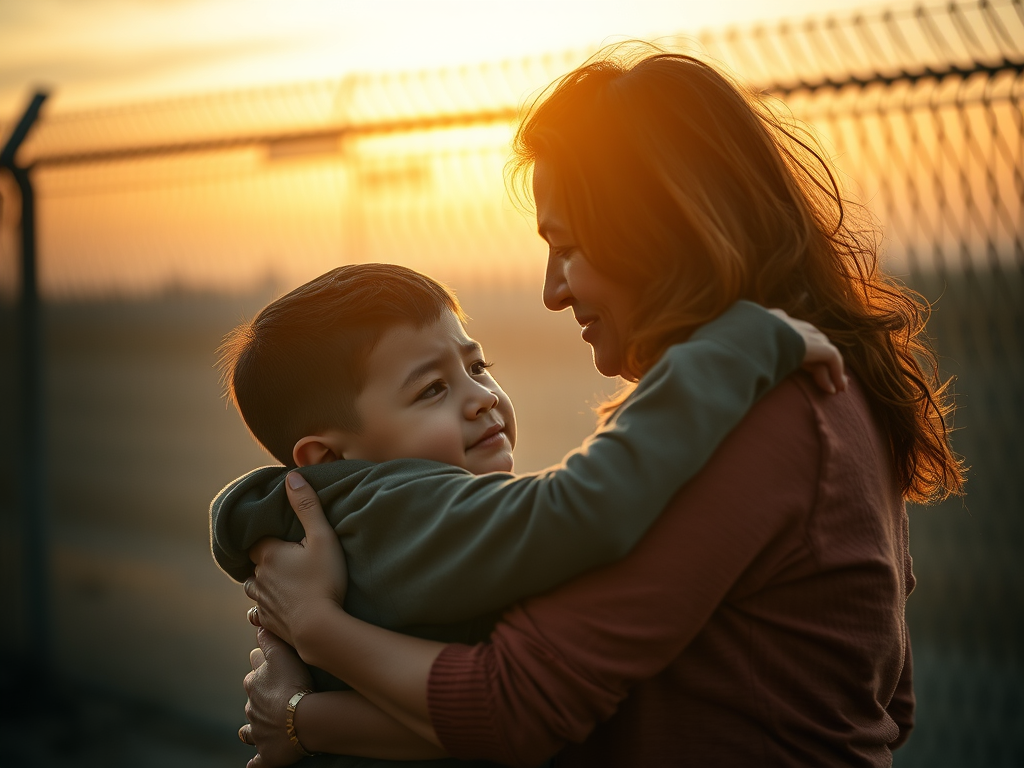

Even after all these years, the memory remains painfully vivid for José and his family. At the southern border, federal agents pulled him from his father’s embrace, making him one of many children separated from their parents as part of a strict Trump-era immigration policy.
In May 2018, at age five, José was taken from his father and placed with a foster family in Michigan, as reported by The Times. Now living with his family in Houston, José, a sixth-grader, is thriving academically, playing guitar in his school band, and passionately pursuing soccer. “You have everything it takes to go far in life,” his English teacher, Ms. Keller, wrote in a handwritten note to him on October 2.
Despite his teachers’ encouragement, José is still affected by his past. “I don’t trust anybody,” he shared in an interview, “only my mom and dad.” Those memories linger, though he rarely speaks about them. His family remains undocumented, facing an uncertain future.
With former President Trump’s renewed campaign, promising a return to strict immigration policies, the memory of family separation is still fresh for advocates and those affected by the policy. Although federal courts ruled it unconstitutional, this provides limited comfort.
In response to a CNN inquiry about family separation, Mr. Trump once stated, “When you have that policy, people don’t come…they love their family.” More recently, he and Mr. Vance have given ambiguous responses about whether they would reinstate the policy, without fully ruling it out.
During a recent visit to the southern border, Mr. Vance commented, “Family separation happens whenever someone is arrested for a crime,” and added, “We must prosecute criminals and uphold the law.” Meanwhile, Vice President Kamala Harris has taken a firmer stance on immigration than President Biden, although she has clarified some policies will not be revisited.
At a media event in Florida, the Harris campaign highlighted children who had been separated from their parents but eventually reunited. “I still see a therapist,” said Billy, who was separated from his father at nine years old. “I’m afraid that if Trump wins, it could all happen again.”
Under the 2018 “zero-tolerance” policy, adults crossing the U.S. border illegally were prosecuted and detained. Their children, sometimes infants, were placed in shelters or foster homes. Though intended to deter migration, images and recordings of distressed children sparked public outrage and drew criticism from prominent figures, including the American Academy of Pediatrics, Pope Francis, and former First Lady Laura Bush. The policy was halted in June 2018, with a federal judge later ordering family reunification.

However, the process was fraught with difficulties. Poor record-keeping meant some families remained separated for years. In 2021, the Biden administration established a task force that worked with nonprofits to locate parents who had been deported, especially in Central American villages. Even now, the American Civil Liberties Union (ACLU) estimates that up to 1,000 families are still separated.
The ACLU’s lead attorney, Lee Gelernt, highlighted the lasting impact, saying, “Many children continue to suffer without their parents, and even those reunited still carry emotional scars.”
Thanks to a 2023 settlement, deported parents can temporarily live and work in the U.S. legally while reuniting with their children. Some families are now pursuing asylum and, potentially, permanent residency. Foster mother Janice Barbee, who cared for José in Michigan, recalls picking him up from the airport. “His eyes were full of fear and confusion,” she said. Though he didn’t cry, he refused to hold her hand.

The Barbee family did their best to make José feel safe, reading to him and sharing family activities. Although he grew more comfortable, José held tightly to two drawings—a stick figure of his family and a sketch of his father—carrying them by day and tucking them under his pillow each night. Once, overwhelmed with emotion, José clutched his family drawing as he cried in Ms. Barbee’s kitchen.
José’s father had been deeply worried his son might be adopted out and refused U.S. authorities’ offer to be repatriated without him. Father and son were finally reunited in October 2018, after five months apart. The young boy, however, struggled to understand why he and his father had been separated. “What did you do wrong?” he asked.
Since then, José’s mother and younger siblings joined them in the U.S., leaving behind a life in Honduras threatened by gang violence. José’s father, previously targeted by gangs for extortion, had been injured in an attack, prompting the family to flee.
When interviewed in Houston in 2021, José, then a cheerful third-grader, shared fragments of his experiences, recounting times when he was separated from both his father and, briefly, his mother. “But I was so happy when she came home with my baby sister,” he said.
To this day, José’s family has been reluctant to use settlement benefits out of mistrust and concern over potential deportation risks. His parents fear that using services could expose them to future immigration policies. With the upcoming election, they worry about a return to harsh immigration policies.
José, aware of the political landscape, noted his understanding of the candidates, observing, “Trump doesn’t like immigrants.” As for who he hopes wins, he answered diplomatically, “Everyone has their own opinion. I can’t vote.”
Turning back to school, he proudly shared his recent achievements: he earned the top score on his English exam and was named Student of the Month in sixth grade.




Leave a Reply