
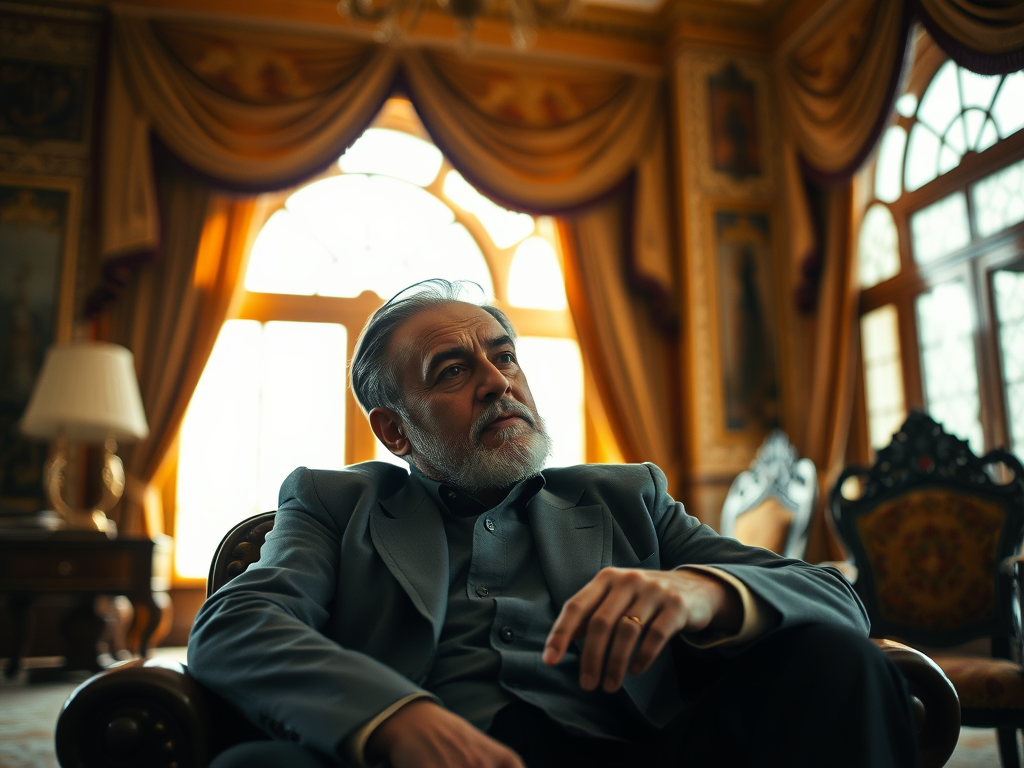

For three years, there was one key figure I had been eager to interview in Afghanistan: Sirajuddin Haqqani.
During the U.S.-led conflict, he gained a reputation as one of the Taliban’s most brutal military minds, orchestrating hundreds of suicide attacks and causing havoc in Kabul. He established connections with various terrorist networks in the region and created a vast network of illegal businesses, resembling a mafia enterprise.
After the Taliban reclaimed power in 2021, Mr. Haqqani emerged as one of the new government’s central figures. Still, he remained elusive, granting only a single interview to a Western journalist.
For years, I sought to arrange my own interview. Earlier this year, Mr. Haqqani finally agreed.
We spoke for three hours at a two-story mansion in Kabul, covering topics like his upbringing and the clandestine interactions between his family and U.S. officials. I also interviewed over 70 experts, diplomats, Afghan leaders, Taliban fighters, and others, while analyzing hundreds of pages of documents to understand Mr. Haqqani’s life and his political stance within the Taliban government.
Here are the main insights from my findings:
The Taliban’s Hidden Divisions
Since taking power, the Taliban has aimed to present a unified front. Yet, internally, Taliban leaders are at odds over their visions for Afghanistan’s future. These tensions set the group’s ultraconservative leader, Sheikh Haibatullah Akhundzada, against more pragmatic figures like Mr. Haqqani.
Privately, most Taliban officials reject Sheikh Haibatullah’s hard-line interpretation of Shariah law. However, loyalty to their supreme leader remains a core tenet. Those advocating for reform have been silenced, as Sheikh Haibatullah consolidates power.
Today, Mr. Haqqani is one of the few dissenting voices. With most of his allies silenced, he has increasingly sought support abroad to shift the balance in his favor, building diplomatic connections with nations in Europe, the Persian Gulf, Russia, and China. However, the U.S. remains reluctant, continuing to list Mr. Haqqani as a wanted terrorist.
Women’s Rights: A Divisive Issue
Sheikh Haibatullah’s government has become infamous globally for its crackdown on women’s rights.
In the spring of 2022, Sheikh Haibatullah rescinded a public promise made by other Taliban leaders to allow girls to attend high school. Since then, he has imposed some of the strictest rules on women and girls, which some human rights observers describe as “gender apartheid.”

Behind the scenes, Mr. Haqqani and his allies have quietly advocated for girls to return to school beyond grade six and for women to resume working in government roles, according to Taliban and foreign officials.
For Mr. Haqqani, his stance seems more strategic than personal. Pledging to restore women’s rights could attract Western support and help him win over local leaders in urban areas less receptive to the Taliban’s regime.
Longstanding U.S.-Haqqani Connections
Connections between the Haqqani family and the U.S. go back decades. Jalaluddin Haqqani, Sirajuddin’s father, developed close ties with the CIA, receiving funds and weapons to resist Soviet forces.
At the onset of the U.S. invasion, the Haqqanis attempted to leverage these connections to reconcile with American officials, but these efforts were rebuffed, leading to years of intense conflict.
Around 2010, the Haqqanis began a secret exchange of letters with U.S. officials, and in 2011, Sirajuddin’s uncle, Ibrahim Omari, met U.S. representatives in Dubai, according to sources familiar with the discussions.
In a previously unreported 2015 meeting in a European city, Mr. Omari again met with U.S. officials to discuss ending the war. In a private lounge of a European hotel, Mr. Omari relayed a message from his family, stating that both the Haqqanis and the U.S. desired peace in Afghanistan. The U.S., he argued, had already overthrown the Taliban, killed Osama bin Laden, and supported a democratic Afghan republic. So why, he asked, was the U.S. still fighting?
A State Department official responded, admitting that the U.S. lacked a clear answer to that question. The conflict, however, would persist for years.




Leave a Reply