
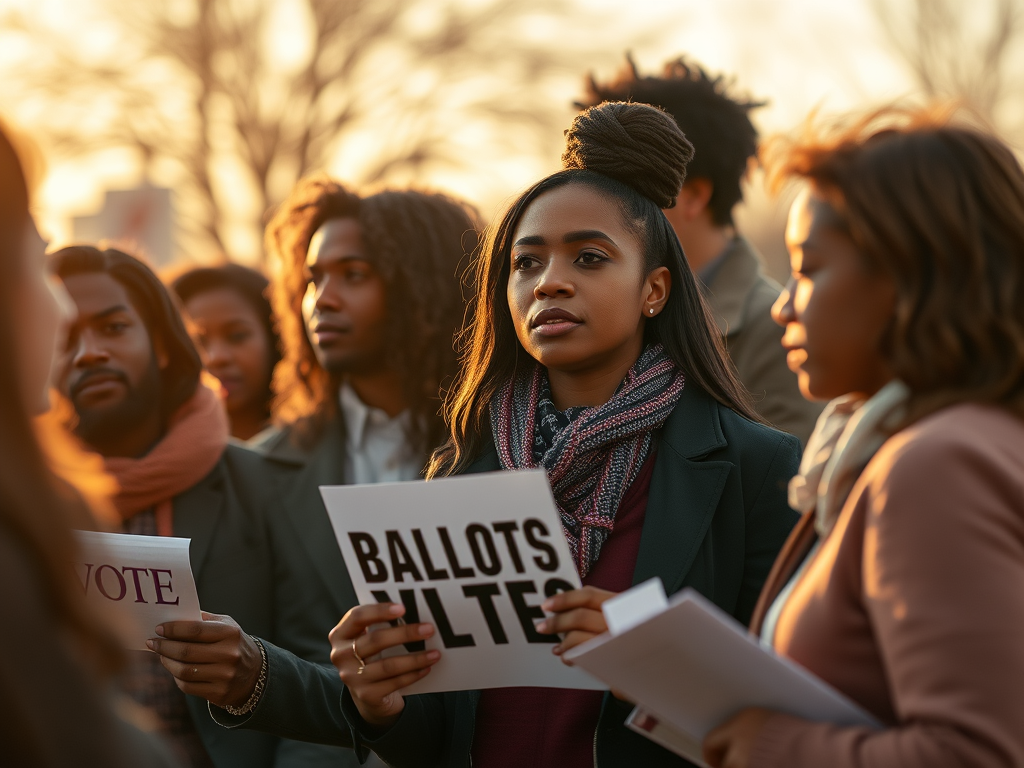

As Election Day approaches, there’s evidence that a small yet pivotal group of voters may support both abortion rights and Republican candidates, a trend that could potentially hurt Vice President Kamala Harris in swing states and other crucial races for Democrats.
This year, ten states will have abortion rights initiatives on the ballot. Democratic campaigners are optimistic that most will pass, following the success of similar measures after the reversal of Roe v. Wade in 2022. However, there’s uncertainty about how many of these voters will also back Democratic candidates.
“The big question is, how much does abortion sway voters toward Democrats?” said Angela Kuefler, a Democratic strategist working on various abortion rights campaigns. “The issue remains important and strongly influences voter decisions. The question is, what is the limit of that influence?”
In states like Arizona and Nevada, where the presidential race is tight, abortion rights measures are expected to pass easily. Similarly, Democrats in Montana are struggling to hold a Senate seat but expect success with an abortion rights referendum. Meanwhile, in Missouri, voters seem ready to approve an abortion rights measure while also re-electing Senator Josh Hawley, one of Congress’s leading opponents of abortion rights.

This scenario could result in a paradoxical situation: voters supporting abortion rights at the state level while electing senators who favor restrictions, along with former President Donald Trump, who has claimed credit for overturning Roe v. Wade.
There is also the chance that some of these measures could fail, marking a first in the post-Roe political landscape.
The Supreme Court’s decision to overturn Roe mobilized a coalition of independents, liberals, and moderate Republicans to support Democratic candidates in the midterm elections. Democrats capitalized on this, securing victories. Now, their strategies face a new test in the heat of the presidential race.
Abortion rights remain a strong issue for Democrats. Polls show that more voters trust Harris over Trump on the subject, which is contributing to the gender gap in this election. However, for a small but crucial percentage of voters, support for abortion rights does not translate to support for Harris.
According to surveys conducted by The New York Times and Siena College in Arizona and Florida, around 12 percent of voters plan to vote for both Trump and an abortion rights referendum. Though most of these voters trust Trump over Harris to handle the abortion issue, they generally don’t rank it as their top priority.
“If you’re a Republican who is generally pro-life but still wants some legal access to abortion, you might vote yes on the measure but remain loyal to the Republican Party,” said Barrett Marson, a Republican strategist in Arizona who supports Harris.
Trent Wichmann, a 20-year-old student from Florida, plans to vote for the amendment, believing that women should have the right to make their own choices, but he also intends to vote for Trump. “My main reason is Trump’s strong focus on border security, which I think is a major issue,” he explained.

Democrats are also dealing with an electorate that is not always well-informed. In swing states, one in five voters mistakenly blames President Biden for ending the constitutional right to abortion, despite Trump appointing the three Supreme Court justices responsible for Roe’s reversal.
Trump, on the other hand, has had trouble maintaining a consistent position on the issue. At times, he has vacillated before finally stating that abortion should be left to the states—a message that Republicans in key races have quickly adopted.
Republicans are finding relief in swing states without abortion measures on the ballot. Two years ago, Michigan voters approved a constitutional right to abortion and re-elected Democratic Governor Gretchen Whitmer largely due to her support for abortion rights. This year, with no abortion measure on the ballot in Michigan, Republicans argue that voters are now more focused on economic issues like inflation and housing costs, where they believe they have the advantage.
“Voters feel that abortion is a settled issue in Michigan,” said Tudor Dixon, a Republican candidate who opposed abortion in cases of rape and incest and lost to Whitmer. “Now, we can shift our focus to issues that affect every family.”
Although abortion rights groups have won every ballot measure since Roe was overturned, those victories occurred during midterm and off-year elections. In a presidential election year, the electorate broadens, making the political landscape more unpredictable for candidates.
“This is the first presidential election since Roe fell,” said Kelly Hall, executive director of the Fairness Project, which supports abortion rights ballot measures in red and purple states. “Voters are turning out for many reasons beyond just the ballot measures. They may cast partisan votes based on immigration, the economy, infrastructure, and jobs.”
Some of this year’s ballot initiatives face steeper opposition. Hall is optimistic about winning in all five states where her organization is active—Arizona, Florida, Missouri, Montana, and Nebraska—but notes that the measures in Florida and Nebraska face particularly strong resistance.
To pass, Florida’s initiative requires more than 60 percent of voters’ approval, a higher bar than any previous abortion measure has faced. While conservative states like Kansas and Ohio have supported abortion rights in the past, no state has surpassed the 60 percent threshold.
In Nebraska, voters will see two opposing measures on the ballot. One would enshrine abortion rights in the state constitution, while the other would maintain the current 12-week ban on abortion, with limited exceptions. If both pass, the measure with the most support will be adopted into law.
Anti-abortion activists are preparing for legal battles even if the abortion rights measures succeed. They believe they can push their agenda forward if Trump wins the presidency. Meanwhile, they hope Democrats’ focus on abortion may have reached its peak.
“This isn’t something Democrats can rely on year after year,” said Kristi Hamrick, a strategist for Students for Life. “It won’t be the end of our efforts at the state level.”




Leave a Reply