
Paul Whelan found himself in Moscow that day, preparing for the wedding of a fellow U.S. Marine at the renowned Metropole Hotel, when an old Russian friend, a junior officer in the border guards, made an unexpected visit.
The friend handed him a thumb drive, claiming it held souvenir photos and videos from a trip they had taken together in Russia months prior. Mr. Whelan tucked the drive into his pocket, but moments later, several men in civilian attire, some with balaclavas obscuring their faces, burst into the room.
“We are with the Federal Security Service, and you are under arrest for espionage,” one of the men reportedly said in English. Mr. Whelan replied, “I have not committed espionage.”
In his first extensive interview with a newspaper since his release on August 1, following the largest prisoner exchange between East and West since the Cold War, the 54-year-old recounted that he initially thought his December 2018 arrest was a joke. It was anything but.
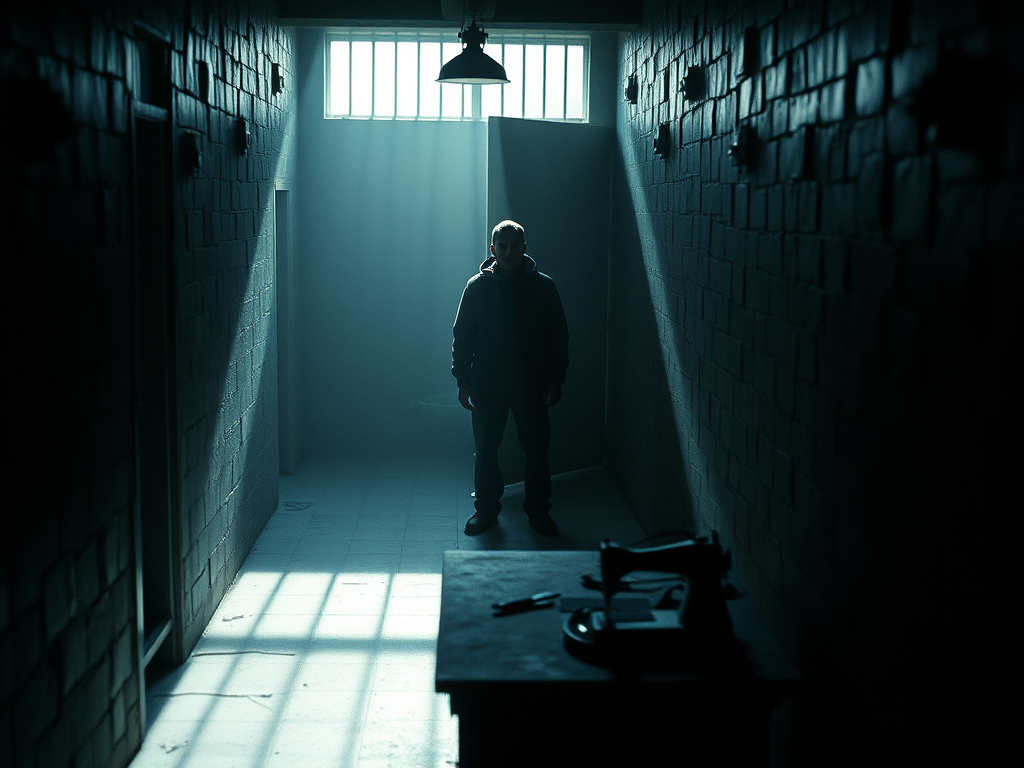
Within hours, he found himself confined to a small 9-foot-square cell in Moscow’s notorious Lefortovo Prison, a site known for the torture of Soviet-era political prisoners. Thus began Mr. Whelan’s journey through what he described as Russia’s grim and often surreal criminal justice system, a nightmare that lasted for five years, seven months, and five days.

At Lefortovo, he underwent an emergency hernia surgery in a dimly lit hospital where half of the lights were out, and instruments were carelessly dropped and reused by the medical staff. After his conviction, he was sent to a labor camp, where his diet consisted of bread, tea, and a watery fish soup that seemed unfit even for animals. He also faced cold showers once a week and spent long hours sewing buttons and buttonholes on winter uniforms for government personnel.
“It was dull, monotonous, and filthy,” he described, adding: “You find yourself in a place you don’t want to be, in awful conditions, doing things you’d rather not do, surrounded by people you’d rather not be with. You have absolutely no control over when you can leave and return home.”

Mr. Whelan’s arrest marked a new phase in what is termed hostage diplomacy, where citizens of the U.S. and other nations are detained on trumped-up charges to be traded for others or to secure certain concessions.
The practice in the U.S. dates back to at least the era of the Barbary pirates, who kidnapped around 100 Americans in 1793. More recently, it gained attention with the hostage crisis in 1979 when 52 Americans were seized at the U.S. Embassy in Iran by radical student revolutionaries. Violent groups in the Middle East, such as the Islamic State, have continued this trend, sometimes resorting to beheading captives who could not be ransomed.
However, Mr. Whelan’s case was particularly complicated because it was the Kremlin, rather than a terrorist group, that apprehended him. The Federal Security Service officers who arrested him were explicit about their intentions: they wanted three Russian prisoners held in the U.S. to be released.

“They indicated that they hoped for a swap, you for them,” Mr. Whelan recalled, a sentiment he heard repeatedly throughout his ordeal.
Mr. Whelan first visited Russia in 2006 during a leisure trip while serving in Iraq. A history enthusiast, particularly of World War II, he was drawn to key battle sites and returned to Russia at least six times. At the time of his arrest, he was the head of security for BorgWarner, an international auto parts manufacturer based in Michigan.
During his visits, he created a VKontakte account, Russia’s equivalent of Facebook, and formed friendships with about 70 Russians, mostly younger men with security backgrounds. A former police officer from Michigan, Mr. Whelan hoped to trade military insignia with them.

In 2008, he received a “bad conduct discharge” from the Marines after being convicted of attempting to embezzle over $10,000 in U.S. government funds in Iraq. He mentioned he would only discuss this incident in a planned memoir.
American officials have noted that, like most countries, the U.S. often sends spies using diplomatic passports, which grants them immunity from prosecution if accused, though they are typically expelled instead of arrested. They also avoid sending individuals with criminal records.
Mr. Whelan had known the officer who gave him the flash drive for a decade; his parents had even stayed at the officer’s home near Moscow in 2009.
Russia accused Mr. Whelan of being a brigadier general in the U.S. Defense Intelligence Agency and insisted he undergo a secret trial for espionage. Mr. Whelan described these closed proceedings as a “sham,” likening it to a “Moscow goat rodeo” designed to mimic a legitimate judicial process.

“They don’t want it to appear as if they’re just snatching tourists from hotels and charging them with espionage for ransom, which is exactly what they are doing,” he stated.
The case rested on the thumb drive’s contents, which were never presented in court but which prosecutors claimed included names and images of cadets from the F.S.B. The drive was confiscated immediately after his arrest and never reappeared, with its contents subsequently classified.
During one court session, the judge indicated that five cardboard boxes in front of him contained evidence, none of which either Mr. Whelan or his F.S.B.-appointed attorneys were allowed to review.
Years later, Russian state television aired footage showing Mr. Whelan in the bathroom of the Metropole Hotel, receiving the thumb drive. Mr. Whelan suspected the F.S.B. had secretly installed the camera, as a Norwegian man arrested shortly before him on espionage charges had also stayed in the same room.
In June 2020, Mr. Whelan was sentenced to 16 years in a labor colony but was quickly informed that he would be home within two weeks.
That timeline proved to be overly optimistic. He was left behind twice during U.S. negotiations for the release of two Americans who had been arrested after him, an experience that left him frustrated and demoralized.
Initially, it was believed he would be part of a trade for Maria Butina, who was accused in 2018 of acting as an unregistered Russian agent in the U.S. However, her relatively brief prison term ended before Mr. Whelan was convicted.

In 2022, the U.S. government swapped Viktor Bout, a Russian arms dealer, for basketball star Brittney Griner, and a drug trafficker, Konstantin Yaroshenko, for Trevor Reed, another former U.S. Marine. Russia, however, resisted including Mr. Whelan in either exchange.
“It was devastating,” he recalled, feeling forsaken by the U.S. government. “I realized I wasn’t as significant as others.”
To keep his spirits up, he began each day by singing the national anthems of the four countries of which he is a citizen: Canada, his birthplace; Britain, his parents’ homeland; Ireland, his grandparents’ country; and the United States.
His Lefortovo cell, which had recently been painted, offered a few comforts, including a flat-screen television. While awaiting his trial, he read numerous spy novels and classic Russian literature, including “War and Peace.”
After his conviction, he was transferred from Lefortovo to labor camp IK-17, located in the remote region of Mordovia, southeast of Moscow. The camp, which had been remodeled by German prisoners of war during World War II, bore a resemblance to Auschwitz, with its low brick buildings surrounded by barbed wire.
Prisoners could trade cigarettes for better food, such as meat, fruit, and dairy products, to supplement the sparse prison diet. He was also able to purchase burner phones, which allowed him to maintain regular contact with his family. Notably, Ms. Griner and her basketball teammates contributed funds to his prison account.
Throughout the night in both facilities, guards conducted checks on him every two hours, ostensibly to ensure he hadn’t escaped, often shining bright lights into his face. He perceived this as harassment and still struggles with sleep.
He attempted to maintain some control over his life by setting his own schedule. If the official wake-up time was 6 a.m., he would rise at 5 and be the first in the exercise yard. He reported that seeing images of himself in court or prison triggers a form of post-traumatic stress, causing him to relive the darkest periods of his incarceration. He hopes this will fade with time.
Currently, at least 11 Americans or dual Russian-American citizens are serving excessively long sentences in Russia on various charges.
Ryan Fayhee, the attorney who represented the Whelan family pro bono in their quest for his release, argued that to combat hostage diplomacy, nations taking captives must face sanctions or other penalties; cases must be escalated to high-level attention immediately; and the U.S. must do more to keep Americans out of countries known for hostage-taking, such as Russia, Iran, and China.
Mr. Whelan’s first indication of a possible release came when two F.S.B. handlers requested that he seek a pardon from President Vladimir V. Putin. He wrote a letter stating that he had not engaged in espionage, that his parents were aging, and that his beloved golden retriever, Flora, had passed away.
He was eventually released in a historic exchange involving 16 journalists, Russian opposition figures, and others for eight Russians, including a convicted assassin.
During his imprisonment, he lost his job and his apartment. Now unmarried, he has returned to live with his elderly parents in Michigan and lacks the financial resources to rebuild his life. He has initiated a GoFundMe campaign to seek support.
He is now engaged in advocacy work aimed at improving medical care for his Central Asian friends still




Leave a Reply