
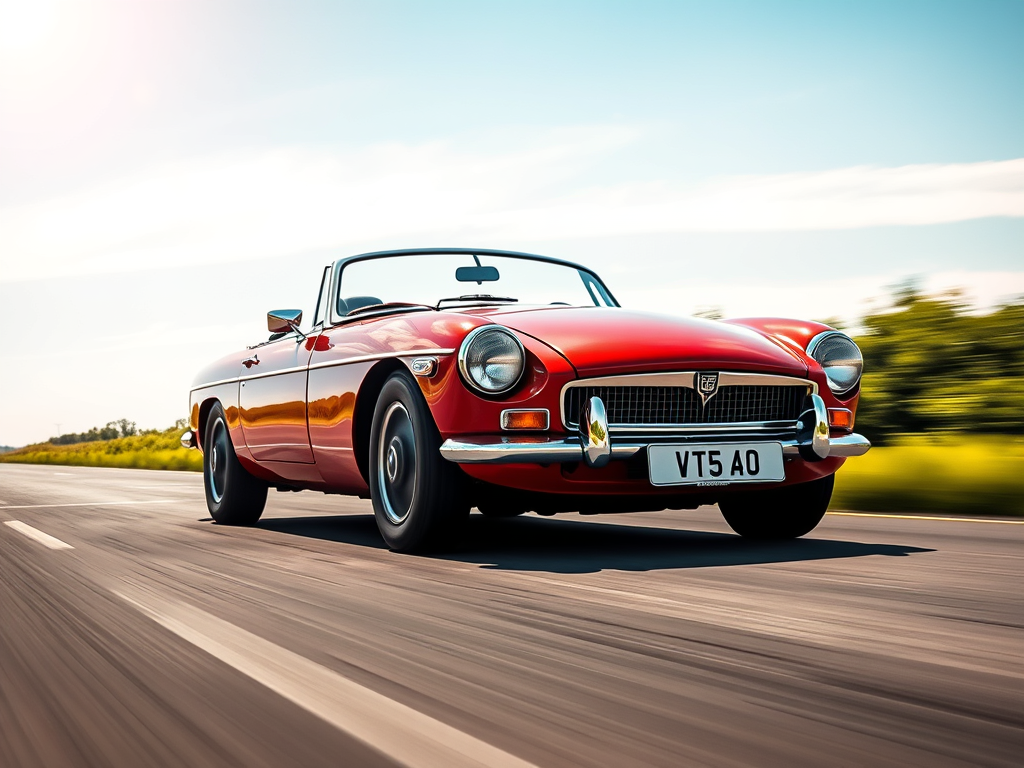

Michael Valentine, an electrical engineer with a passion for fast driving, loved cruising in his MGB sports car. But in 1974, when a nationwide 55 mph speed limit was imposed to conserve fuel, he saw it as the start of a “holy war” between speed-loving drivers and police officers using radar guns to catch them.
“In a holy war, both sides can be right,” he told The Cincinnati Enquirer in 1981. However, he believed the real issue was that police radar was an unreliable electronic tool in the hands of regular people.
Valentine didn’t think strict speed limits ensured road safety, so he and his business partner, Jim Jaeger, developed the Escort radar detector through their company, Cincinnati Microwave. The device quickly became a success, with Valentine stating that by early 1981, they had sold 50,000 units.
Even after he and Jaeger parted ways in 1983, Valentine continued improving radar detectors at his own company, Valentine Research, designing two new generations.
When Valentine passed away at 74 on September 16, Road & Track magazine mourned the loss of “one of the great saviors of speed.” In 1979, a year after the Escort launched, Car and Driver tested 12 radar detectors and overwhelmingly ranked it the best for detecting police radar signals. The magazine later noted, “We all owe Michael Valentine a debt of gratitude for his dedication to the car enthusiast community—and probably for some of the fines we’ve avoided.”
Valentine’s wife, Margaret, confirmed he died at their Cincinnati home from an aneurysm.
Born Michael David Valentine on October 28, 1949, in Dayton, Ohio, he grew up in nearby Vandalia. His father, James, was a mechanical engineer, and his mother, Lillian, was a homemaker. Valentine’s interest in electronics began early, sparked by a ham radio his father gave him, leading him to get an amateur radio license at age 14.
While studying electrical engineering at the University of Cincinnati, where he graduated in 1973, he met Margaret, who later became his partner at Valentine Research. Along with his wife, Valentine is survived by two daughters, Martha Johnson and Anna Valentine, three grandchildren, and four sisters, Kathy Valentine, Cheryl Valentine, Sandra Paulsel, and Nancy Lowe.
One of Valentine’s first jobs involved selling electronic components, and he approached radar detector companies like Electrolert, the maker of the popular Fuzzbuster, with a suggestion for a component that could actively seek out radar signals. However, Electrolert’s founder, Dale Smith, rejected the idea, arguing it would make the product too expensive.
Undeterred, Valentine and Jaeger decided to build their own detector. After disassembling a Fuzzbuster, they were shocked at how basic it was. “There was almost nothing inside,” Jaeger recalled, noting that the two began brainstorming how to create a superior model, without cutting costs.
Together, they formed Cincinnati Microwave in 1976, along with Valentine’s father. The Escort saw steady sales initially, but a glowing Car and Driver review in 1979 describing it as “the next best thing to buying a judge” sparked a surge in orders, creating a seven-month backlog.
In 1983, a disagreement over marketing strategies and a plan to take the company public prompted Valentine to leave the business, selling his stake to Jaeger. After a five-year noncompete period, Valentine and his wife launched Valentine Research, where in 1992, he introduced the Valentine One radar detector.
“I had more ideas,” he told Road & Track in 2020. “I wasn’t done yet. It felt like stepping off a fast-moving train, watching others go by, and wanting to get back on.”
Over the next 30 years, Valentine made continuous improvements to the Valentine One, including features like dual antennas to detect radar from both directions and arrows indicating the source of incoming signals. In 2020, he released the V1 Gen 2, a more advanced version of the device.
Valentine personally tested the new model on the windshield of his Porsche Panamera Turbo S E-Hybrid. That year, Car and Driver ranked the Generation Two detector second overall, praising its detection range, although some drivers found it too sensitive with its frequent alerts.
Valentine remained committed to refining his detectors. “I think I was just meant to do this,” he told Road & Track in 2020. “I don’t know how else to explain it.”




Leave a Reply