
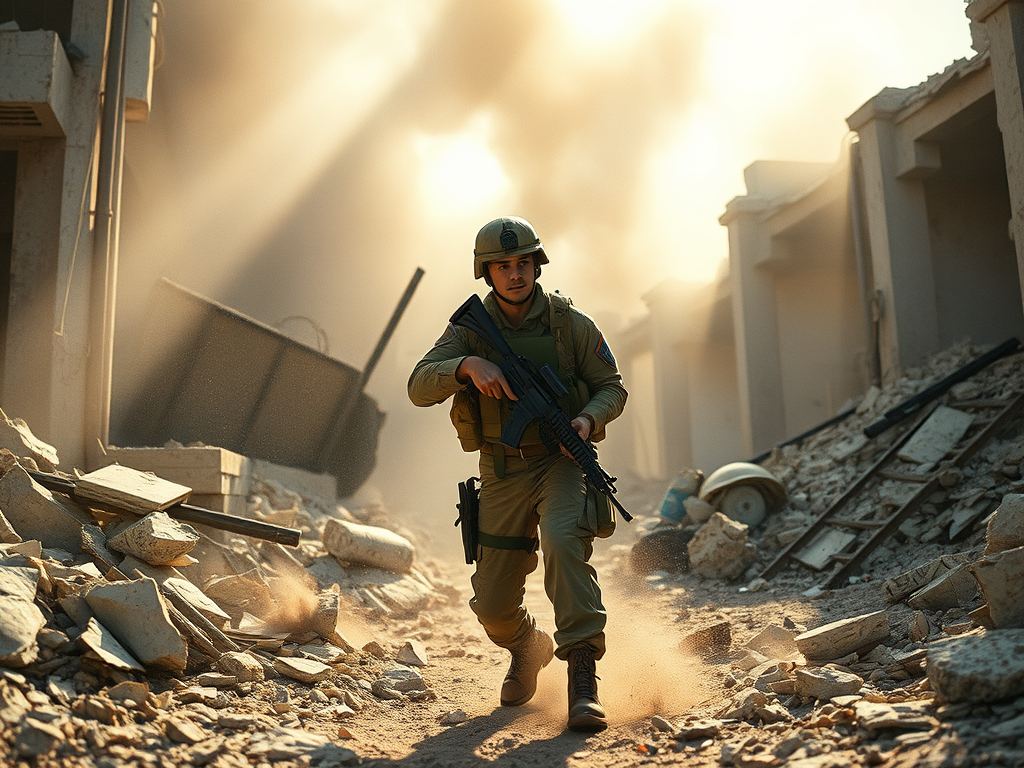

A unit of Israeli soldiers was carrying out a routine patrol in the southern Gaza Strip when they suddenly found themselves in a firefight. Supported by drones, the Israeli forces demolished part of a building where several militants had sought shelter, according to Israeli officials.
As the dust settled and the soldiers began inspecting the building, they discovered an unexpected figure: a man their country had been hunting since October 7, 2023—Yahya Sinwar, the leader of Hamas.
For over a year, Mr. Sinwar had evaded Israel’s extensive military and intelligence efforts to capture or kill him, even as tens of thousands of Gazans lost their lives. Most believed he was hiding deep underground in Gaza, surrounded by Israeli hostages. However, Israeli officials said he was killed on Wednesday, above ground, alongside two other militants, without any hostages nearby. His identity was confirmed on Thursday through dental records and fingerprints, with DNA testing also providing further proof, according to Israeli officials and the White House.
While some had hoped that Mr. Sinwar’s death might mark the end of the Israeli invasion, Prime Minister Benjamin Netanyahu made it clear the offensive would not stop, despite the death of the architect behind last year’s deadly surprise attack on southern Israel.
“Today, evil suffered a significant blow, but our mission remains incomplete,” Mr. Netanyahu said in a statement, reiterating Israel’s commitment to freeing the hostages still held in Gaza, describing it as a national “duty.”
He addressed the people of Gaza, stating that anyone who laid down their arms and returned the hostages would be allowed to leave and live. However, he warned that those who harmed Israeli hostages would face deadly consequences.
Israeli leaders have long maintained that they will continue their assault on Gaza until Hamas is eliminated both as a military and political entity, and the hostages taken on October 7 are freed. In that attack, approximately 1,200 people were killed, and 250 were taken to Gaza as hostages. Of the 101 hostages still believed to be in Gaza, at least a third are presumed dead.

Hamas’s assault drastically changed the Middle East, prompting a fierce Israeli counterattack that has killed more than 42,000 Palestinians, reduced large parts of Gaza to rubble, and left hundreds of thousands of Gazans facing starvation and hardship.
The October 7 attack also ignited clashes between Israel and other groups allied with Hamas and supported by Iran, such as Hezbollah in Lebanon and the Houthis in Yemen. Hezbollah began launching rockets into Israel the day after the October 7 attack, triggering a year of cross-border fire. Last month, Israeli forces launched an extensive bombing and ground campaign in Lebanon to halt Hezbollah’s attacks and dismantle the group. Many top Hezbollah commanders have been killed, including Mr. Nasrallah. Thousands of people in Lebanon have died, and about a million have been displaced in the ongoing conflict.
In Gaza, the Israeli soldiers who encountered Mr. Sinwar were part of a unit training to become squad commanders. After killing Mr. Sinwar and two other militants in the firefight, the soldiers cautiously approached the bodies, discovering explosives, weapons, and cash at the scene, according to one Israeli official.
Photos obtained by The New York Times, some of which later circulated online, show the body of a man with facial features closely resembling Mr. Sinwar’s. The body had severe injuries, including to the head and leg.
Rear Adm. Daniel Hagari, an Israeli military spokesperson, explained that Mr. Sinwar had successfully avoided capture for months, despite clues that had brought Israeli forces close to him. At one point, his DNA was found in a tunnel near the bodies of six Israeli hostages discovered six weeks ago. Israel had previously collected DNA from Mr. Sinwar during his time in Israeli prisons, where he had been incarcerated for decades.
The news of Mr. Sinwar’s death led to celebrations across Israel, with people gathering in streets and on rooftops, waving flags and honking car horns in triumph.

For the families of the hostages, however, the moment was bittersweet. While there was a sense of relief, many were anxious about the increased danger their loved ones might now face.
Einav Zangauker, whose son Matan was kidnapped from Kibbutz Nir Oz, made an emotional plea to Mr. Netanyahu in a video on social media: “Don’t bury the hostages.”
“You’ve secured your victory,” she said. “Now make a deal.”
Orna and Ronen Neutra, parents of Omer Neutra, a hostage who grew up in Long Island, New York, before joining the Israeli military, urged the government to focus all efforts on securing the release of the remaining captives.
As the news of Mr. Sinwar’s death spread throughout Gaza, reactions were mixed. In Khan Younis, his birthplace, some people gathered around televisions in disbelief, hoping that Hamas would refute the reports, just as they had done before.
“We’ve heard these rumors so many times before,” said Rayan Raef Hamdan, a 20-year-old resident, adding, “We pray that God will protect him.”
However, others in Gaza expressed relief at Mr. Sinwar’s death, holding him responsible for the destruction and suffering the conflict had brought upon them.
“He humiliated us, started this war, and left us without food, water, or shelter,” said Mohammed, a 22-year-old who has been repeatedly displaced. “Israel did all this because of him,” he added, calling it “the best day of my life.”




Leave a Reply