

Hours prior to the scheduled execution of Robert Roberson, a Texas man found guilty of killing his 2-year-old daughter, a state court issued a temporary delay on Thursday. This followed arguments from State House members advocating for his testimony at a legislative hearing set for Monday.
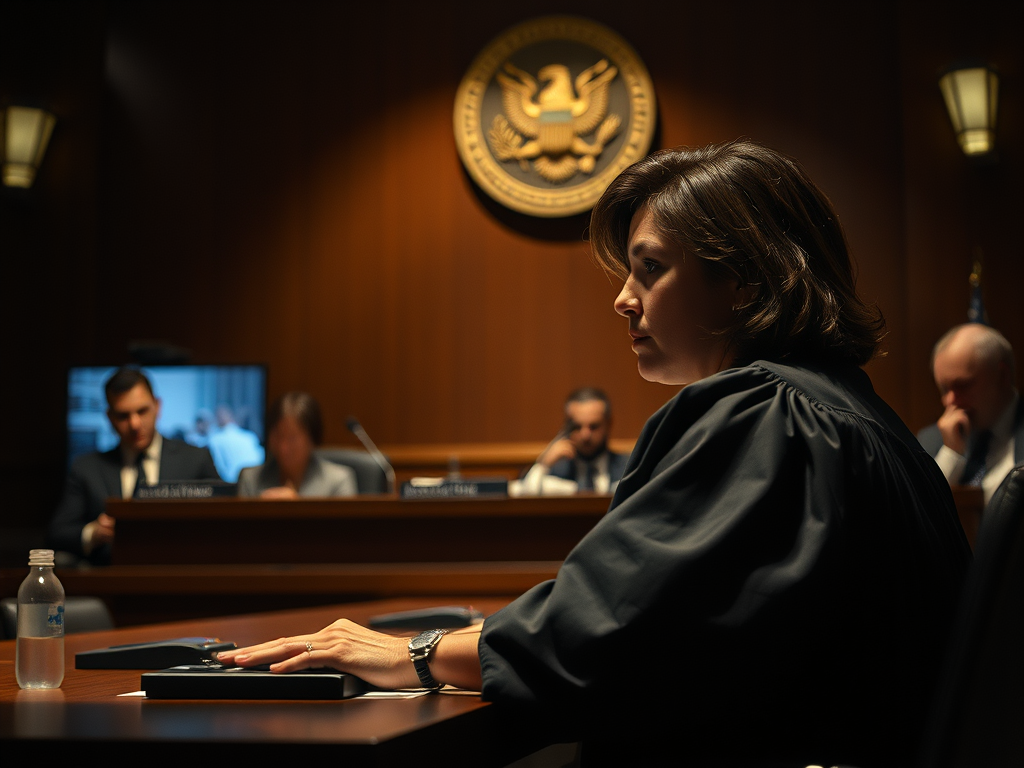
Judge Jessica Mangrum of Travis County made this decision during an urgent video conference hearing, granting a temporary restraining order that could postpone the execution for several days.
However, a lawyer from the state attorney general’s office indicated that they would likely appeal the ruling, with a decision on that appeal potentially coming within hours. The execution was planned to occur sometime between 6 p.m. and midnight local time.
“It’s incredible,” stated Representative Lacey Hull, a Republican from Houston. “I’m grateful the judge took the courageous step to do what’s right. I just hope justice prevails.”
The lethal injection execution was set to take place at a prison in Huntsville, Texas, marking the first execution of someone convicted in a shaken baby case, according to death penalty experts.
The case had progressed after the state’s Board of Pardons and Paroles denied Mr. Roberson’s clemency request on Wednesday.
On Thursday evening, the U.S. Supreme Court issued a separate order refusing to stay the execution. Justice Sonia Sotomayor remarked that while the court couldn’t halt the execution, Texas Governor Greg Abbott could and should grant a temporary reprieve.
“A 30-day executive reprieve would give the Texas Board of Pardons and Paroles a chance to reconsider evidence suggesting Roberson’s actual innocence,” she noted. “This could prevent a miscarriage of justice.”
Mr. Roberson’s execution was one of two scheduled in the nation that day. In Alabama, officials executed Derrick Dearman, who admitted to killing five of his girlfriend’s relatives in 2016. Mr. Dearman, 36, chose not to contest his death sentence this year, seeking to allow his victims’ families to find justice.
The upcoming execution of Mr. Roberson has sparked significant national attention due to the pivotal role of the shaken baby diagnosis in his conviction. His attorneys argue that no crime occurred and have provided evidence and expert testimonies suggesting that his daughter, Nikki, likely died in 2002 from pneumonia aggravated by prescribed medication.
“It’s not surprising that the criminal justice system has failed Mr. Roberson so profoundly,” remarked his lawyer, Gretchen Sween, following the clemency denial. “What is shocking is that the system has yet to rectify this.”
This case has renewed discussions around shaken baby syndrome, a medical finding indicating that abuse led to severe or fatal head trauma, which has contributed to criminal convictions for decades.
While the American Academy of Pediatrics still recognizes this diagnosis, its reliability has come under scrutiny in recent years, particularly in cases with little additional evidence of abuse.
Mr. Roberson’s lawyers also contend that his autism, diagnosed post-trial, influenced the conviction, as investigators misinterpreted his apparent lack of emotion as guilt.
More than half of the Texas House, which is predominantly Republican, has advocated for a reevaluation of the case. The detective who contributed to his conviction now believes Mr. Roberson is innocent. Notably, author John Grisham has also called for the execution to be halted.

Mr. Roberson, 56, has given several television interviews from death row, including one with Phil McGraw on “Dr. Phil Primetime” this week.
With limited options remaining, his lawyers appealed to the U.S. Supreme Court, requesting Governor Abbott to grant a one-time 30-day reprieve to allow for further legal challenges.
According to Texas law, the governor cannot grant clemency after the state board has advised against it.
Members of the Texas House initiated their intervention on Wednesday by issuing a subpoena aimed at delaying the execution to compel Mr. Roberson to testify before a legislative committee on Monday.
Just hours before the execution, two State House members—Jeff Leach, a Republican from Dallas, and Joe Moody, a Democrat from El Paso—sought a court order to pause the execution, allowing Mr. Roberson to respond to the subpoena. Mr. Leach appeared in the video hearing from his car, underscoring the urgency of the proceedings.
“This is an extraordinary measure that the Legislature is pursuing,” Mr. Leach stated, arguing it falls within the Texas House’s constitutional powers.
The court addressed the validity of the legislators’ subpoena but did not evaluate the merits of Mr. Roberson’s defense arguments.
The Texas attorney general’s appeal against the temporary restraining order will be considered by a state appeals court. The attorney general has also submitted a brief to the U.S. Supreme Court, opposing the request for a stay of execution, which the court denied on Thursday.
“Roberson has consistently contested the legitimacy of his conviction and death sentence, and each challenge has been appropriately dismissed,” the state argued in its brief to the high court.
In defending the state’s position, the attorney general cited testimony from Mr. Roberson’s girlfriend, claiming he was violent towards Nikki before her death, having paddled, shaken, and thrown her, as well as threatened and yelled at her.
In response, Ms. Sween called this characterization an “inaccurate summary of testimony from wholly incredible witnesses manufactured for trial,” asserting that the accusations lacked any supporting records. She emphasized that Mr. Roberson had no history of violence.
Mr. Roberson’s lawyers argue that the understanding of shaken baby syndrome has evolved over the two decades since his trial. They assert he was convicted based on a narrow interpretation of the medical condition when Nikki stopped breathing and he took her to the emergency room on January 31, 2002.
At that time, Mr. Roberson explained a bruise on Nikki’s head by saying she had fallen from their bed.
Hospital scans revealed subdural bleeding, brain swelling, and retinal hemorrhages—conditions that have historically been used to infer abuse in shaken baby cases.
However, those symptoms can also result from disease. Mr. Roberson’s lawyers argue that Nikki’s condition was more likely due to a respiratory infection she had been battling before her death and the medication prescribed, which could have suppressed her breathing.
Mr. Roberson previously had his execution postponed in 2016 when the state’s highest criminal court, the Court of Criminal Appeals, allowed new medical evidence to be presented by his legal team.
Ultimately, the court ruled against him and denied subsequent appeals to revisit his conviction under the state’s “junk science” law, which permits challenges based on advancements in scientific understanding.
“I firmly believe that the criminal justice system in Texas has failed catastrophically at every level in this case,” remarked Representative Brian Harrison, a Republican from the State House, during a radio interview on Thursday. “The extent to which our state laws are being violated is grotesque, and it could lead to the execution of an innocent person,” he asserted.




Leave a Reply