
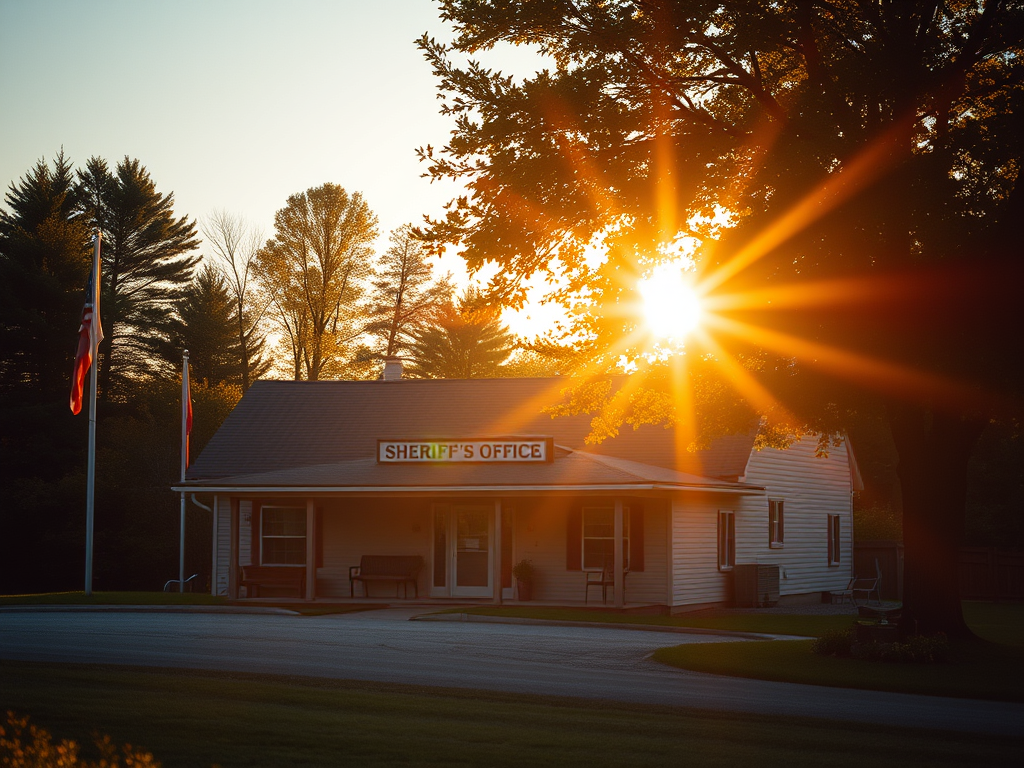

In an alternate reality where a gunman didn’t tragically claim 18 lives in Lewiston, Maine, last October, the most pressing issue in the Sagadahoc County sheriff’s race this fall might have been the county jail’s budget.
Instead, the focus of the race has shifted to the decisions made, and not made, by the sheriff’s office in the lead-up to Maine’s deadliest mass shooting. Incumbent Sheriff Joel Merry, 66, is seeking a fifth term, despite intense criticism for failing to confiscate the gunman’s weapons as concerns grew last fall. The gunman, who lived in Sagadahoc County, was known to authorities.
Sgt. Aaron Skolfield, a 26-year veteran of the department and Merry’s opponent, was also criticized by the state commission that investigated the incident. Skolfield, 52, has built his campaign around clearing his name and exposing what he perceives as unfair blame placed upon him.
For some voters, this election serves as a stark reminder of unresolved grief and lingering blame from the events of last year.
Sheriff Merry, defending his department’s actions, has expressed a desire to complete ongoing projects, though he acknowledges that the mass shooting and the election are inevitably linked.
Sergeant Skolfield, however, sees no separation between his campaign and defending his actions before the shooting. For him, the two have become one mission to restore his reputation.

“I’m told to focus on my goals for the department, but it’s all so connected,” he said. “This is something I think about daily.”
Sagadahoc County, a rural area with around 37,000 residents, lies between Portland and Lewiston. With low crime rates and small towns lacking their own police forces, the sheriff’s office, which has 22 officers, plays a vital role. A key part of their work involves responding to mental health crises.
Last fall, Robert R. Card II, a 40-year-old Army Reserve grenade instructor from Bowdoin, needed such help. Hearing voices and making threats, his family and Army superiors were worried. He was sent for a mental health evaluation in the summer of 2023, resulting in a two-week stay in a psychiatric hospital.
Upon his release in August, medical staff recommended continued treatment and the removal of his weapons. However, follow-up efforts failed, and his condition worsened. On September 15, after a fellow reservist reported fears of a potential mass shooting, the Army Reserve asked the sheriff’s office to check on Card.
Sergeant Skolfield visited Card’s home but received no response. He issued a statewide alert and contacted Card’s family but could not intervene further. The case was closed upon Skolfield’s return from vacation in October.
On October 25, 2023, Card opened fire at a bar and bowling alley in Lewiston, killing 18 people and injuring 13. Two days later, he was found dead from a self-inflicted gunshot wound.
The commission that reviewed the shooting found that both the Army Reserve and the sheriff’s office failed to act decisively. They criticized Skolfield for not invoking Maine’s “yellow flag” law, which would have allowed a judge to confiscate Card’s weapons. Skolfield argues that at the time, he did not have enough legal grounds to justify this action.
Skolfield remains angry about the commission’s findings, believing they downplayed the Army Reserve’s involvement and concerns. He contends that had Army officials expressed more urgency, the situation would have unfolded differently.

An Army investigation later found that the Reserve had not followed procedures, and three commanders were disciplined.
As the election draws closer, Skolfield and Merry both recall questioning whether to run again after the tragedy but were encouraged to do so by supporters.
For Skolfield, the weight of the shooting will remain regardless of the election’s outcome. “It’ll always be with me,” he said.

In conversations with voters in Topsham, many expressed frustration over the failures by both the sheriff’s office and the Army in the events leading up to the shooting. Some, like Hope Shaw, 50, from Topsham, said they’ll vote for “the lesser of two evils.”
Others, like Bill Small, 69, from Bowdoinham, struggled to find a better option.
Both candidates agree that changes to the “yellow flag” law after the shooting have made it easier to use. Since the shooting, the sheriff’s office has invoked the law 17 times.
“I’ve told my officers to act if they see a threat, no matter the cost,” Sheriff Merry said. “We’re not risking any more chances.”
The law’s use has increased across the state since the tragedy.
“Nobody wants to be—” Sheriff Merry stopped, visibly emotional, before pointing to himself.




Leave a Reply