
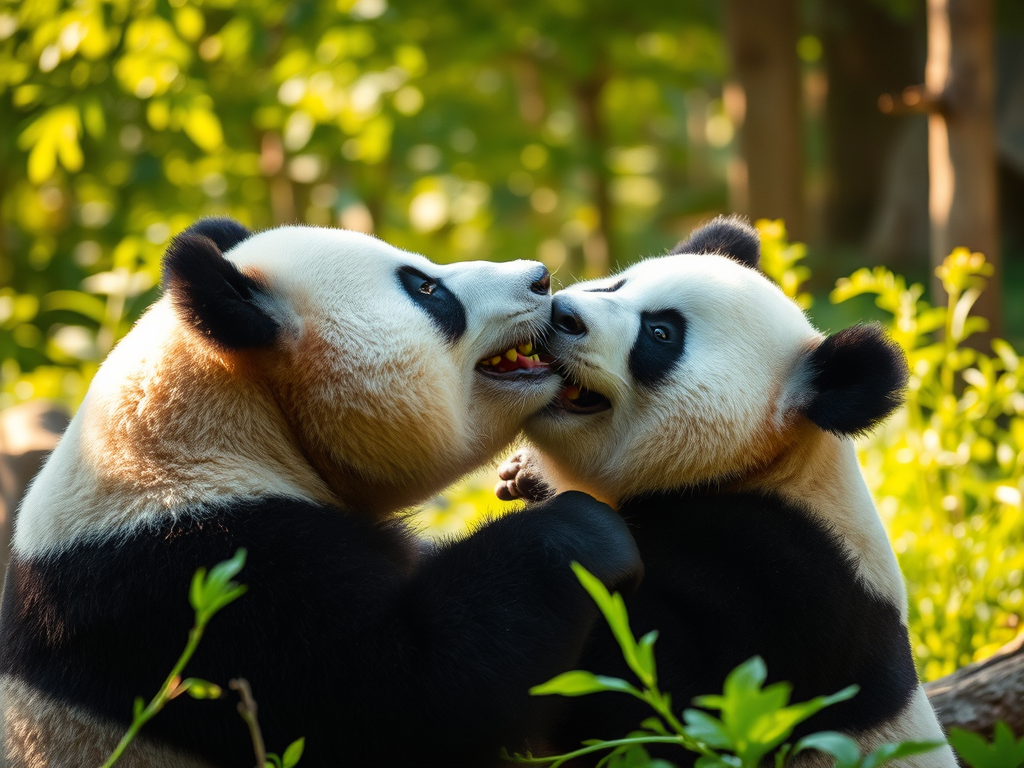
Two robust pandas, one male and one female, arrived at Washington’s National Zoo from China on Tuesday. If all goes according to plan, they will eventually produce offspring.
Exchanges like this have played a pivotal role in making giant pandas a global symbol for conservation efforts.
The panda conservation initiative was established with the primary aim of rescuing an endangered and cherished species. Zoos would pay up to $1.1 million annually for a pair, with these funds directed towards helping China preserve the pandas’ natural habitats. By adhering to well-designed breeding strategies, zoos aimed to enhance the genetic diversity of the species.
In the future, the hope was that China would release these pandas back into the wild.
However, an investigation by The New York Times, based on over 10,000 pages of documents, reveals that both Chinese authorities and American zoos have often painted an overly optimistic picture of a program that has frequently struggled to meet its goals. Documents, photos, and videos—many sourced from the Smithsonian Institution Archives—offer an unfiltered look at the program’s history.
They show that, from the outset, zoos saw panda cubs as a means to attract visitors, enhance their reputation, and increase merchandise sales.
In that regard, they have been successful.
The Times discovered that China has removed more pandas from the wild than it has released. No cubs born in American or European zoos, nor their descendants, have been reintroduced into the wild. Moreover, the true number of wild pandas is uncertain due to questionable and politically influenced counts by the Chinese government.
Over time, individual pandas have suffered.
Because pandas are notoriously difficult to breed in captivity, scientists turned to artificial methods, which have had troubling consequences. Records show that at least one panda died, another suffered rectal burns, and others experienced vomiting and injuries during these procedures. Some pandas were only partially sedated during painful procedures, while in China, some were repeatedly anesthetized and inseminated far more frequently than recommended.
Despite these concerns, American zoos continue to seek pandas, and China continues to supply them. Zoos benefit from the increased attention and attendance, while Chinese breeders receive cash bonuses for every cub. In 2000, there were 126 captive pandas, but today there are more than 700.

Kati Loeffler, a veterinarian who worked at a panda breeding center in Chengdu during the program’s early days, recalls realizing that her role had shifted from focusing on the welfare and conservation of pandas to facilitating financial gain. She also noted that scientists often used anesthesia excessively and carelessly.
Kimberly Terrell, former director of conservation at the Memphis Zoo, explained that there was always pressure to produce cubs because they brought in money. Despite concerns from zookeepers about inseminating an aging female panda every year, administrators insisted on continuing, even though the attempts never succeeded.
The Times gathered key materials from the Smithsonian archives, supplemented with information obtained through open-records requests. These include decades of medical records, field notes, photos, and videos that document breeding practices and the conditions in which the pandas were kept.
The records show that the riskiest techniques were used in the program’s early stages, but aggressive breeding practices persisted for years at the National Zoo and other institutions. In one case, a panda in Japan died during sperm collection in 2010. Chinese breeding centers, until recently, separated cubs from their mothers prematurely to make the females return to heat more quickly.

Pandas continue to be distributed to zoos worldwide, including recent arrivals in San Diego and upcoming plans for San Francisco. The growing number of captive pandas has fueled debate among zoo workers and scientists about the ethics of subjecting pandas to intensive breeding, particularly when there is little chance of releasing them into the wild. These discussions often take place behind closed doors, as public criticism of the program could jeopardize opportunities for research.、

While veterinary medicine inherently carries risks, especially with wild animals, there is an ongoing concern that pandas are being repeatedly bred not for conservation, but for financial gain, with the harshest realities hidden from public view.
The National Zoo, a part of the Smithsonian Institution, has played a central role in this story. Pandas have been a symbol of the zoo since 1972, when President Nixon’s historic trip to China resulted in the exchange of a pair of musk oxen for two pandas.

Yet, according to the records, the Smithsonian has at times worked with Chinese propaganda efforts to downplay the harsh realities of artificial breeding. Despite this, American zoos argue that keeping and breeding pandas has advanced scientific knowledge about the species.
A National Zoo spokeswoman acknowledged that the effort to release pandas into the wild is still in its developmental stages, and she emphasized that the program’s success isn’t solely measured by the number of released pandas, but by ensuring the species’ survival.
While some improvements have been made, the underlying issues remain. Pandas in captivity continue to struggle with natural mating, and breeding programs often resort to artificial methods, which carry significant risks and ethical concerns.




Leave a Reply