
Election experts are suggesting that this year’s presidential contest is too close to predict. Nevada? It’s up in the air. Pennsylvania? Anyone’s guess.
However, Seth Keshel, a Trump supporter and former Army intelligence officer who created his own forecasts for November, sees things differently. Unlike other analysts, Keshel factors in widespread election fraud — a claim that officials have repeatedly dismissed as unsubstantiated — leading him to predict a victory for former President Donald Trump.
This unique approach has made Keshel a notable figure among election skeptics, earning him a speaking tour across 40 states and even recognition from Trump himself, who praised him as “highly respected.”
In Keshel’s view, Pennsylvania will go to Trump, partly because Democrats failed to implement laws that he believes could “rig” the race in favor of Vice President Kamala Harris. As for Michigan, Keshel believes Trump might struggle there due to Democratic control over key government branches, which he claims allows for potential fraud.
“I’d say it’s clear Trump is doing better than in 2020,” Keshel shared in an interview.
Since Trump’s 2020 loss, figures like Keshel have spent the past four years advancing a conspiracy theory involving voter fraud, largely through mail-in ballots, ballot harvesting, and automatic registration. Despite repeated dismissals of these claims by courts and election officials, the theory persists. In reality, voter fraud in the U.S. remains exceedingly rare.

Keshel’s rising influence highlights how deeply these conspiracy theories have permeated Republican circles, even affecting the typically data-driven field of election forecasting.
Experts who reviewed Keshel’s methods observed that, like other election skeptics, he appeared to select data supporting his belief that Trump should win while ignoring contradictory evidence.
Most forecasters, including Nate Silver of the Silver Bulletin, lean toward Harris based on extensive data models that analyze polling, economic indicators, and past election outcomes. The New York Times’ poll averages also show many swing states as too close to predict.
In contrast, Keshel predicts Trump will secure at least 281 Electoral College votes, leaving Harris with 226, and considers Georgia and Michigan as still undecided.
“If he gets some predictions right, it’ll likely be by chance,” said Logan Phillips, an election forecaster from Race to the WH.
Phillips critiqued Keshel’s model, saying, “The problem is that it’s based on false assumptions about 2020.”

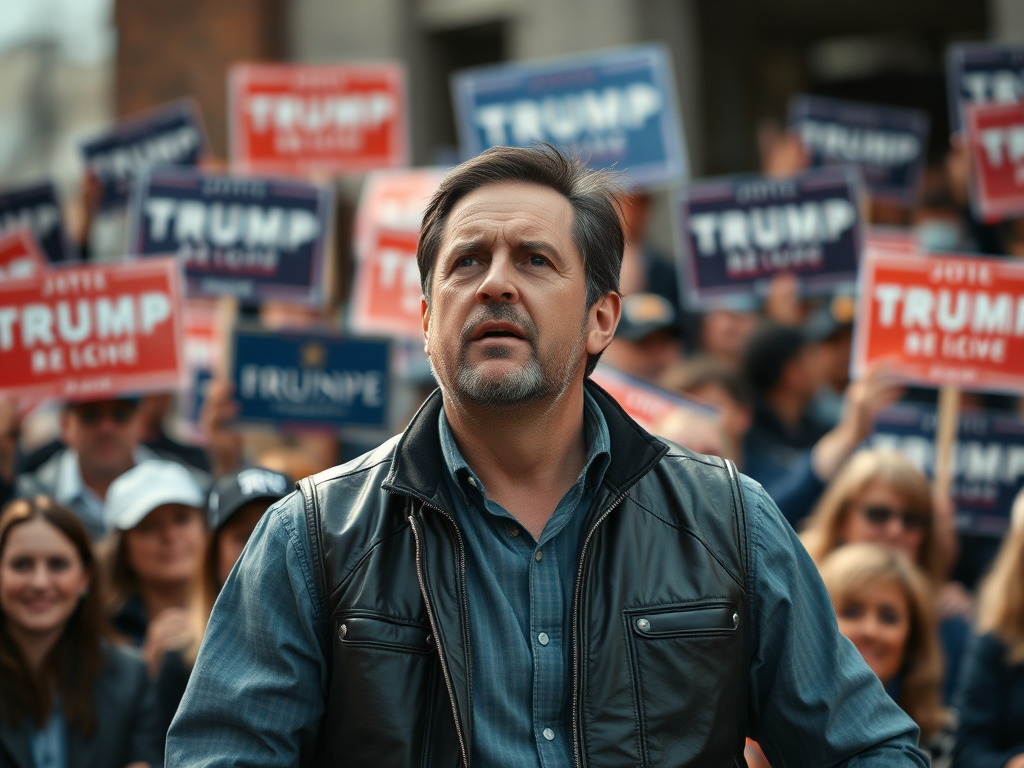
Keshel, a towering figure known for his signature leather vest, became a prominent player in “Stop the Steal” efforts, meeting with Trump’s allies and preparing statistical analyses for lawsuits, though many were quickly dismissed.
Despite criticism, his influence within conservative circles grew. He was soon speaking at Republican rallies, including one for Arizona gubernatorial candidate Kari Lake, whose loss he attributed to fraud — despite several court dismissals due to lack of evidence.
Keshel’s work fueled further challenges to the 2020 election results, though none gained traction. One Republican election supervisor called Keshel’s analysis of the 2020 outcome “statistically invalid.”
Personally, Keshel’s life saw changes too. He lost his job as a technology salesman and remarried, meeting his wife, Arizona state senator Rachel Jones, through their mutual interest in election integrity.
Today, Keshel shares his in-depth election analysis via newsletters and social media, amassing large followings on platforms like Truth Social and Substack.
According to Keshel, Trump’s path to victory runs through key battlegrounds like Wisconsin and Pennsylvania, where his “pessimistic” forecasts still favor Trump. Despite polls showing Harris with a slight lead, he believes Trump will prevail.
In Georgia, Keshel concedes Harris has a chance, although he attributes her possible win to expected fraud in Fulton County. The region saw numerous fraud claims in 2020, all dismissed by courts. While Georgia’s Republican secretary of state supports scrutiny of the voting process, critics argue it introduces confusion and delays.
Keshel’s predictions begin with analyzing county-level performance in past elections, seeing Trump’s gains in rural areas as legitimate while often attributing Biden’s urban success to fraud, despite officials repeatedly denying such claims.
In some states, Keshel anticipates even stronger support for Trump from deeply conservative counties, while predicting that Harris will lose support among Black and Hispanic voters. However, in states like Michigan, he predicts Trump’s rural gains will be offset by fraudulent votes in urban areas.
Much of Keshel’s analysis hinges on voter registration data, particularly Democratic registration declines in states like Pennsylvania. However, other forecasters argue that polling is a more reliable indicator than registration trends.
“If registrations truly signaled change, it would be reflected in the polls,” said Lakshya Jain of Split Ticket.
Despite these controversies, Keshel remains confident in his forecast, joking about possibly joining Trump’s next administration as “director of election reform” to push for changes like banning automatic registration and early voting.
Still, Keshel admits that if the 2024 election yields a similar outcome to 2020, his enthusiasm for challenging the results might wane.
“If the 2024 election is like 2020 and 2022, I won’t be traveling the country to argue it was stolen,” he said.




Leave a Reply